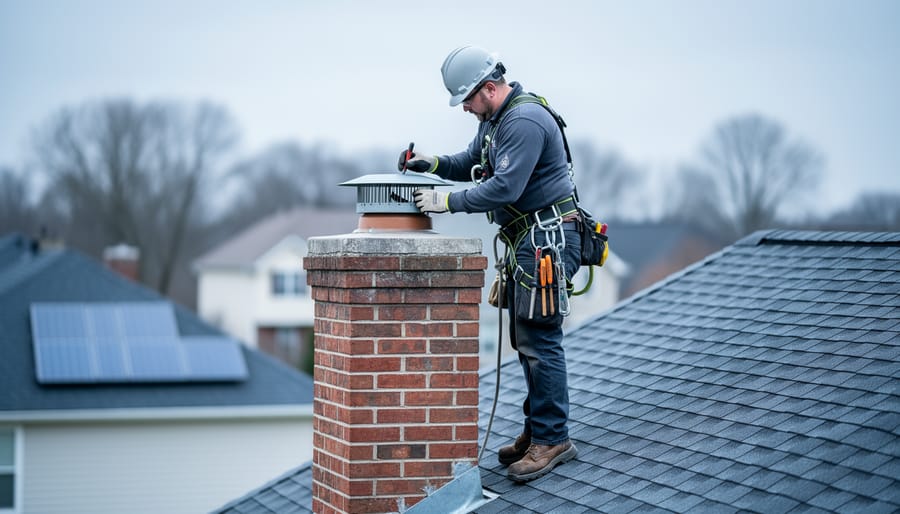

Technician in safety harness installing a top-sealing damper on a brick chimney atop a suburban roof under overcast light, with roof shingles, faint solar panels, and leafless trees softly blurred in the background.

Why Your Drafty Chimney Is Sabotaging Your Clean Energy Goals

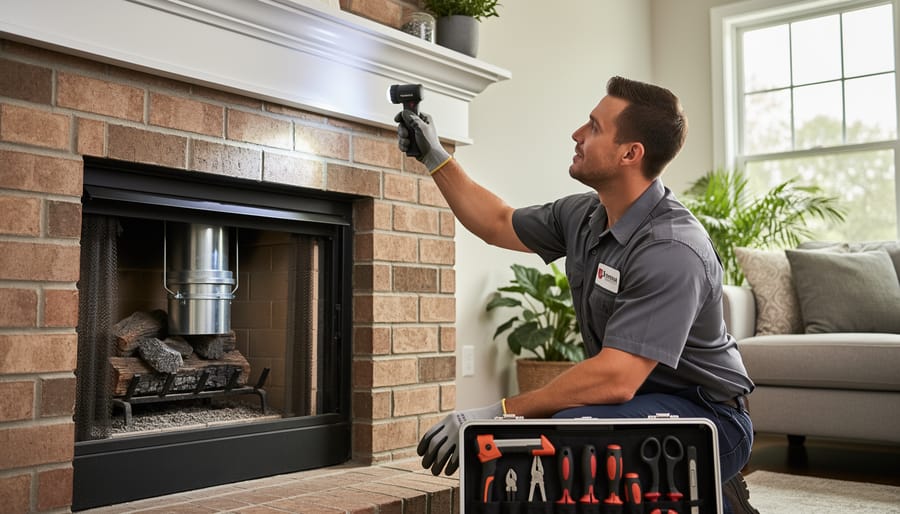
Schedule annual inspections with certified professionals like Mason Chimney Repair to catch cracks, blockages, and deteriorating mortar before they become expensive energy drains. A damaged chimney flue can pull heated air directly out of your home, forcing your HVAC system to work overtime and adding 15-30% to your heating bills.

Clean creosote buildup at least once per year, more frequently if you burn wood regularly. This tar-like substance not only creates fire hazards but also narrows your flue opening, disrupting the proper draft needed for efficient combustion and causing smoke to backdraft into living spaces.

Install a top-sealing damper to stop the constant air leakage that traditional throat dampers can’t prevent. An open or poorly sealed chimney acts like leaving a window open year-round, letting conditioned air escape and outdoor air infiltrate. This simple upgrade can reduce heating costs by hundreds of dollars annually while improving indoor comfort.

Every home’s path toward energy efficiency includes often-overlooked components. Your chimney represents one of the largest potential sources of energy loss, yet it remains invisible in most weatherization conversations. Communities across the country are discovering that a holistic approach to energy saving must address every opening in the building envelope, from windows and doors to chimneys and vents.

The families benefiting most from chimney maintenance are those in older homes, where decades of deferred upkeep have compounded small problems into major inefficiencies. In neighborhoods where energy burden already consumes too much of household income, these repairs deliver immediate relief. One community program in the Northeast helped 200 low-income homeowners seal and repair their chimneys, cutting average winter heating bills by $340. That’s money redirected toward groceries, healthcare, and education instead of disappearing up the flue.

Understanding chimney maintenance isn’t just about saving money. It’s about taking control of your energy future.

The Hidden Energy Drain: How Neglected Chimneys Waste Power and Money

Your chimney might be quietly sabotaging every dollar you spend on heating your home. While we focus our attention on upgrading thermostats and installing better insulation, a neglected chimney creates a powerful upward draft that pulls heated air straight out of your living space. This effect, known as the stack effect, turns your chimney into a vacuum that continuously draws warm air from your home, forcing your heating system into overdrive just to maintain a comfortable temperature.

Note: Studies show that up to 30% of home heating energy can escape through chimney systems, costing the average household an additional $200-$600 annually in wasted energy.

The problem extends beyond the chimney itself. Research demonstrates how air infiltration affects heating demand particularly around structural penetrations like chimneys where hot and cold air meet. Deteriorating mortar joints, cracked flue liners, and damaged dampers create pathways for conditioned air to escape. These air leaks around chimneys work against your heating system 24 hours a day, seven days a week throughout winter months.

The Riverside Community Coalition in Pittsburgh discovered this firsthand when they launched a neighborhood energy audit program last year. What they found surprised everyone: homes with unmaintained chimneys were spending 25% more on heating than comparable homes with recently serviced chimneys. One resident, Maria Chen, watched her monthly heating bill drop from $240 to $180 after addressing her chimney’s draft issues and repairing damaged mortar.

This waste directly undermines our clean energy efforts. Every extra kilowatt-hour or therm of natural gas burned to compensate for chimney-related heat loss adds unnecessary carbon emissions to our atmosphere. For households working hard to reduce their environmental impact through renewable energy adoption or energy-efficient appliances, an unmaintained chimney can erase those gains completely.

The carbon footprint impact compounds across communities. A neighborhood of just 100 homes with neglected chimneys collectively wastes enough energy annually to power 15 additional homes. That’s energy we’re burning unnecessarily while communities across our region still lack access to affordable, efficient heating solutions.

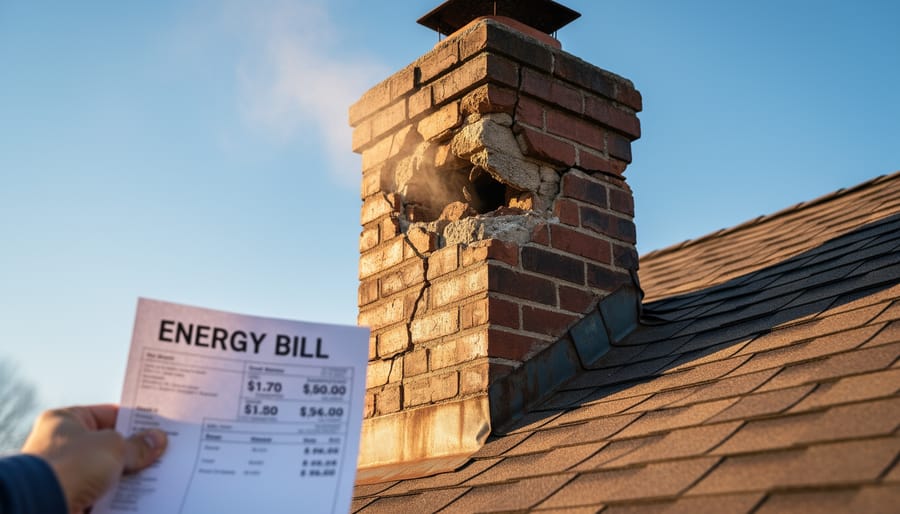
Weathered brick chimney on residential roof showing gaps and deterioration that cause energy loss
Deteriorating chimney structures create significant air leaks that allow heated or cooled air to escape, forcing HVAC systems to work harder and increasing energy bills.

Essential Chimney Maintenance That Keeps Energy Inside Your Home

Sealing Air Leaks and Installing Chimney Dampers

Every winter, millions of dollars literally vanish up American chimneys. When your damper doesn’t seal properly or air leaks exist in your flue, you’re paying to heat the outdoors instead of your living room. This isn’t just about personal comfort. It represents wasted energy that strains our grid and burns fossil fuels unnecessarily.

Here’s the good news: sealing these leaks is one of the simplest ways to reclaim lost energy. Start by checking your damper when the fireplace isn’t in use. Stand beneath it and look up with a flashlight. If you see daylight or feel a draft, your damper isn’t doing its job. A properly closed damper should create an airtight seal.

For traditional throat dampers that have worn out, consider upgrading to a top-sealing damper. These mount at the chimney crown and provide superior protection from both air loss and weather. The installation typically pays for itself within two heating seasons through reduced utility bills.

Around the chimney flue where it passes through your home, apply high-temperature caulk to seal any gaps. Check the area in your attic where the chimney meets the roofline. These transitions often develop cracks over time.

In Detroit’s Brightmoor neighborhood, residents working through a weatherization cooperative discovered that sealing chimney leaks reduced heating costs by an average of 18 percent. That’s real money returning to families who need it most. These improvements don’t require special skills, just attention and a few hours of your time.

Homeowner's hands installing metal chimney damper to prevent air leakage
Installing and maintaining properly functioning chimney dampers is one of the most effective ways to prevent conditioned air from escaping through your flue.

Chimney Caps and Chase Covers: Your First Line of Defense

Small investments in chimney protection deliver outsized returns for your home’s energy performance. Chimney caps and chase covers act as sentinels, preventing three major threats that silently drain efficiency and money from household budgets.

Without proper covering, downdrafts force cold air down your chimney and into living spaces. Your heating system works overtime to compensate, burning through fuel and raising utility bills. A quality chimney cap disrupts these air currents, keeping conditioned air where it belongs.

Water infiltration poses an even greater threat. Rain and snow entering an unprotected chimney deteriorate masonry, corrode metal components, and saturate insulation systems. The Springfield Energy Cooperative documented how community members reduced heating costs by 12 to 18 percent after installing caps and repairing water damage. One resident discovered her attic insulation had absorbed moisture for years, essentially turning her home into an energy sieve.

Pest intrusions create surprising efficiency problems. Birds, squirrels, and raccoons nest in open chimneys, blocking proper ventilation and damaging flue liners. These disruptions force homeowners to leave windows open for ventilation, defeating insulation efforts entirely.

Installing caps and chase covers costs between $150 and $500, typically paying for themselves within two heating seasons through reduced energy waste.

Insulation and Weatherproofing Around Your Chimney

Where your chimney meets your roof, invisible gaps quietly drain warmth and inflate heating bills. These junctions lose more energy than most homeowners realize, but solutions are straightforward and affordable.

Start by inspecting the flashing, those metal sheets sealing the roof-chimney junction. Deteriorated flashing creates gaps where heated air escapes while moisture enters. Quality counter-flashing and base flashing work together to create an airtight barrier. Many hardware stores offer step-by-step tutorials that make this a manageable DIY project.

Check the chimney chase cover and crown too. Cracks in the concrete crown allow water infiltration and thermal bridging. A simple application of elastomeric sealant prevents further damage and improves thermal performance.

Inside your home, examine where the chimney passes through walls and ceilings. Gaps here should be filled with fire-rated caulk or insulation. One Cleveland neighborhood organized weatherproofing workshops where residents learned these techniques together, reducing collective heating costs by 18% that winter. Their success proves that small actions multiply when communities share knowledge. Your chimney can become part of your home’s energy solution rather than a source of waste.

Community Success: How Neighborhoods Are Combining Chimney Care with Solar Transitions

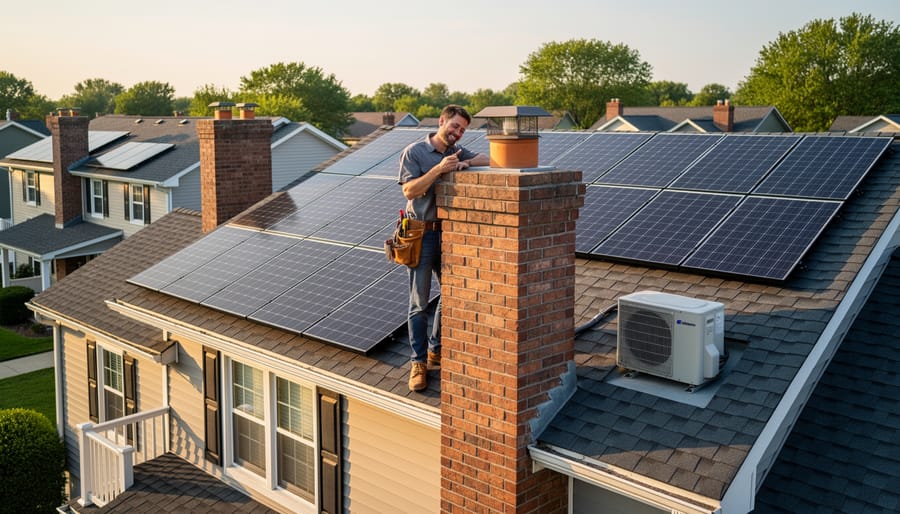
In Rochester, New York, a coalition of weatherization agencies discovered something unexpected during home energy audits: nearly 40 percent of older homes slated for solar panel installation had chimneys creating significant heat loss. Rather than treating these as separate issues, the Rochester Climate Action Collaborative developed an integrated approach. Homeowners received chimney inspections and repairs as part of their solar transition package, closing off unused flues, installing dampers, and sealing gaps before panels went on the roof. The results spoke clearly. Families reduced their overall energy consumption by an average of 22 percent, making their new solar systems even more effective and bringing monthly utility costs down faster than solar alone could achieve.

Similar success emerged in Portland, Oregon, where the Southeast Uplift Neighborhood Coalition partnered with local chimney professionals and solar installers to create a “Whole Home Energy” program. They focused specifically on households that had been excluded from clean energy transitions due to cost barriers. Through sliding-scale pricing and community fundraising, the program helped 150 families in three years address both their aging chimney infrastructure and add rooftop solar. One participant, Maria Torres, explained how fixing her deteriorating chimney liner and damper before installing solar panels cut her heating bills in half. “I thought solar was about the future, but fixing my chimney was about not wasting the energy I already had,” she said.

These efforts mirror the philosophy behind community-wide programs that recognize energy transition as a comprehensive undertaking, not a piecemeal effort. The key insight? Old infrastructure and new technology aren’t competing priorities. They’re partners.

In Denver, Habitat for Humanity incorporated chimney maintenance into their Green Retrofit program, training volunteers to identify common chimney issues during home assessments. This expanded their capacity to serve more families while building community expertise. Volunteers learned that a $200 chimney cap installation could prevent $2,000 in water damage and heat loss, making every dollar of program funding work harder.

These stories reveal a powerful truth: sustainable energy transitions succeed when they honor the homes people already live in. By addressing chimneys alongside solar panels, communities create pathways to clean energy that are more accessible, more effective, and more just. The revolution doesn’t require abandoning what exists. It requires making everything work together.

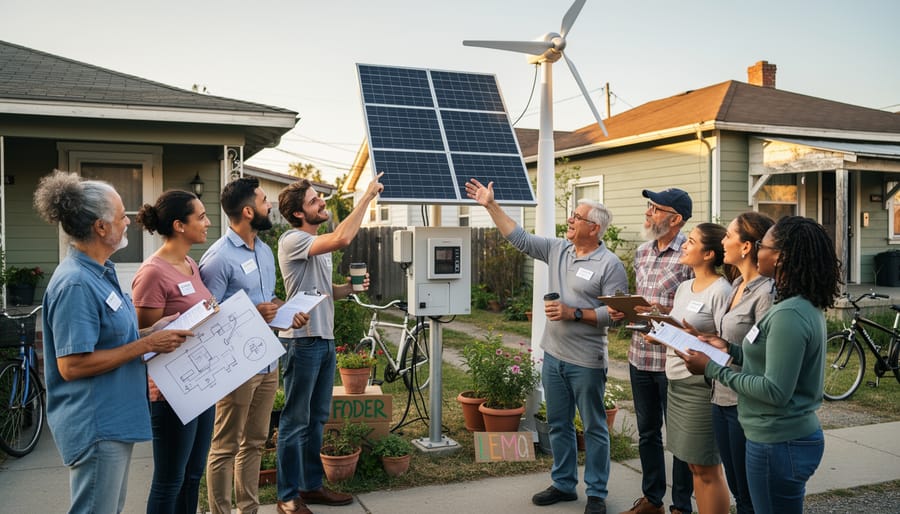
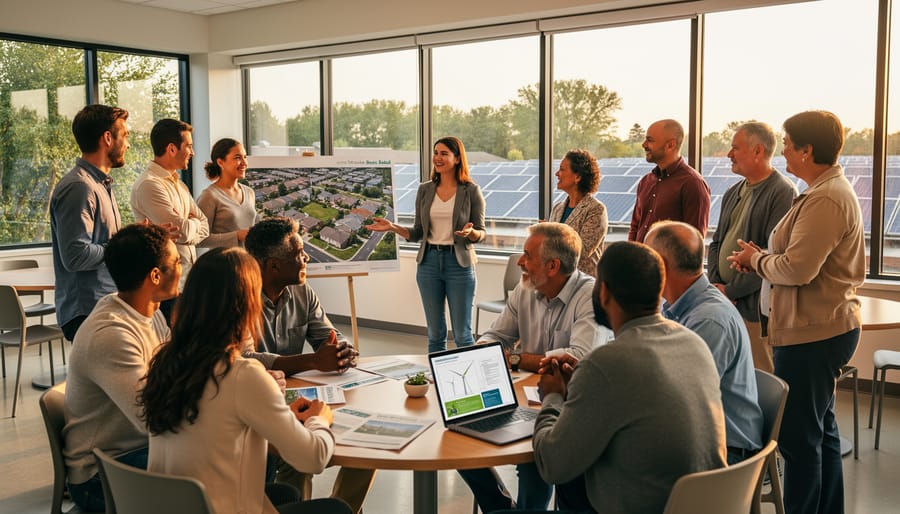
Diverse neighborhood residents gathering to discuss home energy efficiency and solar installation programs
Communities across the country are discovering that combining traditional chimney maintenance with modern clean energy upgrades creates comprehensive solutions for home energy efficiency.

Making Chimney Maintenance Affordable and Accessible

Energy efficiency shouldn’t be a privilege reserved for those who can afford it. Yet too many families face a difficult choice: pay for essential chimney maintenance or stretch an already tight budget even thinner. This barrier keeps households trapped in inefficient homes, paying more for heat that literally goes up the chimney while missing out on the health and safety benefits of proper maintenance.

The good news? Solutions exist that bridge this gap. Weatherization assistance programs across the country now include chimney repairs and cleaning as eligible expenses. The Low-Income Home Energy Assistance Program (LIHEAP) has helped thousands of families address chimney issues that compromise their home’s energy performance. These programs recognize what energy justice advocates have long argued: home maintenance directly affects energy costs, and everyone deserves access to safe, efficient heating.

Maintenance Task Professional Cost DIY Feasible? Assistance Available
Annual Inspection $125-$250 Partial LIHEAP, local grants
Chimney Cleaning $200-$400 Yes, with training Weatherization programs
Damper Repair $150-$350 Sometimes State energy offices
Masonry Repair $500-$2,500 No Emergency repair funds

Community-led initiatives are changing the landscape too. In Vermont, a neighborhood collective negotiated bulk rates with certified chimney sweeps, cutting costs by 40% for participating households. Similar programs in Oregon and Maine demonstrate how organizing collectively creates buying power that individuals lack alone.

For those comfortable with hands-on work, DIY options offer significant savings. Basic chimney cleaning can be learned through community workshops or online resources, though safety training is essential. Some tasks absolutely require professionals, but homeowners can handle visual inspections, damper operation checks, and minor weatherproofing.

Local libraries and community centers increasingly host skill-sharing sessions where neighbors teach each other home maintenance basics. These gatherings build both knowledge and community resilience. They prove that when we share resources and expertise, we create pathways for everyone to participate in the clean energy transition, one chimney at a time.

Your Next Steps: Integrating Chimney Care Into Your Clean Energy Journey

You’ve learned how chimney maintenance protects your clean energy investment and keeps your home efficient. Now it’s time to turn knowledge into action.

Start with a simple assessment. Walk around your home and look for visible signs that your chimney needs attention: crumbling mortar, white staining on bricks, or rust on the damper. Check inside for creosote buildup or debris. If you haven’t had a professional inspection in the past year, schedule one now. Many communities offer chimney safety programs through fire departments or energy efficiency initiatives that provide inspections at reduced costs or even free.

Prioritize your maintenance tasks based on safety first, then energy efficiency. A damaged chimney cap or cracked flue liner poses immediate risks. Once safety issues are resolved, focus on air sealing and insulation improvements that complement your other energy upgrades. Think of your chimney maintenance as part of the same investment strategy as your solar panels or heat pump.

Connect with local resources to make this work affordable and effective. Your town’s energy committee, weatherization assistance program, or environmental coalition can point you toward qualified professionals and available rebates. Some areas have launched neighborhood chimney maintenance cooperatives where residents schedule group inspections to negotiate better rates.

The Springfield Energy Alliance in Massachusetts created exactly this kind of program. After organizing collective chimney services for 47 households, participants saved an average of $340 annually on heating costs while preventing two house fires. They didn’t stop there. Neighbors shared what they learned at community meetings, inspiring adjacent towns to launch similar initiatives.

Talk to your neighbors about what you’re doing. Share your inspection reports, recommend reliable contractors, and discuss how chimney care fits into your broader clean energy plans. When enough households prioritize this overlooked piece of home efficiency, utility bills drop across entire neighborhoods.

Consider advocating for municipal chimney maintenance programs alongside solar incentives and weatherization funding. Energy efficiency gains momentum when communities tackle it together, ensuring everyone benefits from the clean energy transition.

Solar panels on a UK community centre roof beside a housing estate, with people in the foreground symbolizing community investment in renewable energy.

How UK Property Buyers Are Building Solar Equity in Their Communities

Leverage your property investment to accelerate solar access for low-income communities while building portfolio value. Property Saviour and similar initiatives connect property equity with renewable energy projects that deliver measurable social impact alongside financial returns.

Transform unused equity in your UK property into community solar investments that reduce energy poverty. Instead of letting capital sit idle, property owners are redirecting £20,000 to £150,000 from remortgaging or equity release into solar equity programmes that install panels on social housing estates, schools in underserved areas, and community centres. These programmes typically offer 4-6% annual returns while slashing electricity bills for families struggling with fuel poverty.

Partner with established community energy cooperatives that structure solar equity investments as loan notes or shares. These proven models allow property buyers to commit funds for 10-20 year terms, receiving regular interest payments while their capital finances solar installations on properties owned by housing associations and local councils. The panels generate clean power for decades, cutting carbon emissions and energy costs for the very households most vulnerable to rising utility prices.

Right now, over 200 community energy groups across Britain need capital to expand solar access. Property owners sitting on £500 billion in untapped equity represent an enormous opportunity to close this funding gap. When you connect your property wealth to these programmes, you join a growing movement of investors who refuse to choose between financial security and climate action.

The mechanics are straightforward but the impact runs deep. Every pound redirected from property equity into community solar removes barriers that have kept clean energy out of reach for working families. This isn’t charity. It’s strategic investment that recognizes environmental justice and portfolio diversity as complementary goals, not competing priorities.

What Solar Equity Programs Mean for Property Buyers

Solar equity programs represent a fundamental shift from thinking about solar power as something you install on your own roof to viewing it as a shared community resource. Unlike traditional solar installations where property owners generate power solely for their own use, solar equity programs pool resources and distribute benefits across entire neighborhoods, particularly reaching households that have historically been locked out of the clean energy transition.

At their core, these programs address a simple injustice: the families most burdened by high energy costs are often the least able to access solar power. Renters can’t install panels on properties they don’t own. Low-income homeowners may lack the credit score or upfront capital traditional solar companies require. Social housing residents face systemic barriers even when their roofs are ideal for solar generation.

Solar equity
The principle that clean energy benefits and opportunities should be accessible to all community members, regardless of income, housing status, or property ownership.
Community solar
Shared solar installations where multiple participants collectively benefit from a single solar array, typically located on a community building, unused land, or social housing.
Energy burden
The percentage of household income spent on energy bills, which disproportionately affects low-income families who may spend 10% or more of their earnings on electricity and heating.
Shared renewable energy
Models that allow property buyers to invest in or support solar installations that serve multiple households, spreading both costs and benefits across a wider community.

Property buyers enter this equation as potential catalysts. When you participate in a solar equity program, your investment or property becomes part of a larger system designed to lower energy costs for families struggling with fuel poverty while accelerating renewable energy deployment. You might invest in community shares that fund solar panels on a housing association block, or partner with a local cooperative to develop solar capacity that directly reduces energy bills for nearby low-income households.

The distinction matters because it transforms solar from an individual consumer decision into collective climate action with measurable social outcomes. You’re not just generating clean kilowatt-hours; you’re redistributing access to affordable energy and building community resilience against both climate change and economic hardship.

Rooftop solar panels installed on a house in the UK
A UK home featuring rooftop solar panels highlights how property owners can directly support cleaner electricity generation.

The UK’s Growing Solar Equity Movement

Community Energy Cooperatives Leading the Way

Across Britain, property buyers are joining forces through community energy cooperatives that prove renewable power can belong to everyone. In Brighton, the Brighton & Hove Energy Services Cooperative turned its members’ investments into rooftop solar arrays across local schools, delivering clean electricity directly to classrooms whilst paying dividends back to those who funded the panels. Similarly, Plymouth Energy Community has installed community-owned wind and solar across seventeen sites, transforming initial capital from homeowners into lasting energy assets that serve thousands.

These cooperatives work through a straightforward model: property buyers purchase shares, typically ranging from £50 to £10,000, which finance solar installations on community buildings, social housing estates, or commercial rooftops. The generated electricity either supplies the host building at reduced rates or feeds into the grid, creating revenue that returns to members whilst slashing carbon emissions. In Bristol, Mongoose Energy attracted over 150 local investors who collectively funded four solar farms, demonstrating how regional property wealth can mobilize significant renewable capacity.

What sets these initiatives apart is genuine local control. Members vote on project selection, review financial performance annually, and watch their investments power the places they live. A homeowner in Leeds invested £2,000 in their cooperative five years ago; she now receives steady returns whilst knowing her capital installed panels that cut fuel poverty for her neighbours.

Social Housing and Solar: Breaking Down Barriers

Social housing residents face disproportionate energy poverty, spending higher percentages of income on heating and electricity while living in less efficient homes. Solar installations on social housing estates offer a powerful solution, but upfront capital remains a persistent barrier for housing associations operating on tight budgets.

Innovative programs are now bridging this gap by connecting private property buyers with social housing solar projects. In Leeds, the Solar for Social Housing initiative enables local property investors to fund panel installations on council estates through a community investment fund. Residents benefit from reduced electricity bills, while investors receive steady returns indexed to energy savings. Over three years, the program has installed solar on 400 social housing units, cutting tenant energy costs by an average of £340 annually.

Brighton’s Community Energy Plus takes a different approach. Property buyers can purchase solar bonds specifically designated for installations on housing association properties serving low-income families. The bonds generate 4% annual returns while guaranteeing that 100% of the energy savings go directly to residents. This model has attracted over 200 local property owners, demonstrating how private capital can address energy injustice without extracting value from vulnerable communities.

These programs prove that social housing solar need not depend solely on public funding. When structured with community benefit at the centre, private property buyers become partners in expanding renewable access where it matters most.

How Property Buyers Can Participate in Solar Equity Programs

Investment Models That Work

UK property buyers have multiple accessible pathways to invest in solar equity programs, each designed to match different financial capacities and involvement preferences.

Community share offers represent the most direct form of participation. These schemes allow buyers to purchase shares in community-owned solar installations, typically starting from £50 to £500 per share. Returns usually range between 3% and 5% annually, with the added benefit of knowing your investment directly funds solar panels on local community buildings, schools, or social housing. Brighton Energy Co-operative and Energy4All demonstrate this model successfully, with property buyers forming a substantial portion of their investor base.

Solar bonds provide another route, offering fixed-term investments with predictable returns. These bonds fund specific solar projects and typically mature between three and seven years. They appeal to property buyers seeking straightforward investment terms without ongoing governance responsibilities. The Brighton & Hove Energy Services Co-op has issued bonds that raised over £3 million for local renewable projects.

Cooperative membership combines investment with active participation. Property buyers become part-owners in energy cooperatives, gaining voting rights on project decisions while contributing capital. Annual membership fees remain modest, often between £1 and £20, with additional share purchases funding solar installations. This model creates genuine community ownership rather than passive investment.

Each structure prioritizes accessibility, ensuring property buyers at various financial levels can contribute meaningfully to expanding solar access while receiving fair returns. The key difference lies in the balance between financial return and community engagement each buyer seeks.

People meeting outdoors near a shared solar installation on a community building
Community members gather around a shared solar installation, reflecting how collective ownership can broaden clean energy benefits.

Partnership Opportunities with Local Organizations

Property buyers looking to make a real difference don’t need to navigate solar equity alone. Across the UK, a growing network of organizations stands ready to facilitate meaningful partnerships that connect property ownership with community energy access.

Environmental justice groups like Friends of the Earth’s local networks offer established frameworks for property buyers to channel investment into neighborhoods facing energy poverty. These organizations have spent years building trust in underserved communities and understand precisely where solar infrastructure can deliver the greatest impact. They coordinate between willing investors and recipient communities, ensuring projects genuinely serve local needs rather than imposing solutions from outside.

Community development trusts present another powerful partnership avenue. These locally-rooted organizations manage assets for community benefit and often seek property buyer involvement in solar schemes that reduce energy costs for community facilities, youth centers, and elder care homes. The partnership model typically involves property buyers providing capital or securing their property as collateral while the trust handles project management and community engagement.

Local authorities increasingly welcome property buyer collaboration, particularly through council-backed community energy schemes. Many councils maintain registers of properties suitable for solar installation and can connect buyers with funding mechanisms like the UK Community Energy Fund. Some forward-thinking authorities have created dedicated solar equity liaison roles to smooth partnerships between private investors and social housing providers.

The key across all partnerships is reciprocity. Property buyers bring financial resources and stability; community organizations contribute local knowledge, established relationships, and project management expertise. Together, they create solar equity programs that neither could achieve alone.

Solar panels installed on a social housing building roof in the UK
Solar panels on social housing demonstrate how shared renewable energy can help reduce energy costs for residents.

Real Stories: Property Buyers Making a Difference

When Sarah Mitchell purchased her two-bedroom flat in Bristol in 2019, she never imagined her property investment would help power a community center in one of the city’s most underserved neighborhoods. Through Bath & West Community Energy, Sarah invested £2,000 in community solar shares alongside her mortgage payments. Three years later, the 250kW installation on a local youth center has cut energy bills by 60%, and Sarah receives a 4% annual return while watching the facility expand its after-school programs.

The impact extends beyond numbers. Sarah volunteers at the center quarterly, connecting with families who benefit directly from the reduced operating costs that freed up funding for educational programs. “I wanted my property wealth to mean something beyond personal gain,” she explains. “Seeing kids access programs that wouldn’t exist without affordable energy makes every pound feel purposeful.”

In Leeds, retired teacher James Okonkwo took a different path. After selling his family home and downsizing in 2021, James partnered with Leeds Community Homes to finance solar installations on three social housing blocks. His £15,000 investment through a cooperative bond scheme now provides renewable electricity to 47 households, cutting their energy costs by an average of £380 annually.

James meets quarterly with residents who share how the savings transformed their lives, one single mother afforded her daughter’s school uniform, another elderly couple could finally heat their home adequately through winter. The financial return matters less to James than the relationships formed. “Property gave me security. This gives me purpose,” he says.

Further north in Glasgow, first-time buyers Aisha and Tom Chen joined the Clyde Valley Community Energy cooperative immediately after purchasing their starter home. Contributing £500 initially and £50 monthly, they’re part-owners of solar arrays across community buildings in Possilpark, an area with significant fuel poverty. Their involvement sparked a neighborhood-wide conversation about energy justice.

The couple now hosts informational sessions for other young buyers, demystifying solar equity participation. “We thought solar programs were only for people with detached houses and big gardens,” Aisha shares. “Learning we could contribute meaningfully as flat owners changed everything about how we see our role in the community.”

These stories reveal a pattern: property buyers discovering that wealth can build bridges, that investment can foster belonging, and that individual action creates collective transformation. They’re not exceptional people, they’re ordinary property owners who recognized an opportunity to align their assets with their values.

Financial and Social Returns for Participating Property Buyers

Property buyers entering solar equity programs discover returns that extend far beyond conventional investments. The financial dimension presents genuine opportunities: community solar bonds typically yield 3-5% annual returns over 15-20 year periods, outperforming many traditional savings vehicles while supporting tangible infrastructure. Unlike volatile stock portfolios, these investments anchor to physical assets generating predictable income streams through feed-in tariffs and power purchase agreements.

Properties near community solar installations often see enhanced appeal among environmentally conscious buyers, though quantifying exact value increases remains challenging given the UK market’s complexity. More immediate financial benefits emerge through energy bill reductions when programs include local tariff arrangements, plus potential tax reliefs as community energy policies evolve. Some cooperative models allow members to earn returns through shared ownership structures that distribute surplus revenue annually.

Pros

  • Stable 3-5% returns over 15-20 years with lower volatility than equity markets
  • Tangible local impact you can visit and measure in your own community
  • Portfolio diversification into ethical infrastructure with predictable income streams
  • Enhanced reputation and network connections through community leadership
Cons

  • Capital typically locked in for long periods with limited early withdrawal options
  • Returns modest compared to higher-risk investment vehicles
  • Requires active engagement and time commitment for meaningful participation
  • Policy changes could affect feed-in tariff rates and overall returns

Yet the social returns often prove more compelling for participants. Contributing to an energy-saving holistic approach transforms abstract climate concern into measurable action, with each installation displacing thousands of tonnes of carbon annually. Property buyers report profound satisfaction watching vulnerable households gain energy security through their investment, directly witnessing reduced fuel poverty in their postcodes.

Community resilience strengthens as local energy generation reduces grid dependency and keeps energy spending circulating within regional economies rather than flowing to distant corporations. Participating property buyers gain standing as environmental leaders, opening doors to networks of change-makers, local government consultation opportunities, and meaningful civic engagement that enriches their connection to place. These intangible returns accumulate daily, creating legacy impact that transcends balance sheets while still delivering respectable financial performance.

Overcoming Barriers: What Needs to Change

Despite growing interest, UK property buyers face real challenges when trying to participate in solar equity programs. Understanding these barriers, and the emerging solutions, helps us chart a path forward.

Policy frameworks remain fragmented. The UK lacks comprehensive low-wealth solar policy that explicitly connects property ownership to community benefit schemes. Planning regulations often treat community solar differently across local authorities, creating confusion for potential participants. The Feed-in Tariff closure in 2019 removed a key financial incentive, though the Smart Export Guarantee offers some replacement. What we need: coordinated national guidance that recognizes property buyers as community energy stakeholders, with clear pathways for participation alongside standardized legal frameworks for solar equity investments.

Financing presents another hurdle. Traditional mortgage products don’t account for community solar investments, and many property buyers remain unaware that community shares or solar bonds exist as investment vehicles. Banks and building societies rarely promote these options during property transactions. Community energy groups themselves often struggle with capital requirements for larger projects. The gap shows: targeted financial products designed for property buyers wanting to support solar equity, plus mainstream lender education about community renewable investments as viable options.

Awareness stands as perhaps the biggest barrier. Most UK property buyers simply don’t know solar equity programs exist or how their property ownership could catalyze clean energy access for others. Estate agents and conveyancers rarely mention community energy opportunities. This information gap perpetuates itself, people can’t advocate for what they don’t know about.

Progress emerges through advocacy. Community energy organizations are pushing for improved renewable energy legislation that centers equity. Local councils in Bristol, Brighton, and Edinburgh have pioneered policies supporting community solar partnerships. Property buyer networks now share information about participation pathways, building momentum from the ground up. Each voice advocating for clearer policy, better financing, and broader awareness moves us closer to systemic change.

A homeowner standing indoors near a window with rooftop solar panels visible outside
A homeowner in everyday life looks out toward a solar-powered home, capturing the personal connection between property ownership and community clean energy.

Taking Action: Your Next Steps Toward Solar Equity

Your journey toward solar equity starts with a single conversation. Here’s how to move from interest to impact in your community.

  1. Research local community energy organizations in your area. Contact groups like Community Energy England or your regional energy cooperative to learn about existing solar equity projects seeking property buyer involvement.
  2. Attend a community energy meeting or webinar. These gatherings connect you with experienced participants, clarify investment models, and reveal immediate opportunities in your region.
  3. Calculate your potential contribution. Determine how much capital you can direct toward solar equity, whether through community shares starting at £100 or larger cooperative investments.
  4. Connect with your local council’s renewable energy team. Many authorities actively seek private sector partners for social housing solar projects and can outline specific partnership pathways.
  5. Join a solar equity advocacy network. Organizations working toward recognition through initiatives like the solar justice award often welcome new members who bring property ownership perspectives and resources.
  6. Commit to a pilot project. Start with one meaningful investment or partnership, learn from the experience, and expand your involvement as you witness the community transformation firsthand.

The organizations you connect with today become your partners in building energy justice tomorrow. Document your journey, share learnings with fellow property buyers, and advocate for policy changes that make solar equity participation easier for those who follow. Your property ownership represents more than personal wealth; it’s potential energy for community empowerment. The solar equity movement needs your capital, your influence, and your commitment to ensure clean energy reaches everyone, not just those who can install panels on their own roofs.

The future of clean energy in the UK doesn’t rest solely with governments or corporations, it lives in the choices ordinary property buyers make today. When you invest in solar equity programs, you’re not just adding renewable capacity to the grid. You’re dismantling the barriers that have kept clean energy as a privilege rather than a right.

Every property buyer who joins a community energy cooperative, funds social housing solar installations, or advocates for public participation in clean energy policy becomes a catalyst for systemic change. These individual actions accumulate into something far greater: communities where energy costs don’t force impossible choices, where local ownership builds resilience, and where the benefits of the renewable transition reach those who need them most.

The path forward is clear and within reach. Across the UK, property buyers are proving that homeownership can be a tool for justice rather than inequality. They’re showing that financial returns and social impact aren’t opposing forces, they strengthen each other.

The solar equity movement needs your voice, your investment, and your vision. The communities around you need partners in building a cleaner, fairer energy future. Start small if you must, but start today. The equitable, community-owned renewable energy landscape we need won’t build itself, it requires property buyers willing to see their investments as bridges to collective prosperity.

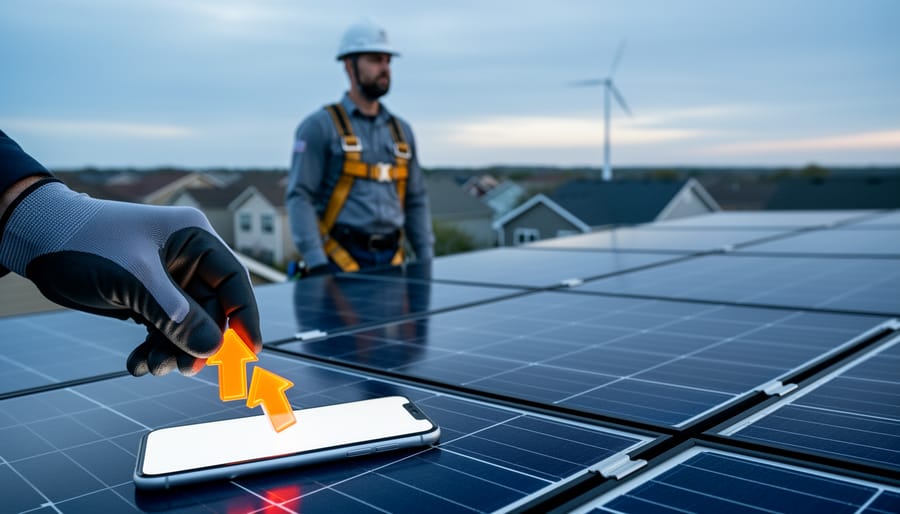
Eye-level photo of a rooftop solar installer beside blue panels while a gloved hand in the foreground drops glossy orange arrow-shaped tokens onto a blank smartphone screen, with blurred neighborhood roofs and a distant wind turbine in soft late-afternoon light.

Why Buying Reddit Upvotes Could Sabotage Your Clean Energy Mission

Clean energy advocacy faces a visibility crisis on social media platforms where algorithms favor engagement over impact. Some advocates, desperate for their climate solutions to reach wider audiences, consider shortcuts like the option to buy reddit upvotes to artificially boost their message. This practice promises instant visibility but undermines the very foundation of trust and authenticity that environmental movements require to create lasting change.

The temptation is understandable. Climate urgency demands immediate action, and watching vital information about renewable energy solutions languish in obscurity while misinformation trends can feel devastating. Yet purchasing upvotes creates a hollow façade that crumbles under scrutiny, potentially damaging your credibility precisely when environmental advocates need public trust most. Communities built on manufactured engagement lack the resilience required for long-term advocacy work.

Real impact comes from genuine connection. Across the country, grassroots clean energy campaigns are proving that authentic engagement drives policy change and community adoption of renewable solutions. When solar cooperative organizers in rural communities share their stories honestly, when wind energy advocates respond thoughtfully to concerns, and when environmental justice groups build relationships through consistent, transparent communication, they create movements that endure beyond a single viral moment.

This article explores why authentic Reddit engagement serves clean energy advocacy far better than purchased votes, offering proven strategies that align visibility with integrity while building the community power necessary for meaningful climate action.

The Promise and Peril of Reddit for Clean Energy Advocates

How Reddit’s Community Structure Amplifies Authentic Voices

Reddit’s unique community structure offers powerful opportunities for clean energy advocates to connect with audiences who genuinely care about our planet’s future. Unlike traditional social media platforms where algorithms prioritize paid content, Reddit’s upvote system creates a democratic space where authentic voices can rise through community validation.

At its heart, Reddit operates through subreddits—specialized communities organized around shared interests. Climate-focused communities like r/ClimateAction, r/RenewableEnergy, and r/environment bring together hundreds of thousands of environmentally conscious users actively seeking meaningful discussions and solutions. When community members upvote content, they signal its value to others who share their concerns, creating organic visibility that money simply cannot manufacture.

What makes this system particularly powerful for clean energy advocacy is its built-in authenticity detector. Reddit users pride themselves on spotting and rejecting manipulative tactics. They’ve developed a collective wisdom that distinguishes between genuine passion and manufactured hype. This means when your community shares real success stories—like a neighborhood solar cooperative reducing energy costs by 40 percent, or a grassroots campaign that convinced local policymakers to invest in wind infrastructure—fellow Redditors recognize and amplify that authenticity.

The voting system rewards content that educates, inspires, and invites collaboration rather than preaches or sells. When advocates share transparent information about clean energy challenges and victories, they tap into a community hungry for both hope and honest dialogue. This creates opportunities for meaningful connections that extend far beyond a single post, building networks of engaged supporters who become active participants in the clean energy transition.

Success Stories: When Clean Energy Advocacy Goes Viral Organically

Real change happens when authentic voices unite around shared values. Across Reddit’s diverse communities, community solar projects and climate initiatives have gained momentum not through manipulation, but through genuine storytelling that resonates.

In 2022, a grassroots organizer shared their neighborhood’s journey installing community solar panels in a historically underserved area. Posted in r/solar and r/ClimateActionPlan, the detailed account included budget breakdowns, policy obstacles overcome, and testimonials from elderly residents seeing reduced energy bills. The post organically reached thousands, sparking conversations that led to three neighboring communities replicating the model. What made it spread? Transparency, practical information, and celebration of collective achievement rather than individual glory.

Another powerful example emerged when residents fighting a proposed natural gas plant in a low-income community documented their organizing efforts across multiple subreddits. Their posts included meeting photos, petition milestones, and connections to broader environmental advocacy campaigns. Redditors from entirely different regions offered strategic advice, connected them with legal resources, and amplified their story through cross-posting. Within months, the campaign secured regulatory review and national media attention. The key was vulnerability and specificity showing real people defending their health and future.

These stories demonstrate something purchase-based engagement cannot replicate: trust built through consistent, honest dialogue. When advocates share both struggles and victories, acknowledge setbacks alongside progress, and invite collaboration rather than passive consumption, communities respond. The upvotes that followed weren’t manufactured metrics but reflections of genuine human connection around our shared stake in a livable planet.

Diverse community members gathered around solar panel installation discussing clean energy project
Community-driven clean energy projects thrive on authentic grassroots engagement and trust-building, not artificial amplification tactics.

What Happens When You Buy Reddit Upvotes

The Mechanics Behind Purchased Engagement

Understanding how purchased engagement works helps advocates make informed decisions about their outreach strategies. When individuals or organizations buy Reddit upvotes, they typically engage with services that deploy bot networks or coordinated groups of fake accounts. These services promise quick visibility boosts by artificially inflating post scores within minutes or hours.

The mechanics are straightforward but problematic. Upvote vendors maintain databases of automated accounts or employ low-wage workers to manually click upvote buttons across multiple posts. Some services use sophisticated algorithms to stagger votes, attempting to mimic organic engagement patterns and avoid Reddit’s detection systems. Prices vary based on quantity, with packages ranging from dozens to thousands of upvotes.

However, Reddit’s algorithms have grown increasingly sophisticated at identifying unnatural voting patterns. The platform regularly purges fake accounts and can shadow-ban content that shows suspicious engagement spikes. For clean energy advocates who rely on building genuine community trust, these artificial methods fundamentally contradict the collaborative, transparent values that drive meaningful environmental progress. When your mission centers on creating authentic connections and inspiring collective action, purchased engagement undermines the very foundation of credibility your advocacy requires.

Reddit’s Detection Systems and Community Vigilance

Reddit’s community thrives on authenticity, and the platform has developed sophisticated systems to protect that integrity. Understanding these detection mechanisms reveals why purchasing upvotes ultimately undermines rather than advances clean energy advocacy.

Reddit employs complex algorithms that analyze voting patterns, account behavior, and engagement metrics. The platform can identify coordinated voting from similar IP addresses, sudden vote surges on new posts, and accounts created specifically for manipulation. When detected, Reddit implements shadowbanning, where your content remains invisible to others while appearing normal to you. This creates a false sense of engagement while your message reaches no one.

Account suspension represents the more severe consequence, removing your voice entirely from conversations where it matters most. For clean energy advocates who have invested time building community connections and sharing valuable resources, losing an established account means starting over and losing trust.

Beyond automated systems, Reddit’s community members have become remarkably adept at spotting inauthentic content. Experienced Redditors notice when posts have high upvote counts but minimal genuine discussion, when engagement feels scripted rather than spontaneous, or when accounts suddenly promote specific agendas without community participation history. These savvy users often call out suspicious activity publicly, damaging credibility far beyond the individual post.

This community vigilance reflects Reddit’s greatest strength: users genuinely care about maintaining authentic spaces. When clean energy advocates earn upvotes through compelling stories, answering questions thoughtfully, and contributing consistently, that organic growth builds lasting influence. Communities rally behind voices they trust, creating momentum that purchased engagement can never replicate.

The Trust Crisis: Why Shortcuts Undermine Environmental Justice

Cracked foundation with small plant growing through damage symbolizing fragile trust
Trust and credibility form the foundation of environmental advocacy—once damaged by manipulation tactics, they’re difficult to rebuild.

Credibility Is Your Most Valuable Asset

The clean energy movement has achieved remarkable progress precisely because communities trust the science, the advocates, and the grassroots organizations leading the charge. When neighbors see solar panels transforming a local school or hear authentic stories about families reducing their carbon footprint, that trust becomes the foundation for broader change. Every wind farm, every community solar project, every electric vehicle charging station represents not just technology, but a promise that our collective action matters.

This credibility is painstakingly built through transparent communication, verifiable results, and genuine engagement with communities most affected by both climate change and energy transitions. Environmental justice advocates have spent decades earning trust in communities that have historically been overlooked or misled. When advocacy groups share information about clean energy solutions, people listen because that trust has been earned through consistent, honest dialogue.

Manipulating social media engagement, even with the best intentions, fundamentally undermines this foundation. When upvotes are purchased rather than earned, the appearance of grassroots support becomes a manufactured illusion. If discovered, the revelation doesn’t just damage one campaign—it casts doubt on the entire movement. Skeptics already question climate science and clean energy solutions; giving them evidence of deception, however small, provides ammunition to dismiss legitimate concerns.

The urgency of the climate crisis might make shortcuts tempting, but credibility cannot be rebuilt as quickly as it can be destroyed. Communities facing environmental challenges deserve authentic advocacy, not manufactured consensus. Your most powerful tool isn’t artificial engagement—it’s the trust you’ve cultivated through genuine commitment to environmental justice and community empowerment.

The Equity Contradiction in Paid Amplification

When clean energy advocates purchase Reddit upvotes, they inadvertently create a two-tiered system where message visibility depends on financial resources rather than community support or message quality. This practice fundamentally contradicts environmental justice principles that demand equitable access to participation in decisions affecting our shared future.

Consider the neighborhood solar cooperative in Detroit that organized for months to share rooftop solar success stories, competing against industry-funded campaigns with substantial marketing budgets. Their authentic community voice risked being drowned out not by better ideas, but by deeper pockets. When advocacy becomes transactional, we silence the very communities most impacted by energy decisions and climate change.

Grassroots organizations working in frontline communities already face resource constraints while fighting for clean energy access, job training programs, and reduced energy burdens. Requiring marketing budgets to achieve visibility adds another barrier, effectively pricing out community voices from digital conversations about their own futures.

This contradiction runs deeper than fairness. Environmental movements gain strength from diverse perspectives and lived experiences. When financial gatekeeping determines which stories reach wider audiences, we lose critical insights from those leading innovative local solutions. True clean energy transition requires amplifying community wisdom, not advantage for those who can afford algorithmic manipulation. Building authentic engagement may take longer, but it creates lasting connections that honor everyone’s right to participate in shaping our energy future.

Authentic Strategies That Actually Work for Clean Energy Advocacy

Tell Stories That Move People to Action

Real stories create emotional connection and drive meaningful engagement far more effectively than purchased upvotes ever could. When advocating for clean energy on Reddit, share narratives that illuminate the human impact of your work.

Focus on specific community members whose lives have improved through solar installations or energy efficiency programs. Describe the single mother who cut her electric bill by 40 percent through community solar access, freeing resources for her children’s education. Tell how elderly residents on fixed incomes found relief from energy burden, maintaining dignity and comfort in their homes.

Document the journey of neighborhoods transforming through clean energy transitions, including challenges overcome and lessons learned. Highlight local workers gaining new skills in renewable industries, building economic opportunity alongside environmental progress.

Use vivid details and authentic voices. Include photos, testimonials, and concrete outcomes like kilowatt-hours saved or carbon emissions reduced. These genuine stories resonate deeply with Reddit communities, earning organic upvotes through emotional authenticity rather than artificial manipulation.

When readers see real people thriving through clean energy access, they understand why this work matters urgently. They become advocates themselves, sharing your content widely and amplifying impact through trust rather than purchased visibility.

Build Genuine Relationships in Relevant Subreddits

Start by identifying subreddits where environmental conversations naturally thrive. Communities like r/environment, r/climatechange, r/solar, r/renewableenergy, and r/sustainability welcome thoughtful discussions about clean energy solutions. Before sharing your advocacy, spend weeks genuinely engaging with these communities. Comment on others’ posts with helpful insights, answer questions about renewable technologies, and celebrate community wins. This authentic participation builds trust and establishes you as a valued contributor rather than someone seeking quick visibility.

Share your personal clean energy story first. Perhaps you installed solar panels, organized a neighborhood charging station, or witnessed how offshore wind transformed your coastal town. These narratives resonate deeply and inspire action without feeling promotional. When community members recognize your consistent, valuable presence, they naturally support your advocacy efforts through organic upvotes and meaningful engagement.

Respect each subreddit’s unique guidelines carefully. Some communities prohibit self-promotion entirely, while others designate specific days for advocacy content. Violating these rules damages your credibility and undermines the broader clean energy movement. Instead, focus on adding genuine value through educational resources, answering technical questions accessibly, and amplifying others’ environmental justice initiatives. This collaborative approach creates lasting relationships that amplify your message far beyond what purchased upvotes could ever achieve, building a foundation for sustained community-driven change.

Environmental advocate authentically engaging with online community on laptop
Authentic engagement and thoughtful community participation build lasting support for clean energy advocacy far more effectively than purchased shortcuts.

Timing, Formatting, and Engagement Best Practices

Authentic engagement requires strategic timing and thoughtful content design. Research shows Reddit activity peaks during morning commutes and lunch hours (8-10 AM and noon-2 PM EST), when users actively browse their feeds. Weekend mornings also generate strong engagement as people catch up on community discussions.

Craft titles that spark curiosity while conveying clear value: “How our neighborhood cut energy costs 40% through community solar” performs better than generic headlines. Include specific numbers, local references, or compelling questions that invite participation.

Visual content dramatically increases engagement. Share infographics showing renewable energy growth, before-and-after photos of community projects, or short video testimonials from residents benefiting from clean energy initiatives. Authentic images from real projects resonate far more than stock photography.

Responding thoughtfully to every comment, even critical ones, demonstrates genuine commitment to dialogue. Acknowledge concerns, share additional resources, and ask follow-up questions that deepen conversation. This responsiveness signals you’re building community, not just broadcasting messages.

Foster meaningful discussion by ending posts with open questions: “What clean energy solutions have you seen work in your area?” or “What barriers does your community face in accessing renewable energy?” These invitations transform passive readers into active participants, generating organic upvotes through genuine connection rather than artificial manipulation.

Mobilize Your Existing Community Authentically

Your greatest asset isn’t purchased visibility—it’s the people already standing with you. When you’ve built authentic relationships around clean energy advocacy, mobilizing that community on Reddit becomes a natural extension of your work, not a manufactured campaign.

Start by creating genuinely valuable content worth sharing. When your organization publishes a comprehensive guide on community solar benefits or documents a local clean energy success story, share it directly with your email list and social media followers. Invite them—never demand—to engage if they find value in the conversation. The key is transparency: people appreciate knowing you’d welcome their authentic participation on platforms where these discussions happen.

Leverage coalition partnerships to amplify reach organically. When multiple organizations genuinely support a legislative initiative or community project, their combined networks create natural momentum. Coordinate messaging so partners can share content through their own authentic voices rather than orchestrating artificial campaigns.

Most importantly, make participation effortless. Create shareable infographics, compelling testimonials, and clear talking points. When community members understand the issues and feel equipped to contribute meaningfully, they become passionate advocates who engage because they believe—not because they were asked. This organic enthusiasm builds sustainable momentum that purchased upvotes never could, creating lasting change rooted in genuine community support.

When Visibility Feels Urgent: Balancing Speed with Integrity

We understand the weight you carry. Climate science tells us we’re racing against time, and every day without meaningful action feels like ground lost. When your message about renewable energy solutions or climate justice sits at three upvotes while misinformation trends, the temptation to buy visibility becomes very real. This urgency isn’t manufactured anxiety, it’s a rational response to an existential challenge.

But here’s what we’ve learned from successful movements: shortcuts that compromise trust ultimately slow us down. The renewable energy transition isn’t a single viral moment, it’s a sustained effort requiring millions of people to believe in and act on this future together. When communities discover their advocates used artificial engagement, that breach of trust doesn’t just affect one post, it undermines years of relationship building.

Consider the example of grassroots solar cooperatives that spent months building authentic Reddit communities. Their growth seemed painfully slow at first, genuine conversations, answering questions individually, sharing transparent data about installation costs and energy savings. Within eighteen months, these patient efforts created self-sustaining communities where members became advocates themselves, recruiting neighbors and defending clean energy policies in their own voices. That’s exponential impact no purchased upvote count can manufacture.

The climate crisis demands speed, yes, but it demands the right kind of speed. Rapid scaling built on authentic relationships, trusted voices multiplying your message, and communities mobilized through genuine connection. These foundations take time to establish, but once built, they move mountains. Purchased engagement offers the illusion of progress while potentially damaging the very trust networks we need most. Choose the harder path that builds lasting power.

The path forward for clean energy advocacy mirrors the very transition we champion: it must be rooted in transparency, equity, and genuine community collaboration. Just as we cannot build a sustainable energy future on extractive practices that harm communities, we cannot build lasting advocacy movements on manufactured engagement that undermines trust.

When you purchase upvotes, you’re investing in an illusion of support rather than the real thing. Authentic engagement takes longer to build, but it creates something far more powerful: a community of people who truly care about clean energy solutions, who will show up not just to click an arrow but to attend town halls, contact representatives, and make changes in their own lives. These are the allies who will sustain the movement through setbacks and celebrate genuine victories together.

Consider the climate advocates who have built thriving Reddit communities through patient storytelling, thoughtful responses to questions, and consistent sharing of actionable information. Their influence extends far beyond upvote counts because they’ve earned credibility through transparency and demonstrated their commitment to the communities they serve.

The clean energy transition is fundamentally about building a better future for everyone, especially those most impacted by environmental injustice. Our advocacy tactics must reflect these values. Choose genuine connection over shortcuts. Invest your resources in creating content worth sharing, listening to community concerns, and amplifying voices that have been historically marginalized. This is how we create the collective power necessary for systemic change. The planet and our communities deserve nothing less than our authentic commitment.