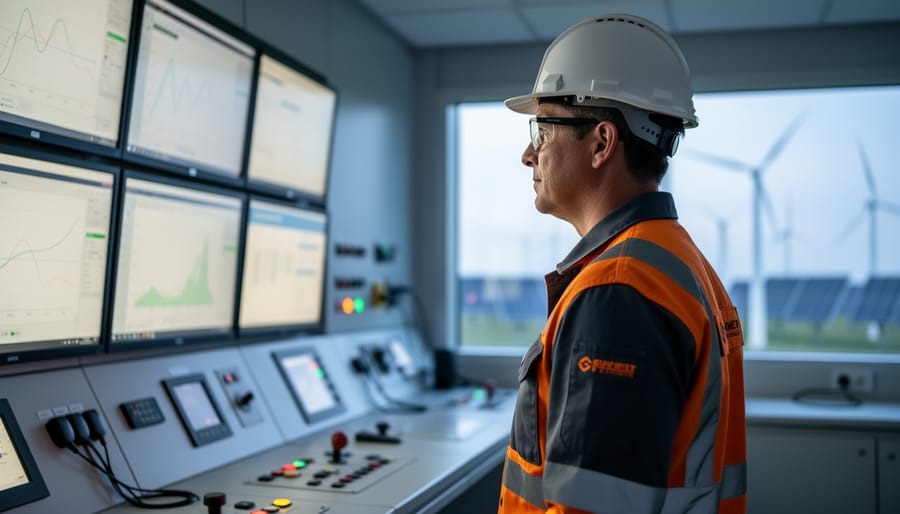
A clean energy plant operator in FR workwear and a hard hat monitoring equipment from inside a modern control room with large screens.

How to Launch a Clean Energy Plant Operator Career and What Skilled Operators Earn

Skilled power plant operators in the clean energy sector earn a national median of $97,010 annually, with experienced operators at top-performing facilities bringing home more than $123,000 per year. These are not abstract promises or distant career possibilities. Right now, operators are running solar thermal plants, biomass facilities, and next-generation geothermal stations while drawing steady paychecks that support families and anchor communities across the country.

The pathway into these positions starts with technical training or an apprenticeship, typically lasting one to three years, followed by hands-on experience and state or regional licensing. Many operators begin as auxiliary equipment operators or shift technicians before advancing to full control room responsibilities. While the role demands precision and calm under pressure, it does not require a four-year degree. Instead, employers value mechanical aptitude, problem-solving skills, and a commitment to safety protocols.

Key Takeaway: Clean energy plant operators earn a median of $97,010 annually as of May 2023, enter the field through apprenticeship or technical programs, and play a frontline role in delivering reliable renewable power to communities navigating the energy transition.

This career matters beyond the paycheck. Operators are the people who keep the lights on when wind farms ramp up at dawn, when solar arrays peak at midday, and when biomass plants provide dispatchable power during evening demand. They monitor thousands of data points, adjust output to match grid needs, and respond to equipment alarms before small problems become outages. In communities transitioning away from fossil fuels, these workers represent economic continuity, the chance to build local expertise in technologies that will define the next generation of energy infrastructure. For those exploring clean energy careers, this breakdown of 4th class pay offers additional context on entry-level earnings in power engineering roles across different licensing frameworks.

What Clean Energy Plant Operators Do and Why They Matter
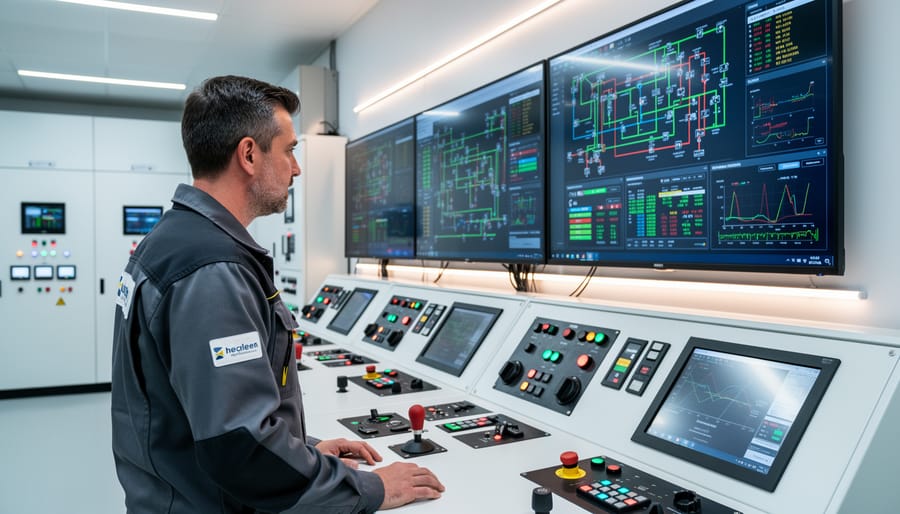
Power plant operator in a clean energy control room monitoring equipment at a console
A trained plant operator monitors power system controls inside a clean energy facility control room.

The Changing Grid: From Fossil Fuels to Renewables

The American power grid is undergoing its most dramatic transformation in over a century, and operators who run the control systems that generate power are at the center of this shift. Large coal and natural gas plants that once dominated our electricity supply are giving way to distributed solar farms, wind installations, and battery storage facilities. This isn’t just a change in fuel source. It’s a fundamental redesign of how we generate and distribute energy across communities.

For plant operators, this transition creates unprecedented opportunity. The skills that powered yesterday’s grid, understanding electrical systems, monitoring equipment performance, responding to demand fluctuations, remain essential. But the work now carries different meaning. Operators moving into clean energy roles become architects of a healthier future, supporting initiatives like community choice power programs that give local communities control over their energy sources. Modern facilities integrate renewable generation with an energy saving approach that prioritizes efficiency alongside production, requiring operators who understand both traditional grid management and emerging clean technologies. Workers entering the field today will spend their careers building the infrastructure that makes a 100% clean energy future possible.

What You Need to Start: Skills, Education, and Personal Qualities
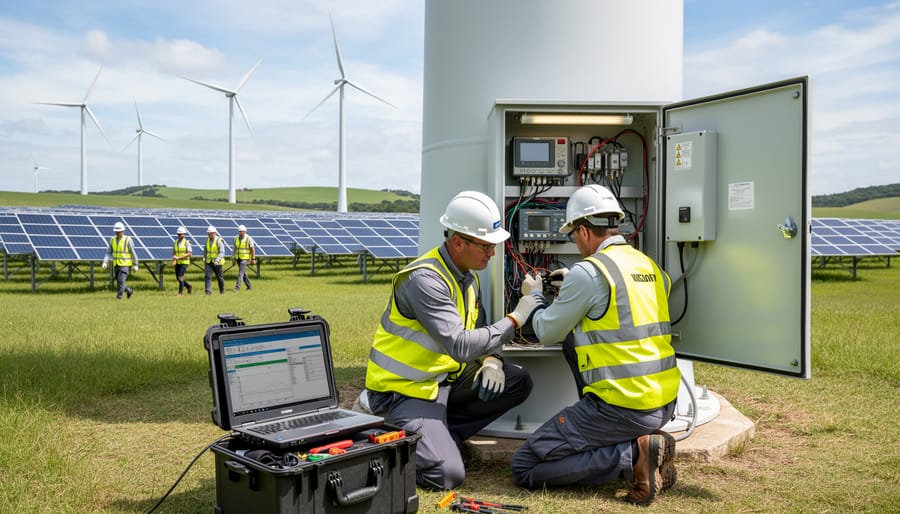
Wind turbine technician inspecting equipment at the base of a wind turbine under an overcast sky
The image highlights the hands-on field work that skilled operators and technicians perform to keep renewable energy assets running safely.

You don’t need a four-year degree to start a career as a clean energy plant operator, but you do need the right foundation. Most employers require a high school diploma or equivalent, along with coursework in math and science, particularly algebra, physics, and chemistry. These subjects give you the tools to understand electricity, thermodynamics, and the mechanical systems you’ll work with every day. Technical courses in electronics, mechanics, or industrial technology strengthen your application and prepare you for the problem-solving you’ll do on the job.

Beyond formal education, successful plant operators share certain core qualities and competencies:

  • High school diploma or equivalent, with strong performance in math and science
  • Mechanical and electrical aptitude, comfort working with tools, machinery, and control systems
  • Problem-solving skills and the ability to diagnose issues under pressure
  • Attention to detail and a methodical approach to monitoring complex systems
  • Willingness to work rotating shifts, including nights, weekends, and holidays
  • Deep commitment to safety protocols and the discipline to follow procedures without exception

The mental qualities matter as much as the technical ones. Plant operators need calm under pressure because equipment failures and grid emergencies don’t wait for convenient hours. You’ll make decisions that affect thousands of people’s access to electricity, so judgment and reliability count more than speed. A genuine interest in how things work, the kind of curiosity that drives you to understand not just what a valve does but why it’s positioned where it is, will carry you further than raw credentials.

Physical fitness helps, too. The work involves walking miles of facility grounds during shifts, climbing stairs and ladders, and occasionally working in confined spaces or extreme temperatures. You don’t need to be an athlete, but you should be comfortable moving through an industrial environment for hours at a time. This role rewards people who can think clearly, act decisively, and stay alert over long shifts while maintaining the standards that keep communities safe and the clean energy grid running.

Safety and Industry Standards You Should Know
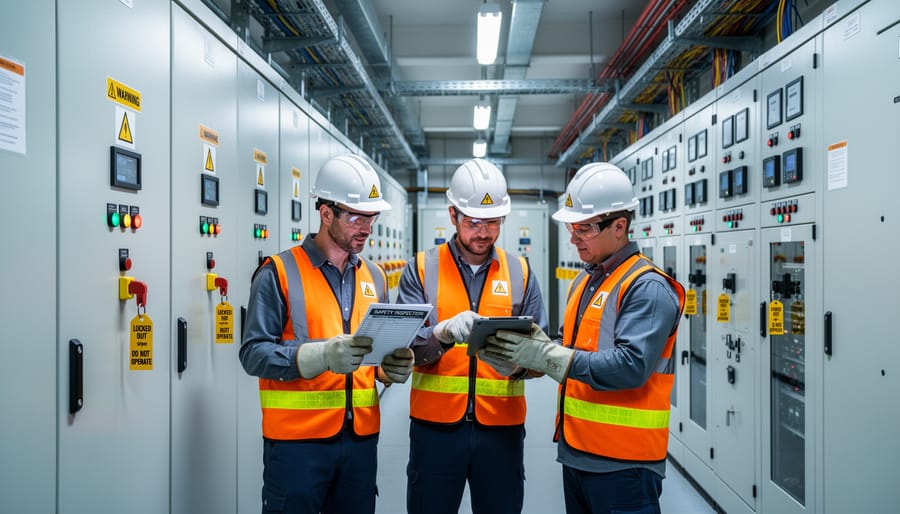
Plant operators performing a safety inspection next to electrical switchgear cabinets
Skilled operators follow strict safety routines while inspecting critical electrical equipment in a clean energy plant.

Working in power generation means accepting responsibility for equipment that can injure or kill if handled carelessly. Plant operators work around high-voltage electrical systems, rotating machinery, steam under extreme pressure, and chemical processes that demand constant attention and respect. Every shift requires the discipline to follow lockout-tagout procedures, wear required personal protective equipment, and never take shortcuts, no matter how routine a task seems.

Warning: Power plant operations involve high-voltage equipment, heavy machinery, and potential hazards. All operators must complete rigorous safety training and maintain constant vigilance to protect themselves, coworkers, and the communities they serve.

The Occupational Safety and Health Administration sets baseline standards for electrical safety, hazardous energy control, and confined space entry that apply across all power generation facilities. But the real safety culture goes deeper than compliance. Operators learn to conduct thorough pre-shift inspections, communicate clearly during equipment transfers, and speak up immediately when conditions feel unsafe. Many facilities operate under industry-specific standards developed by organizations like the National Fire Protection Association and the American Society of Mechanical Engineers, which set technical requirements for everything from boiler operation to emergency shutdown systems.

Clean energy plants introduce their own safety considerations. Solar facilities require training in photovoltaic system lockout and arc flash protection. Wind operations demand fall protection certification and confined space rescue skills for tower work. Battery storage systems bring chemical and thermal runaway risks that differ from traditional generation. Operators must master the specific hazards of their technology while maintaining the fundamental safety mindset that keeps everyone going home whole at the end of each shift.

Step-by-Step: How to Become a Clean Energy Plant Operator

Finding the Right Apprenticeship or Training Program

Start your search where opportunity meets mission. Look for registered apprenticeship programs through the Department of Labor’s apprenticeship finder, which lists programs that meet federal standards for structured on-the-job training combined with classroom instruction. These programs let you earn a paycheck from day one while building the skills utilities need.

Community colleges across the country have partnered with local utilities to create power plant technology programs tailored to renewable energy operations. Contact your regional community college to ask specifically about programs linked to solar, wind, or battery storage facilities. Many have relationships with employers who hire directly from their graduating classes.

Utility-sponsored training programs offer another proven pathway. Investor-owned utilities, municipal power authorities, and public power districts often run their own operator development programs. Check the career pages of utilities in your region, and don’t limit yourself to those operating renewable plants today, many fossil fuel utilities are transitioning their fleets and need operators ready to run clean energy infrastructure.

Prioritize programs with explicit equity commitments. The best training pathways actively recruit from communities that have been excluded from energy sector jobs and often harmed by fossil fuel pollution. Look for programs that partner with community organizations, offer support services like transportation assistance or childcare, and track placement outcomes for workers from underrepresented backgrounds. These commitments align with broader solar equity policies that ensure the clean energy transition creates opportunity for everyone, not just those with existing industry connections.

What to Expect During Your Training

Your apprenticeship won’t follow a single script. Some days you’ll shadow an experienced operator through startup procedures, watching how they read gauges, adjust valves, and respond when a piece of equipment throws an alarm. Other days you’ll sit in a classroom learning electrical theory, thermodynamics, or the chemistry of water treatment. The balance shifts as you progress, early months lean heavily on fundamentals and observation, while later periods give you more hands-on responsibility under supervision.

Expect to work rotating shifts from the start. Power plants run around the clock, so you’ll learn operations during nights, weekends, and holidays. This schedule teaches you how equipment behaves differently across conditions and prepares you for the realities of the job. You’ll also spend significant time in simulated control rooms, practicing emergency scenarios without the risk of actual shutdowns or safety incidents.

The technical skills build gradually. You’ll start with basic tasks like monitoring systems and recording data, then advance to adjusting controls, performing routine maintenance, and eventually managing entire startup and shutdown sequences. But the deeper learning involves judgment, recognizing when a vibration sounds wrong, deciding whether to adjust a process parameter or call for backup, understanding how changing weather affects renewable energy output.

Most registered apprenticeship programs run three to four years. You’ll earn wages throughout, typically starting around 60% of a full operator’s pay and increasing as you demonstrate competency. The investment of time matters because this career demands both precision and adaptability, qualities that only develop through repeated practice and varied experience.

Certifications and Credentials That Advance Your Career

While your apprenticeship provides the foundation, the right credentials can significantly boost your earning potential and position you for leadership roles in the clean energy sector. Most states require power plant operators to hold a license, and the specific requirements vary by location and plant size. Your employer will guide you through the state licensing process, which typically involves passing written and practical exams that demonstrate your ability to operate equipment safely and respond to emergencies. These licenses often come in tiers, starting with an auxiliary or third-class license and advancing to first-class status as you gain experience and demonstrate mastery of increasingly complex systems.

Beyond state licensing, industry-recognized certifications strengthen your resume and signal specialized expertise to employers. The National Institute for Certification in Engineering Technologies (NICET) offers certifications in power plant operations that validate your technical knowledge. Many operators also pursue boiler operator licenses through organizations like the National Board of Boiler and Pressure Vessel Inspectors, which can be particularly valuable if you work with steam generation systems common in certain renewable facilities.

As the grid evolves, specialized credentials in renewable energy technologies can set you apart. Training in solar photovoltaic systems, wind turbine operations, or battery energy storage systems demonstrates your commitment to the clean energy transition and opens doors to emerging roles. These credentials often translate directly to higher wages, the national median annual wage of $97,010 for power plant operators masks significant variation based on expertise and credentials, with experienced, highly certified operators earning well above that benchmark. Investing in your professional development isn’t just about advancing your career; it’s about positioning yourself as a skilled leader in the movement toward 100% clean energy.

What Skilled Plant Operators Earn in the Clean Energy Sector

How Your Employer and Location Affect Pay

The power sector you work in has a direct impact on your paycheck. May 2023 verified wage data shows stark differences: operators in electric power generation, transmission and distribution, the core utility sector, earned a mean annual wage of $95,450, while those working for local governments averaged $85,900. Educational institutions pay considerably less, with operators at colleges and universities earning a mean of $63,310.

These employer-type differences reflect more than just budget priorities. Investor-owned utilities typically offer higher base wages and more robust benefits packages, while municipal utilities and public power entities often provide strong pension plans and job stability that offset somewhat lower cash compensation. Educational institutions compete for skilled operators despite smaller budgets, sometimes offering tuition benefits and flexible schedules.

Geography compounds these sector variations. An operator earning $95,000 in a low-cost-of-living region has far greater purchasing power than someone making the same wage in a high-cost metro area. States with aggressive clean energy buildouts and tight labor markets tend to push wages higher, while regions with slower renewable adoption may lag. When evaluating opportunities, look beyond the raw salary figure to what it buys where you’ll live and work.

How to Know You’re Ready and Next Steps for Success

You know you’re ready to operate independently when you can walk into the control room without needing constant oversight. That confidence comes from proven capability, not arbitrary timelines. Most apprentices reach this threshold after two to four years of structured training, but readiness isn’t about hours logged, it’s about demonstrated competence under real operating conditions.

Watch for these signs that you’ve mastered the role:

  • You can independently troubleshoot equipment issues and identify problems before they escalate
  • You demonstrate mastery of safety protocols in routine operations and emergency scenarios
  • You’re comfortable with control room technology and can adjust systems without hesitation
  • You respond effectively to emergencies, making sound decisions under pressure
  • You understand grid operations and load management well enough to explain them to others
  • You’re ready to mentor new apprentices and answer their questions with patience

If you’re consistently handling shift responsibilities without supervision, coordinating with grid operators confidently, and catching potential issues before your senior colleagues do, you’ve crossed the threshold. Your willingness to train others is another clear marker, teaching reveals whether you truly understand the systems or just follow procedures by rote.

From there, pathways for advancement open quickly in the clean energy sector. Experienced operators move into shift supervisor roles, overseeing teams and coordinating multi-shift operations. Others specialize in renewable integration, becoming experts in battery storage systems, solar farm operations, or wind turbine coordination. These specialized positions often command premium pay and place you at the leading edge of grid transformation.

Leadership opportunities extend beyond the control room. Operators with field experience are increasingly needed in workforce development, designing apprenticeship programs, teaching at community colleges, and mentoring the next generation. You can shape how the industry trains workers and advocate for pathways that prioritize equity and community benefit. Your frontline expertise makes you invaluable in building the clean energy workforce our communities need.

Stories from the Field: Operators Leading the Transition

When Carlos Martinez walked through the gates of a Pennsylvania coal plant for the last time in 2019, he wasn’t sure what came next. He’d spent 14 years as an auxiliary operator, keeping boilers running and turbines spinning. “I thought my skills would be obsolete,” he recalls. Then he learned about a utility program retraining fossil fuel workers for solar and wind facilities. Within six months, he was operating control systems at a utility-scale solar farm, earning $48 per hour, more than his coal plant wage. “I’m still generating power for my community,” Carlos says, “but now my kids can be proud of what I do.”

Stories like his are becoming common as renewable legislation opens pathways from declining fossil sectors into clean energy careers. Maria Johnson made a similar leap in California, transitioning from a natural gas peaking plant to a battery storage facility. She found the technical skills transferred directly, monitoring systems, responding to grid signals, maintaining equipment, but the mission felt different. “We’re storing solar energy so families can run their air conditioning on summer evenings,” she explains. “That’s powerful.”

These transitions matter beyond individual paychecks. When experienced operators bring their expertise to renewable facilities, they strengthen grid reliability and mentor the next generation. Some have been recognized for their leadership in building equitable career pathways; programs like the Solar Justice Award highlight operators who champion access for underrepresented communities. They prove that the clean energy transition isn’t about leaving workers behind, it’s about bringing their skills forward to build something better.

Common Questions About Clean Energy Plant Operator Careers

Is this a secure career path as the grid transitions to clean energy?

Yes. Operators remain essential regardless of the power source, renewable facilities need skilled professionals to control and maintain generation equipment just as fossil fuel plants do. The transition creates sustained demand for these roles rather than eliminating them.

Can I transition into clean energy if I’ve worked at a fossil fuel plant?

Absolutely. The core skills of controlling machinery, monitoring systems, and responding to operational changes transfer directly. You’ll need additional training on renewable energy equipment and grid integration, but your foundation gives you a significant advantage.

How long does it take to become a fully qualified operator?

Most registered apprenticeship programs take three to four years to complete, combining paid on-the-job experience with classroom instruction. This pathway allows you to earn while you learn, typically starting above entry-level wages and progressing as your skills develop.

Are there real opportunities for women and people of color in this field?

The clean energy sector has made equity and inclusion central to workforce development initiatives. Many utilities and training programs actively recruit from underrepresented communities and provide support services to ensure success, recognizing that diverse teams strengthen the industry.

Do I need a college degree to start?

Not necessarily. Many apprenticeship programs require only a high school diploma or equivalent, along with aptitude in math and mechanical reasoning. Some employers value technical college coursework, but apprenticeships offer a proven pathway without four-year degree requirements.

These questions reflect the real concerns people have when considering a major career decision. Beyond the basics covered above, prospective operators often wonder about the day-to-day reality of shift work, since power generation operates around the clock. You’ll likely work rotating shifts, including nights, weekends, and holidays, which affects work-life balance but also means consistent employment without seasonal layoffs.

Another common question centers on advancement potential. Starting as an auxiliary equipment operator or assistant, you can progress to control room operator, senior operator, shift supervisor, and eventually plant manager roles. Each step brings increased responsibility and higher pay. The May 2023 data shows this progression clearly: entry-level operators earned around $54,080 annually, while experienced operators at the 90th percentile made $123,120, demonstrating significant earning growth as you master the role.

People also ask whether automation threatens these jobs. While technology continues advancing, operators remain irreplaceable for judgment calls, emergency response, and the nuanced decision-making that keeps the grid stable. The role evolves rather than disappears, requiring operators who can work alongside sophisticated control systems while maintaining hands-on expertise.

Finally, many want to know if the work feels meaningful. Operators consistently report satisfaction in knowing their work directly powers homes, schools, and hospitals. In clean energy, that purpose deepens, you’re not just keeping the lights on, you’re helping communities transition away from fossil fuels and building the infrastructure for a sustainable future. That combination of solid middle-class wages, job security, and mission-driven work makes this career path compelling for people who want both financial stability and the chance to contribute to something larger than themselves.

The path to becoming a skilled clean energy plant operator offers more than a stable career with strong earnings, it’s an invitation to be part of the most important infrastructure transformation of our generation. With median wages of $97,010 and entry points accessible to workers from all backgrounds, these roles prove that good-paying jobs and environmental progress aren’t competing goals. They’re the same goal.

Every operator who learns to control renewable energy systems, every apprentice who chooses clean power over fossil fuels, moves us closer to a grid that serves both people and planet. The technical skills you’ll build, reading instrumentation, managing complex machinery, responding to grid demands, are exactly what communities need to achieve 100% clean energy by 2050. Your work will keep the lights on while reducing the pollution that harms public health.

The training programs are ready. The jobs are growing. What’s needed now are people willing to step up, learn the craft, and claim their place in this transition. If you’re looking for work that pays well and matters deeply, explore registered apprenticeship programs in your region today. The clean energy future isn’t waiting to be built by someone else. It’s waiting for you.


Diverse nonprofit board members seated at a table reviewing property documents with a community building and green landscape visible through a window in the background.

Quick vs. Long Property Sale for Nonprofits: Key Differences and What They Mean for Your Mission

For most not-for-profit boards holding property, a longer sale process delivers better financial returns and stronger mission alignment, but quick sales make sense when cash flow crises threaten core programs or when holding costs exceed the benefit of waiting. The deciding factor comes down to whether your organization can afford the time it takes to find the right buyer at the right price, or whether immediate liquidity matters more than maximizing proceeds.

This decision carries weight far beyond the balance sheet. Community organizations working on climate resilience, clean energy cooperatives expanding access to solar, and environmental justice groups securing land for green spaces face a fundamental tension: property can be a strategic asset that advances mission work, or a financial burden draining resources from frontline programs. Getting the sale timeline wrong means either leaving tens of thousands on the table or watching critical initiatives collapse while waiting for a better offer.

The stakes are particularly high in 2026, as nonprofit real estate decisions ripple through communities already navigating economic uncertainty and the urgent need for climate action. A quick sale might fund an immediate opportunity to purchase renewable energy infrastructure or prevent layoffs of community organizers. A patient approach could attract mission-aligned buyers, preserve community assets, or yield funds for a permanent endowment supporting long-term environmental work.

Board members need a clear framework that cuts through the complexity. Which approach protects your mission? When does speed become a liability? How do successful environmental and community organizations make this choice? Understanding the true costs and benefits of each path, including practical options like working with buyers who sell your house for cash when circumstances demand immediate action, empowers boards to act decisively in service of their communities and the planet.

At-a-Glance: Quick Sale vs. Long Sale for Nonprofit Properties

Diverse nonprofit board members reviewing property documents in a boardroom during a decision meeting
Board members discuss a property decision together, weighing the organization’s priorities and responsibilities.

Understanding how quick and long property sales differ can help nonprofit boards make confident decisions aligned with their mission and community needs. This comparison highlights the trade-offs that matter most when selling organizational assets to fund clean energy programs and environmental justice initiatives.

Factor Quick Sale Long Sale
Timeline 30-90 days from listing to close 6-18 months, sometimes longer
Expected Value 10-20% below market peak; faster access to capital Closer to full market value with patient negotiation
Board Time Commitment Limited meetings; streamlined decision process Multiple review sessions; ongoing oversight
Community Engagement Minimal consultation window Time for stakeholder input and mission-aligned buyer search
Best Fit When Urgent funding needed for solar rollout or policy response Maximizing proceeds for endowment or finding values-aligned buyer

The choice between these approaches reflects your organization’s current capacity, funding timeline, and commitment to community partnership. A quick sale delivers immediate resources that might fund emergency weatherization programs or rapid response to clean energy policy opportunities. The longer path protects asset value and creates space for the community voices that make environmental justice work credible and lasting. Both strategies serve nonprofit missions when matched thoughtfully to organizational circumstances and the communities you serve.

What Each Sale Approach Means for Your Organization

Exterior view of a clean nonprofit property building with landscaping under an overcast sky
A calm, well-kept property exterior sets the context for how asset decisions impact the community.

What a Quick Property Sale Looks Like

Solar technician installing panels on a rooftop during golden hour
Solar installation work illustrates how quick access to funding can accelerate clean energy projects.

A quick property sale compresses what might normally take a year into 30 to 90 days. Your board lists the property, accepts an offer, and closes, all within a single quarter. This accelerated timeline means fewer showings, streamlined negotiations, and a buyer who’s ready to move fast with cash or pre-approved financing.

The buyers in quick sales are typically investors, developers, or institutional purchasers looking to add properties to their portfolios. They’re less concerned with finding the perfect fit and more focused on acquiring assets efficiently. These buyers often purchase properties as-is, which means your organization avoids costly repairs or upgrades before closing. You hand over the keys in current condition and move on.

Due diligence gets simplified in fast transactions. While you’ll still need basic inspections and title work, buyers willing to close quickly usually accept abbreviated processes. They might waive contingencies or limit their inspection period to days instead of weeks. This doesn’t mean cutting legal corners, your board still fulfills fiduciary duties, but it does mean fewer rounds of back-and-forth.

Nonprofits choose this path when mission urgency outweighs maximizing every dollar. Perhaps a once-in-a-decade policy window opens for renewable energy funding and you need capital now to launch a solar program. Or community partners are ready to break ground on an environmental justice initiative but waiting for you. Quick sales free up resources when timing matters more than squeezing out the highest possible price.

What a Long Property Sale Involves

A long property sale unfolds over six to eighteen months or more, giving your nonprofit board the time to pursue the highest possible return while finding a buyer whose vision aligns with your clean energy mission. This extended timeline isn’t passive waiting, it’s an active strategic process that positions your property to attract the right partner and maximize proceeds for solar programs, community initiatives, or organizational endowment.

The process begins with comprehensive property assessment and market analysis. Your board works with real estate professionals to understand current market conditions, identify comparable sales, and determine optimal listing price. You’ll invest in professional appraisals, environmental assessments, and any necessary property improvements that could significantly increase value. This upfront work pays dividends when you enter negotiations from a position of strength.

Strategic marketing comes next, often running several months. Rather than accepting the first offer, you actively court buyers who understand and support your environmental justice work. This might mean targeting mission-aligned developers, clean energy companies expanding their footprint, or community land trusts committed to equitable development. Your team crafts marketing materials that tell the property’s story and its potential role in the clean energy transition.

Throughout the sale, you’ll have multiple negotiation phases. Extended timelines allow you to evaluate competing offers not just on price, but on community benefit, future use commitments, and alignment with your organization’s values. You can engage stakeholders, local residents, partner organizations, and program participants, in meaningful dialogue about the property’s future, building trust and ensuring the sale advances rather than undermines your mission.

Comparing Quick and Long Sales Across Key Decision Factors

Financial Return and Asset Maximization

A nonprofit board choosing a quick sale typically accepts 10-20% below market value in exchange for certainty and speed. Cash buyers and investors who purchase properties “as-is” expect this discount to compensate for their risk and rapid closing. By contrast, a long sale process, with professional staging, broad marketing, and patient negotiation, often yields closer to full market value or even premium prices when multiple qualified buyers compete.

The negotiation leverage shifts dramatically between approaches. Quick sales favor buyers who control the timeline and dictate terms, leaving boards with limited room to negotiate price, contingencies, or closing conditions. Long sales allow your organization to vet multiple offers, counter strategically, and select buyers whose vision aligns with your mission, perhaps a developer committed to solar installation or affordable housing that serves your community.

Market timing matters more than many boards realize. A quick sale locks in today’s price regardless of seasonal fluctuations or emerging development interest in your neighborhood. A longer timeline lets you monitor market conditions and adjust strategy when clean energy incentives or zoning changes might increase property value. This matters because sale proceeds directly fund programs: an extra $200,000 from a well-timed sale could power community solar projects for years, while rushed funding timing might leave mission-critical initiatives undercapitalized. The board’s fiduciary duty requires weighing immediate cash needs against the larger resource base that patient asset maximization can deliver.

Timeline and Operational Impact

A quick property sale compresses the entire transaction into 30-90 days, which means staff can return to mission work sooner but must absorb intense due diligence demands alongside their regular responsibilities. Organizations pursuing time-sensitive clean energy grants or responding to policy windows, like new solar incentive programs with application deadlines, often find that rapid liquidation frees up capital exactly when opportunities emerge. However, this compressed timeline leaves little room for unexpected complications, and boards must be prepared to make decisive calls without extensive deliberation.

A longer sale process spreads the workload across 6-18 months, reducing daily operational strain but creating sustained uncertainty that can affect program planning and staff morale. This extended timeline allows boards to wait for strategic buyers who align with the organization’s environmental justice mission, potentially securing partners who will advance solar installations or community energy programs on the property itself. Yet this patience carries costs: maintenance expenses continue accumulating, executive director time remains partially diverted from program delivery, and the organization may miss immediate funding needs for advocacy campaigns or community outreach initiatives that can’t wait another year for proceeds to materialize.

The operational trade-off ultimately centers on whether your board values immediate capacity to act on emerging opportunities or the flexibility to align property disposition with long-term programmatic vision.

Mission Alignment and Community Engagement

Neighbors and nonprofit staff meeting outdoors near a property and discussing plans together
Community members and staff share a constructive moment, reflecting how longer processes can build trust and alignment.

A longer sale timeline fundamentally expands your board’s capacity to align property transactions with your organization’s clean energy mission and community values. When you’re not racing against a 60-day close deadline, you can conduct meaningful community engagement to understand how stakeholders view the property’s role in neighborhood resilience and environmental health. This breathing room lets you identify buyers who share your commitment to renewable energy access rather than settling for whoever can close fastest.

The timeline difference shows up most clearly in buyer vetting. A quick sale forces you to accept purchase offers based primarily on financial terms, with little chance to assess whether the buyer will preserve green space, install solar panels, or maintain community access to the site. An extended process allows your board to seek mission-aligned purchasers, perhaps a cooperative that will establish rooftop solar, a developer committed to affordable housing with renewable power, or another nonprofit advancing solar equity in underserved communities.

This alignment directly serves environmental justice goals. When boards take time to engage residents, document community priorities, and write those values into sales agreements, they ensure property transitions strengthen rather than undermine local clean energy progress. The trade-off is real: slower sales mean carrying costs and delayed proceeds. But for organizations whose mission centers community power and climate action, that patience often translates into outcomes no quick transaction could deliver.

Board Governance and Fiduciary Responsibility

When selling nonprofit property, board members must balance two fundamental duties: the duty of care (making informed, deliberate decisions) and the duty of loyalty (acting in the organization’s best interest). The sale timeline you choose directly affects how well you can fulfill both.

A quick sale compresses due diligence into weeks rather than months. Your board still needs independent appraisals, title searches, and legal review, but you’ll have less time to explore alternative buyers or creative deal structures. This approach requires documenting why speed serves the mission, perhaps funding a time-sensitive solar partnership or avoiding mounting maintenance costs that drain program budgets. Boards choosing this path must demonstrate they exercised reasonable care despite the accelerated timeline, which means clear conflict-of-interest policies and transparent voting records become even more critical.

A long sale gives boards breathing room to meet their fiduciary obligations more thoroughly. You can solicit multiple offers, conduct environmental assessments that might reveal opportunities for green development partnerships, and engage stakeholders without rushing community input. This timeline allows for deeper legal review of deed restrictions or covenants that might affect mission alignment, and provides space to structure the sale in ways that advance environmental justice goals, like prioritizing buyers committed to affordable clean energy access.

Both approaches require full board approval and proper documentation. The difference lies in how much time you have to gather information, consider alternatives, and communicate transparently with donors, staff, and the communities you serve.

Which Sale Strategy Is Right for Your Nonprofit Board

When a Quick Sale Serves Your Mission

A quick property sale becomes the strategically sound choice when your nonprofit faces time-sensitive opportunities that matter more than squeezing every dollar from a transaction.

If your organization needs capital now to seize a clean energy policy window, say, matching funds for a state solar grant that expires in sixty days, or launching a community solar project before incentive rates drop, waiting six months for a potentially higher offer means missing the mission entirely. Speed converts the property into immediate program capacity when timing is everything.

Quick sales also make sense when the property itself drains resources your team should spend advancing environmental justice work. If you’re paying $3,000 monthly in maintenance, insurance, and utilities on an unused facility, that’s $36,000 annually not funding solar installations or community engagement. Boards sometimes hold properties hoping for better market conditions while watching mission funds evaporate in carrying costs. An accelerated sale stops the bleeding and redirects those resources toward impact.

Strong buyer interest creates another scenario where speed serves you well. When a developer approaches with a fair all-cash offer and genuine mission alignment perhaps planning workforce housing with rooftop solar, the certainty of closing quickly outweighs the gamble of testing the broader market. You avoid months of showing the property, negotiating with less-committed buyers, and risking deal collapse during extended due diligence.

The clearest signal for a quick sale: when keeping the property one more quarter actively prevents you from doing the clean energy work your community needs today. In those moments, speed is strategy.

When a Long Sale Protects Your Impact

A longer sale timeline becomes strategically valuable when the property transaction itself can amplify your organization’s mission impact. This approach treats the sale not merely as a financial event but as an opportunity to advance clean energy values, deepen community relationships, and secure resources for transformational work.

When your organization faces a major capital need, launching a regional solar cooperative, establishing a community energy fund, or building out programs in underserved neighborhoods, the additional proceeds from a patient sale process can mean the difference between incremental change and systems-level impact. An extra three to six months of strategic marketing and negotiation might yield 15-25% higher sale proceeds, translating to hundreds of thousands of dollars for your clean energy initiatives.

Finding mission-aligned buyers requires time but delivers benefits beyond the transaction. A developer committed to LEED certification, renewable energy installations, or workforce training partnerships extends your organization’s impact well past closing day. These buyers emerge through targeted outreach, relationship-building, and careful vetting that rushed timelines simply cannot accommodate. The property becomes a legacy asset advancing environmental justice even after it leaves your balance sheet.

The community engagement dimension carries particular weight for organizations working in environmental justice communities. A longer timeline allows for transparent communication with neighbors, solicitation of input about future land use, and coordination with community partnerships around redevelopment priorities. This process builds trust, demonstrates accountability to stakeholders, and ensures the sale strengthens rather than undermines local relationships that your ongoing programs depend upon.

Complex properties, those with zoning challenges, environmental remediation needs, or highest-and-best-use questions, often require extended timelines to unlock their full value. Working through permitting, environmental assessments, or rezoning applications can substantially increase proceeds while positioning the property for development that aligns with climate goals.

Success Stories: How Clean Energy Nonprofits Have Navigated Property Sales

A Mid-Atlantic solar advocacy group faced a tough call in 2024 when a state legislature suddenly opened funding for community solar grants, but applications were due in 90 days. The organization owned a small office building they’d planned to sell eventually, but “eventually” became “right now” when they realized a quick sale could unlock the matching funds needed to secure a $2 million grant. They accepted an investor’s cash offer at roughly 15% below market value, closed in 45 days, and used the proceeds to launch three solar installations in underserved neighborhoods. The board chair later reflected that the foregone sale price was minor compared to the transformational community impact they’d have missed by waiting for a higher offer.

Contrast that with a West Coast environmental justice nonprofit that took eighteen months to sell a donated warehouse property. Rather than rushing, the board used the time to identify a buyer whose plans aligned with their mission: a worker-owned cooperative developing green building materials. The extended timeline allowed for community input sessions, resulted in a sale price 22% above the initial appraisal, and led to a partnership where the co-op now supplies materials for the nonprofit’s weatherization program. The board leveraged policy windows differently, they had stable funding and chose to wait for mission fit over speed.

A Midwest clean energy coalition split the difference. When their lease ended unexpectedly, they needed to sell their building within six months but refused to sacrifice values for timeline. They worked with a mission-aligned broker, accepted a slightly lower offer from a developer committed to LEED certification and local hiring, and closed in four months. The sale funded their grid modernization advocacy work while ensuring the property’s next chapter supported green jobs.

Each organization made the right choice for their circumstances, proving that success isn’t about following a universal playbook, it’s about honest assessment of mission needs, market realities, and community accountability.

What Each Option Is

Hands holding a small seedling above dark soil with warm light and soft greenery background
A seedling emerging from soil symbolizes how proceeds and timing can support long-term mission impact.

A quick property sale for a nonprofit means completing the transaction in 30 to 90 days, usually by accepting an all-cash offer from an investor or developer. The board prioritizes speed over maximizing price, often trading a 10-20% discount for immediate liquidity. This approach involves minimal marketing, streamlined due diligence, and fewer negotiation rounds.

A long property sale extends the process to six months or beyond, sometimes reaching 18 months for complex properties. The organization lists the property publicly, engages real estate professionals, markets to multiple buyer pools, and conducts thorough vetting of potential buyers. Boards choose this path to capture full market value, find mission-aligned purchasers, and allow time for community input.

The fundamental difference isn’t just timeline. Quick sales exchange certainty and speed for discounted proceeds. Long sales trade time and effort for maximum financial return and strategic fit. Neither approach is inherently superior, each serves different organizational needs at different moments in a nonprofit’s journey.

Dimension-by-Dimension Comparison

Every nonprofit property sale forces boards to weigh competing priorities. A quick sale delivers immediate capital but limits price negotiation. A longer timeline opens doors to mission-aligned buyers yet demands staff capacity your organization may not have. Understanding how each approach performs across critical decision factors helps boards choose the path that serves both financial health and community impact.

Speed versus return creates the fundamental tension. Quick sales typically yield 10-15% below market value because buyers expect a discount for certainty and pace. You gain liquidity in weeks, but you sacrifice the premium that patient marketing and competitive bidding generate. Long sales maximize proceeds through strategic positioning and multiple offers, though carrying costs and delayed capital access erode some of that advantage.

Community engagement shifts dramatically between timelines. A 60-day close leaves little room for stakeholder input or finding buyers who will advance clean energy goals on the property. Extended sales allow meaningful dialogue with neighbors, partner organizations, and mission-aligned developers who might convert the site to solar gardens or affordable green housing, outcomes that reinforce your organization’s environmental justice work beyond the transaction itself.

Who Should Choose Which

Choose a quick sale if your nonprofit faces immediate financial pressure, a budget shortfall that threatens program continuity, an urgent opportunity to expand solar installations while incentives remain available, or mounting maintenance costs that drain resources from mission work. Quick sales also make sense when your property sits in a hot market where investor demand is strong, or when your board lacks capacity for prolonged negotiations while managing critical clean energy initiatives.

Opt for a long sale when your organization can afford patience in exchange for better alignment and higher returns. This approach fits nonprofits building an endowment, seeking buyers who will continue environmental work on the property, or navigating community concerns about development impact. Long sales work best when your property has unique value that takes time to recognize, perhaps zoning potential for renewable energy projects, or location advantages that mission-aligned developers will pay premium prices to access.

The right choice hinges on whether your greatest risk is moving too slowly and missing opportunities, or moving too fast and leaving mission impact on the table.

Quick vs Long Property Sale for Nonprofits Terms to Know

As-Is Sale
A property sale where the nonprofit sells without making repairs or improvements, accepting a lower price in exchange for faster closing and reduced carrying costs. Common in quick sale scenarios when organizations need immediate capital for mission work.
Mission-Aligned Buyer
A purchaser whose intended property use advances environmental justice, clean energy access, or community development goals consistent with the selling organization’s values. Finding these buyers typically requires longer marketing timelines and stakeholder engagement.
Due Diligence Period
The contractual window when buyers investigate property condition, zoning, environmental assessments, and title issues before finalizing purchase. Quick sales compress this to 10-30 days; traditional sales allow 60-90 days or more.
Unrestricted Proceeds
Sale revenue available for any organizational purpose without donor or legal restrictions. Boards often prioritize converting property to unrestricted funds that can support solar programs, advocacy campaigns, or operating reserves.
Fair Market Value (FMV)
The price a property would sell for between willing, informed parties in an open market. Nonprofits must document FMV for IRS reporting, particularly when sales involve related parties or below-market transactions.

Understanding these concepts helps boards navigate property decisions with clarity about the trade-offs each sale approach requires. Whether pursuing speed or strategic positioning, knowing the terminology strengthens governance discussions and ensures all decision-makers share a common framework for evaluating options that serve both immediate needs and long-term mission impact.

Common Questions Nonprofit Boards Ask About Property Sales

Board members frequently grapple with practical questions when weighing property sale decisions, especially when balancing fiduciary duty against mission urgency. The answers often depend on your organization’s specific circumstances, but understanding the common considerations helps boards make informed choices that serve both immediate needs and long-term impact.

How can we determine fair market value quickly without compromising accuracy?

Request comparative market analyses from two or three commercial real estate agents familiar with nonprofit property sales, which typically takes 5-7 days and costs nothing. For properties with unique mission-related features like solar installations or community gathering spaces, consider a formal appraisal to capture value that standard comparisons might miss.

What tax implications should 501(c)(3) organizations consider when selling property?

Nonprofit property sales are generally exempt from capital gains tax, but you may owe unrelated business income tax if the property was debt-financed or used for non-exempt purposes. Consult with a CPA experienced in nonprofit taxation before finalizing any sale to understand your specific reporting obligations and potential liabilities.

How should we communicate a property sale decision to donors and community partners?

Lead with mission impact by explaining how the sale advances your clean energy work, share the decision-making process to demonstrate thoughtful governance, and acknowledge community connections to the property while emphasizing future opportunities. Transparency about whether you chose speed or strategic patience builds trust and helps supporters understand the trade-offs.

Can boards shift from a long sale strategy to a quick sale if circumstances change?

Yes, boards can pivot strategies, though it may affect credibility with prospective buyers and require renegotiating terms. Document the reasons for the change, such as an urgent funding need for a solar expansion or an unexpected strong offer, and communicate the shift clearly to stakeholders to maintain confidence in board decision-making.

Timing questions often center on market conditions and organizational readiness. Boards wonder whether waiting for a better market makes sense when current programs need funding. The answer depends on your financial reserves and mission urgency, if delaying the sale threatens core programs like solar installations for underserved communities, speed takes priority over potential market gains. Conversely, if you can sustain operations for another year, waiting out a buyer’s market might yield proceeds that fund initiatives for a decade.

Valuation concerns extend beyond simple price comparisons. Nonprofit boards need to consider whether potential buyers will honor any deed restrictions, preserve community access, or continue environmental stewardship. A higher offer from a conventional developer might look attractive financially, but selling to a mission-aligned buyer at a slightly lower price could advance your clean energy values and maintain community relationships that support your broader work.

Community trust questions arise because property often represents more than real estate, it symbolizes your organization’s commitment to place and people. Maintaining that trust requires honest communication about why you’re selling, what alternatives you considered, and how the proceeds will accelerate your mission. Share the decision timeline with community partners early, invite input where appropriate, and be transparent about constraints that limit your options.

The decision to pursue a quick or long property sale isn’t a binary choice between right and wrong, it’s a strategic alignment question that only your board can answer. Your organization’s mission timeline, current funding landscape, and relationship with the communities you serve all shape which path will strengthen rather than compromise your work.

Some nonprofits need immediate capital to seize fleeting policy opportunities or respond to urgent community needs, making a quick sale the mission-aligned choice despite leaving money on the table. Others serve their purpose better by taking time to find buyers who will advance environmental justice goals on that same property, or by waiting for market conditions that maximize proceeds for long-term program endowment. Both approaches can be responsible stewardship when they’re grounded in your organization’s unique circumstances and values.

What matters most is bringing intention to the process. Engage your community stakeholders early, examine how each timeline affects your capacity to deliver on clean energy commitments, and ensure the decision reflects your fiduciary duty to both financial sustainability and mission impact. The property sale itself isn’t the goal, it’s a tool that should free your organization to do what it does best.

When nonprofit boards make thoughtful, values-driven property decisions, they unlock resources that power real change: more rooftops covered with solar panels, more families gaining energy independence, more communities building wealth through the clean energy transition. Your property sale, whether swift or deliberate, can become one more step toward the equitable, 100% clean energy future we’re all working to create. That’s the measure of success.

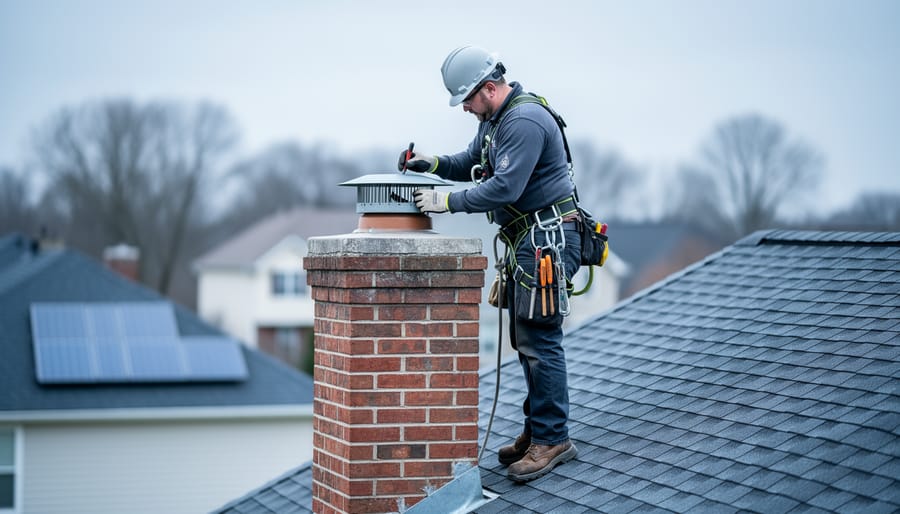
Technician in safety harness installing a top-sealing damper on a brick chimney atop a suburban roof under overcast light, with roof shingles, faint solar panels, and leafless trees softly blurred in the background.

Why Your Drafty Chimney Is Sabotaging Your Clean Energy Goals

Schedule annual inspections with certified professionals like Mason Chimney Repair to catch cracks, blockages, and deteriorating mortar before they become expensive energy drains. A damaged chimney flue can pull heated air directly out of your home, forcing your HVAC system to work overtime and adding 15-30% to your heating bills.

Clean creosote buildup at least once per year, more frequently if you burn wood regularly. This tar-like substance not only creates fire hazards but also narrows your flue opening, disrupting the proper draft needed for efficient combustion and causing smoke to backdraft into living spaces.

Install a top-sealing damper to stop the constant air leakage that traditional throat dampers can’t prevent. An open or poorly sealed chimney acts like leaving a window open year-round, letting conditioned air escape and outdoor air infiltrate. This simple upgrade can reduce heating costs by hundreds of dollars annually while improving indoor comfort.

Every home’s path toward energy efficiency includes often-overlooked components. Your chimney represents one of the largest potential sources of energy loss, yet it remains invisible in most weatherization conversations. Communities across the country are discovering that a holistic approach to energy saving must address every opening in the building envelope, from windows and doors to chimneys and vents.

The families benefiting most from chimney maintenance are those in older homes, where decades of deferred upkeep have compounded small problems into major inefficiencies. In neighborhoods where energy burden already consumes too much of household income, these repairs deliver immediate relief. One community program in the Northeast helped 200 low-income homeowners seal and repair their chimneys, cutting average winter heating bills by $340. That’s money redirected toward groceries, healthcare, and education instead of disappearing up the flue.

Understanding chimney maintenance isn’t just about saving money. It’s about taking control of your energy future.

The Hidden Energy Drain: How Neglected Chimneys Waste Power and Money

Your chimney might be quietly sabotaging every dollar you spend on heating your home. While we focus our attention on upgrading thermostats and installing better insulation, a neglected chimney creates a powerful upward draft that pulls heated air straight out of your living space. This effect, known as the stack effect, turns your chimney into a vacuum that continuously draws warm air from your home, forcing your heating system into overdrive just to maintain a comfortable temperature.

Note: Studies show that up to 30% of home heating energy can escape through chimney systems, costing the average household an additional $200-$600 annually in wasted energy.

The problem extends beyond the chimney itself. Research demonstrates how air infiltration affects heating demand particularly around structural penetrations like chimneys where hot and cold air meet. Deteriorating mortar joints, cracked flue liners, and damaged dampers create pathways for conditioned air to escape. These air leaks around chimneys work against your heating system 24 hours a day, seven days a week throughout winter months.

The Riverside Community Coalition in Pittsburgh discovered this firsthand when they launched a neighborhood energy audit program last year. What they found surprised everyone: homes with unmaintained chimneys were spending 25% more on heating than comparable homes with recently serviced chimneys. One resident, Maria Chen, watched her monthly heating bill drop from $240 to $180 after addressing her chimney’s draft issues and repairing damaged mortar.

This waste directly undermines our clean energy efforts. Every extra kilowatt-hour or therm of natural gas burned to compensate for chimney-related heat loss adds unnecessary carbon emissions to our atmosphere. For households working hard to reduce their environmental impact through renewable energy adoption or energy-efficient appliances, an unmaintained chimney can erase those gains completely.

The carbon footprint impact compounds across communities. A neighborhood of just 100 homes with neglected chimneys collectively wastes enough energy annually to power 15 additional homes. That’s energy we’re burning unnecessarily while communities across our region still lack access to affordable, efficient heating solutions.

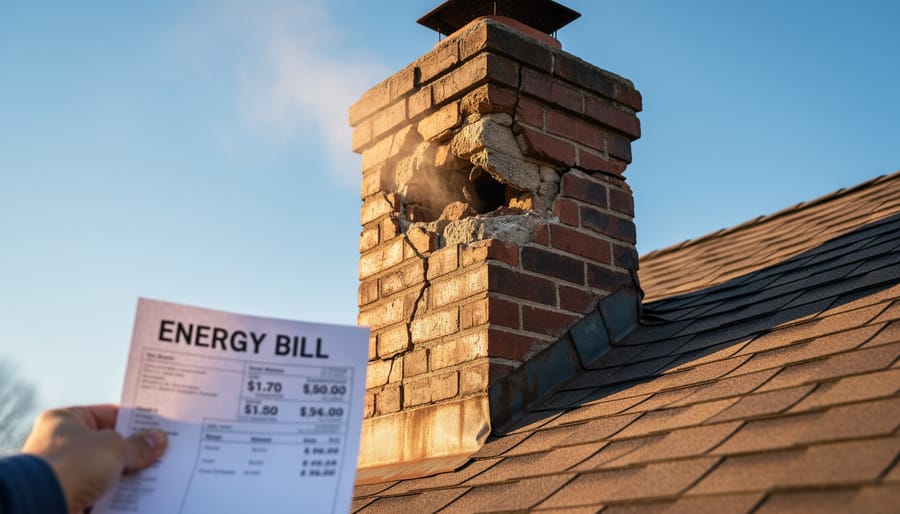
Weathered brick chimney on residential roof showing gaps and deterioration that cause energy loss
Deteriorating chimney structures create significant air leaks that allow heated or cooled air to escape, forcing HVAC systems to work harder and increasing energy bills.

Essential Chimney Maintenance That Keeps Energy Inside Your Home

Sealing Air Leaks and Installing Chimney Dampers

Every winter, millions of dollars literally vanish up American chimneys. When your damper doesn’t seal properly or air leaks exist in your flue, you’re paying to heat the outdoors instead of your living room. This isn’t just about personal comfort. It represents wasted energy that strains our grid and burns fossil fuels unnecessarily.

Here’s the good news: sealing these leaks is one of the simplest ways to reclaim lost energy. Start by checking your damper when the fireplace isn’t in use. Stand beneath it and look up with a flashlight. If you see daylight or feel a draft, your damper isn’t doing its job. A properly closed damper should create an airtight seal.

For traditional throat dampers that have worn out, consider upgrading to a top-sealing damper. These mount at the chimney crown and provide superior protection from both air loss and weather. The installation typically pays for itself within two heating seasons through reduced utility bills.

Around the chimney flue where it passes through your home, apply high-temperature caulk to seal any gaps. Check the area in your attic where the chimney meets the roofline. These transitions often develop cracks over time.

In Detroit’s Brightmoor neighborhood, residents working through a weatherization cooperative discovered that sealing chimney leaks reduced heating costs by an average of 18 percent. That’s real money returning to families who need it most. These improvements don’t require special skills, just attention and a few hours of your time.

Homeowner's hands installing metal chimney damper to prevent air leakage
Installing and maintaining properly functioning chimney dampers is one of the most effective ways to prevent conditioned air from escaping through your flue.

Chimney Caps and Chase Covers: Your First Line of Defense

Small investments in chimney protection deliver outsized returns for your home’s energy performance. Chimney caps and chase covers act as sentinels, preventing three major threats that silently drain efficiency and money from household budgets.

Without proper covering, downdrafts force cold air down your chimney and into living spaces. Your heating system works overtime to compensate, burning through fuel and raising utility bills. A quality chimney cap disrupts these air currents, keeping conditioned air where it belongs.

Water infiltration poses an even greater threat. Rain and snow entering an unprotected chimney deteriorate masonry, corrode metal components, and saturate insulation systems. The Springfield Energy Cooperative documented how community members reduced heating costs by 12 to 18 percent after installing caps and repairing water damage. One resident discovered her attic insulation had absorbed moisture for years, essentially turning her home into an energy sieve.

Pest intrusions create surprising efficiency problems. Birds, squirrels, and raccoons nest in open chimneys, blocking proper ventilation and damaging flue liners. These disruptions force homeowners to leave windows open for ventilation, defeating insulation efforts entirely.

Installing caps and chase covers costs between $150 and $500, typically paying for themselves within two heating seasons through reduced energy waste.

Insulation and Weatherproofing Around Your Chimney

Where your chimney meets your roof, invisible gaps quietly drain warmth and inflate heating bills. These junctions lose more energy than most homeowners realize, but solutions are straightforward and affordable.

Start by inspecting the flashing, those metal sheets sealing the roof-chimney junction. Deteriorated flashing creates gaps where heated air escapes while moisture enters. Quality counter-flashing and base flashing work together to create an airtight barrier. Many hardware stores offer step-by-step tutorials that make this a manageable DIY project.

Check the chimney chase cover and crown too. Cracks in the concrete crown allow water infiltration and thermal bridging. A simple application of elastomeric sealant prevents further damage and improves thermal performance.

Inside your home, examine where the chimney passes through walls and ceilings. Gaps here should be filled with fire-rated caulk or insulation. One Cleveland neighborhood organized weatherproofing workshops where residents learned these techniques together, reducing collective heating costs by 18% that winter. Their success proves that small actions multiply when communities share knowledge. Your chimney can become part of your home’s energy solution rather than a source of waste.

Community Success: How Neighborhoods Are Combining Chimney Care with Solar Transitions

In Rochester, New York, a coalition of weatherization agencies discovered something unexpected during home energy audits: nearly 40 percent of older homes slated for solar panel installation had chimneys creating significant heat loss. Rather than treating these as separate issues, the Rochester Climate Action Collaborative developed an integrated approach. Homeowners received chimney inspections and repairs as part of their solar transition package, closing off unused flues, installing dampers, and sealing gaps before panels went on the roof. The results spoke clearly. Families reduced their overall energy consumption by an average of 22 percent, making their new solar systems even more effective and bringing monthly utility costs down faster than solar alone could achieve.

Similar success emerged in Portland, Oregon, where the Southeast Uplift Neighborhood Coalition partnered with local chimney professionals and solar installers to create a “Whole Home Energy” program. They focused specifically on households that had been excluded from clean energy transitions due to cost barriers. Through sliding-scale pricing and community fundraising, the program helped 150 families in three years address both their aging chimney infrastructure and add rooftop solar. One participant, Maria Torres, explained how fixing her deteriorating chimney liner and damper before installing solar panels cut her heating bills in half. “I thought solar was about the future, but fixing my chimney was about not wasting the energy I already had,” she said.

These efforts mirror the philosophy behind community-wide programs that recognize energy transition as a comprehensive undertaking, not a piecemeal effort. The key insight? Old infrastructure and new technology aren’t competing priorities. They’re partners.

In Denver, Habitat for Humanity incorporated chimney maintenance into their Green Retrofit program, training volunteers to identify common chimney issues during home assessments. This expanded their capacity to serve more families while building community expertise. Volunteers learned that a $200 chimney cap installation could prevent $2,000 in water damage and heat loss, making every dollar of program funding work harder.

These stories reveal a powerful truth: sustainable energy transitions succeed when they honor the homes people already live in. By addressing chimneys alongside solar panels, communities create pathways to clean energy that are more accessible, more effective, and more just. The revolution doesn’t require abandoning what exists. It requires making everything work together.

Diverse neighborhood residents gathering to discuss home energy efficiency and solar installation programs
Communities across the country are discovering that combining traditional chimney maintenance with modern clean energy upgrades creates comprehensive solutions for home energy efficiency.

Making Chimney Maintenance Affordable and Accessible

Energy efficiency shouldn’t be a privilege reserved for those who can afford it. Yet too many families face a difficult choice: pay for essential chimney maintenance or stretch an already tight budget even thinner. This barrier keeps households trapped in inefficient homes, paying more for heat that literally goes up the chimney while missing out on the health and safety benefits of proper maintenance.

The good news? Solutions exist that bridge this gap. Weatherization assistance programs across the country now include chimney repairs and cleaning as eligible expenses. The Low-Income Home Energy Assistance Program (LIHEAP) has helped thousands of families address chimney issues that compromise their home’s energy performance. These programs recognize what energy justice advocates have long argued: home maintenance directly affects energy costs, and everyone deserves access to safe, efficient heating.

Maintenance Task Professional Cost DIY Feasible? Assistance Available
Annual Inspection $125-$250 Partial LIHEAP, local grants
Chimney Cleaning $200-$400 Yes, with training Weatherization programs
Damper Repair $150-$350 Sometimes State energy offices
Masonry Repair $500-$2,500 No Emergency repair funds

Community-led initiatives are changing the landscape too. In Vermont, a neighborhood collective negotiated bulk rates with certified chimney sweeps, cutting costs by 40% for participating households. Similar programs in Oregon and Maine demonstrate how organizing collectively creates buying power that individuals lack alone.

For those comfortable with hands-on work, DIY options offer significant savings. Basic chimney cleaning can be learned through community workshops or online resources, though safety training is essential. Some tasks absolutely require professionals, but homeowners can handle visual inspections, damper operation checks, and minor weatherproofing.

Local libraries and community centers increasingly host skill-sharing sessions where neighbors teach each other home maintenance basics. These gatherings build both knowledge and community resilience. They prove that when we share resources and expertise, we create pathways for everyone to participate in the clean energy transition, one chimney at a time.

Your Next Steps: Integrating Chimney Care Into Your Clean Energy Journey

You’ve learned how chimney maintenance protects your clean energy investment and keeps your home efficient. Now it’s time to turn knowledge into action.

Start with a simple assessment. Walk around your home and look for visible signs that your chimney needs attention: crumbling mortar, white staining on bricks, or rust on the damper. Check inside for creosote buildup or debris. If you haven’t had a professional inspection in the past year, schedule one now. Many communities offer chimney safety programs through fire departments or energy efficiency initiatives that provide inspections at reduced costs or even free.

Prioritize your maintenance tasks based on safety first, then energy efficiency. A damaged chimney cap or cracked flue liner poses immediate risks. Once safety issues are resolved, focus on air sealing and insulation improvements that complement your other energy upgrades. Think of your chimney maintenance as part of the same investment strategy as your solar panels or heat pump.

Connect with local resources to make this work affordable and effective. Your town’s energy committee, weatherization assistance program, or environmental coalition can point you toward qualified professionals and available rebates. Some areas have launched neighborhood chimney maintenance cooperatives where residents schedule group inspections to negotiate better rates.

The Springfield Energy Alliance in Massachusetts created exactly this kind of program. After organizing collective chimney services for 47 households, participants saved an average of $340 annually on heating costs while preventing two house fires. They didn’t stop there. Neighbors shared what they learned at community meetings, inspiring adjacent towns to launch similar initiatives.

Talk to your neighbors about what you’re doing. Share your inspection reports, recommend reliable contractors, and discuss how chimney care fits into your broader clean energy plans. When enough households prioritize this overlooked piece of home efficiency, utility bills drop across entire neighborhoods.

Consider advocating for municipal chimney maintenance programs alongside solar incentives and weatherization funding. Energy efficiency gains momentum when communities tackle it together, ensuring everyone benefits from the clean energy transition.

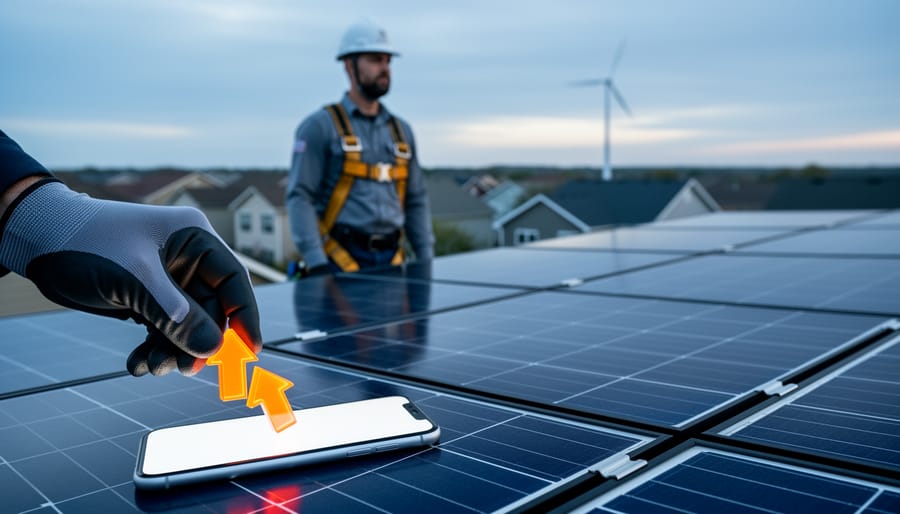
Eye-level photo of a rooftop solar installer beside blue panels while a gloved hand in the foreground drops glossy orange arrow-shaped tokens onto a blank smartphone screen, with blurred neighborhood roofs and a distant wind turbine in soft late-afternoon light.

Why Buying Reddit Upvotes Could Sabotage Your Clean Energy Mission

Clean energy advocacy faces a visibility crisis on social media platforms where algorithms favor engagement over impact. Some advocates, desperate for their climate solutions to reach wider audiences, consider shortcuts like using services to buy reddit upvotes to artificially boost their message. This practice promises instant visibility but undermines the very foundation of trust and authenticity that environmental movements require to create lasting change.

The temptation is understandable. Climate urgency demands immediate action, and watching vital information about renewable energy solutions languish in obscurity while misinformation trends can feel devastating. Yet purchasing upvotes creates a hollow façade that crumbles under scrutiny, potentially damaging your credibility precisely when environmental advocates need public trust most. Communities built on manufactured engagement lack the resilience required for long-term advocacy work.

Real impact comes from genuine connection. Across the country, grassroots clean energy campaigns are proving that authentic engagement drives policy change and community adoption of renewable solutions. When solar cooperative organizers in rural communities share their stories honestly, when wind energy advocates respond thoughtfully to concerns, and when environmental justice groups build relationships through consistent, transparent communication, they create movements that endure beyond a single viral moment.

This article explores why authentic Reddit engagement serves clean energy advocacy far better than purchased votes, offering proven strategies that align visibility with integrity while building the community power necessary for meaningful climate action.

The Promise and Peril of Reddit for Clean Energy Advocates

How Reddit’s Community Structure Amplifies Authentic Voices

Reddit’s unique community structure offers powerful opportunities for clean energy advocates to connect with audiences who genuinely care about our planet’s future. Unlike traditional social media platforms where algorithms prioritize paid content, Reddit’s upvote system creates a democratic space where authentic voices can rise through community validation.

At its heart, Reddit operates through subreddits—specialized communities organized around shared interests. Climate-focused communities like r/ClimateAction, r/RenewableEnergy, and r/environment bring together hundreds of thousands of environmentally conscious users actively seeking meaningful discussions and solutions. When community members upvote content, they signal its value to others who share their concerns, creating organic visibility that money simply cannot manufacture.

What makes this system particularly powerful for clean energy advocacy is its built-in authenticity detector. Reddit users pride themselves on spotting and rejecting manipulative tactics. They’ve developed a collective wisdom that distinguishes between genuine passion and manufactured hype. This means when your community shares real success stories—like a neighborhood solar cooperative reducing energy costs by 40 percent, or a grassroots campaign that convinced local policymakers to invest in wind infrastructure—fellow Redditors recognize and amplify that authenticity.

The voting system rewards content that educates, inspires, and invites collaboration rather than preaches or sells. When advocates share transparent information about clean energy challenges and victories, they tap into a community hungry for both hope and honest dialogue. This creates opportunities for meaningful connections that extend far beyond a single post, building networks of engaged supporters who become active participants in the clean energy transition.

Success Stories: When Clean Energy Advocacy Goes Viral Organically

Real change happens when authentic voices unite around shared values. Across Reddit’s diverse communities, community solar projects and climate initiatives have gained momentum not through manipulation, but through genuine storytelling that resonates.

In 2022, a grassroots organizer shared their neighborhood’s journey installing community solar panels in a historically underserved area. Posted in r/solar and r/ClimateActionPlan, the detailed account included budget breakdowns, policy obstacles overcome, and testimonials from elderly residents seeing reduced energy bills. The post organically reached thousands, sparking conversations that led to three neighboring communities replicating the model. What made it spread? Transparency, practical information, and celebration of collective achievement rather than individual glory.

Another powerful example emerged when residents fighting a proposed natural gas plant in a low-income community documented their organizing efforts across multiple subreddits. Their posts included meeting photos, petition milestones, and connections to broader environmental advocacy campaigns. Redditors from entirely different regions offered strategic advice, connected them with legal resources, and amplified their story through cross-posting. Within months, the campaign secured regulatory review and national media attention. The key was vulnerability and specificity showing real people defending their health and future.

These stories demonstrate something purchase-based engagement cannot replicate: trust built through consistent, honest dialogue. When advocates share both struggles and victories, acknowledge setbacks alongside progress, and invite collaboration rather than passive consumption, communities respond. The upvotes that followed weren’t manufactured metrics but reflections of genuine human connection around our shared stake in a livable planet.

Diverse community members gathered around solar panel installation discussing clean energy project
Community-driven clean energy projects thrive on authentic grassroots engagement and trust-building, not artificial amplification tactics.

What Happens When You Buy Reddit Upvotes

The Mechanics Behind Purchased Engagement

Understanding how purchased engagement works helps advocates make informed decisions about their outreach strategies. When individuals or organizations buy Reddit upvotes, they typically engage with services that deploy bot networks or coordinated groups of fake accounts. These services promise quick visibility boosts by artificially inflating post scores within minutes or hours.

The mechanics are straightforward but problematic. Upvote vendors maintain databases of automated accounts or employ low-wage workers to manually click upvote buttons across multiple posts. Some services use sophisticated algorithms to stagger votes, attempting to mimic organic engagement patterns and avoid Reddit’s detection systems. Prices vary based on quantity, with packages ranging from dozens to thousands of upvotes.

However, Reddit’s algorithms have grown increasingly sophisticated at identifying unnatural voting patterns. The platform regularly purges fake accounts and can shadow-ban content that shows suspicious engagement spikes. For clean energy advocates who rely on building genuine community trust, these artificial methods fundamentally contradict the collaborative, transparent values that drive meaningful environmental progress. When your mission centers on creating authentic connections and inspiring collective action, purchased engagement undermines the very foundation of credibility your advocacy requires.

Reddit’s Detection Systems and Community Vigilance

Reddit’s community thrives on authenticity, and the platform has developed sophisticated systems to protect that integrity. Understanding these detection mechanisms reveals why purchasing upvotes ultimately undermines rather than advances clean energy advocacy.

Reddit employs complex algorithms that analyze voting patterns, account behavior, and engagement metrics. The platform can identify coordinated voting from similar IP addresses, sudden vote surges on new posts, and accounts created specifically for manipulation. When detected, Reddit implements shadowbanning, where your content remains invisible to others while appearing normal to you. This creates a false sense of engagement while your message reaches no one.

Account suspension represents the more severe consequence, removing your voice entirely from conversations where it matters most. For clean energy advocates who have invested time building community connections and sharing valuable resources, losing an established account means starting over and losing trust.

Beyond automated systems, Reddit’s community members have become remarkably adept at spotting inauthentic content. Experienced Redditors notice when posts have high upvote counts but minimal genuine discussion, when engagement feels scripted rather than spontaneous, or when accounts suddenly promote specific agendas without community participation history. These savvy users often call out suspicious activity publicly, damaging credibility far beyond the individual post.

This community vigilance reflects Reddit’s greatest strength: users genuinely care about maintaining authentic spaces. When clean energy advocates earn upvotes through compelling stories, answering questions thoughtfully, and contributing consistently, that organic growth builds lasting influence. Communities rally behind voices they trust, creating momentum that purchased engagement can never replicate.

The Trust Crisis: Why Shortcuts Undermine Environmental Justice

Cracked foundation with small plant growing through damage symbolizing fragile trust
Trust and credibility form the foundation of environmental advocacy—once damaged by manipulation tactics, they’re difficult to rebuild.

Credibility Is Your Most Valuable Asset

The clean energy movement has achieved remarkable progress precisely because communities trust the science, the advocates, and the grassroots organizations leading the charge. When neighbors see solar panels transforming a local school or hear authentic stories about families reducing their carbon footprint, that trust becomes the foundation for broader change. Every wind farm, every community solar project, every electric vehicle charging station represents not just technology, but a promise that our collective action matters.

This credibility is painstakingly built through transparent communication, verifiable results, and genuine engagement with communities most affected by both climate change and energy transitions. Environmental justice advocates have spent decades earning trust in communities that have historically been overlooked or misled. When advocacy groups share information about clean energy solutions, people listen because that trust has been earned through consistent, honest dialogue.

Manipulating social media engagement, even with the best intentions, fundamentally undermines this foundation. When upvotes are purchased rather than earned, the appearance of grassroots support becomes a manufactured illusion. If discovered, the revelation doesn’t just damage one campaign—it casts doubt on the entire movement. Skeptics already question climate science and clean energy solutions; giving them evidence of deception, however small, provides ammunition to dismiss legitimate concerns.

The urgency of the climate crisis might make shortcuts tempting, but credibility cannot be rebuilt as quickly as it can be destroyed. Communities facing environmental challenges deserve authentic advocacy, not manufactured consensus. Your most powerful tool isn’t artificial engagement—it’s the trust you’ve cultivated through genuine commitment to environmental justice and community empowerment.

The Equity Contradiction in Paid Amplification

When clean energy advocates purchase Reddit upvotes, they inadvertently create a two-tiered system where message visibility depends on financial resources rather than community support or message quality. This practice fundamentally contradicts environmental justice principles that demand equitable access to participation in decisions affecting our shared future.

Consider the neighborhood solar cooperative in Detroit that organized for months to share rooftop solar success stories, competing against industry-funded campaigns with substantial marketing budgets. Their authentic community voice risked being drowned out not by better ideas, but by deeper pockets. When advocacy becomes transactional, we silence the very communities most impacted by energy decisions and climate change.

Grassroots organizations working in frontline communities already face resource constraints while fighting for clean energy access, job training programs, and reduced energy burdens. Requiring marketing budgets to achieve visibility adds another barrier, effectively pricing out community voices from digital conversations about their own futures.

This contradiction runs deeper than fairness. Environmental movements gain strength from diverse perspectives and lived experiences. When financial gatekeeping determines which stories reach wider audiences, we lose critical insights from those leading innovative local solutions. True clean energy transition requires amplifying community wisdom, not advantage for those who can afford algorithmic manipulation. Building authentic engagement may take longer, but it creates lasting connections that honor everyone’s right to participate in shaping our energy future.

Authentic Strategies That Actually Work for Clean Energy Advocacy

Tell Stories That Move People to Action

Real stories create emotional connection and drive meaningful engagement far more effectively than purchased upvotes ever could. When advocating for clean energy on Reddit, share narratives that illuminate the human impact of your work.

Focus on specific community members whose lives have improved through solar installations or energy efficiency programs. Describe the single mother who cut her electric bill by 40 percent through community solar access, freeing resources for her children’s education. Tell how elderly residents on fixed incomes found relief from energy burden, maintaining dignity and comfort in their homes.

Document the journey of neighborhoods transforming through clean energy transitions, including challenges overcome and lessons learned. Highlight local workers gaining new skills in renewable industries, building economic opportunity alongside environmental progress.

Use vivid details and authentic voices. Include photos, testimonials, and concrete outcomes like kilowatt-hours saved or carbon emissions reduced. These genuine stories resonate deeply with Reddit communities, earning organic upvotes through emotional authenticity rather than artificial manipulation.

When readers see real people thriving through clean energy access, they understand why this work matters urgently. They become advocates themselves, sharing your content widely and amplifying impact through trust rather than purchased visibility.

Build Genuine Relationships in Relevant Subreddits

Start by identifying subreddits where environmental conversations naturally thrive. Communities like r/environment, r/climatechange, r/solar, r/renewableenergy, and r/sustainability welcome thoughtful discussions about clean energy solutions. Before sharing your advocacy, spend weeks genuinely engaging with these communities. Comment on others’ posts with helpful insights, answer questions about renewable technologies, and celebrate community wins. This authentic participation builds trust and establishes you as a valued contributor rather than someone seeking quick visibility.

Share your personal clean energy story first. Perhaps you installed solar panels, organized a neighborhood charging station, or witnessed how offshore wind transformed your coastal town. These narratives resonate deeply and inspire action without feeling promotional. When community members recognize your consistent, valuable presence, they naturally support your advocacy efforts through organic upvotes and meaningful engagement.

Respect each subreddit’s unique guidelines carefully. Some communities prohibit self-promotion entirely, while others designate specific days for advocacy content. Violating these rules damages your credibility and undermines the broader clean energy movement. Instead, focus on adding genuine value through educational resources, answering technical questions accessibly, and amplifying others’ environmental justice initiatives. This collaborative approach creates lasting relationships that amplify your message far beyond what purchased upvotes could ever achieve, building a foundation for sustained community-driven change.

Environmental advocate authentically engaging with online community on laptop
Authentic engagement and thoughtful community participation build lasting support for clean energy advocacy far more effectively than purchased shortcuts.

Timing, Formatting, and Engagement Best Practices

Authentic engagement requires strategic timing and thoughtful content design. Research shows Reddit activity peaks during morning commutes and lunch hours (8-10 AM and noon-2 PM EST), when users actively browse their feeds. Weekend mornings also generate strong engagement as people catch up on community discussions.

Craft titles that spark curiosity while conveying clear value: “How our neighborhood cut energy costs 40% through community solar” performs better than generic headlines. Include specific numbers, local references, or compelling questions that invite participation.

Visual content dramatically increases engagement. Share infographics showing renewable energy growth, before-and-after photos of community projects, or short video testimonials from residents benefiting from clean energy initiatives. Authentic images from real projects resonate far more than stock photography.

Responding thoughtfully to every comment, even critical ones, demonstrates genuine commitment to dialogue. Acknowledge concerns, share additional resources, and ask follow-up questions that deepen conversation. This responsiveness signals you’re building community, not just broadcasting messages.

Foster meaningful discussion by ending posts with open questions: “What clean energy solutions have you seen work in your area?” or “What barriers does your community face in accessing renewable energy?” These invitations transform passive readers into active participants, generating organic upvotes through genuine connection rather than artificial manipulation.

Mobilize Your Existing Community Authentically

Your greatest asset isn’t purchased visibility—it’s the people already standing with you. When you’ve built authentic relationships around clean energy advocacy, mobilizing that community on Reddit becomes a natural extension of your work, not a manufactured campaign.

Start by creating genuinely valuable content worth sharing. When your organization publishes a comprehensive guide on community solar benefits or documents a local clean energy success story, share it directly with your email list and social media followers. Invite them—never demand—to engage if they find value in the conversation. The key is transparency: people appreciate knowing you’d welcome their authentic participation on platforms where these discussions happen.

Leverage coalition partnerships to amplify reach organically. When multiple organizations genuinely support a legislative initiative or community project, their combined networks create natural momentum. Coordinate messaging so partners can share content through their own authentic voices rather than orchestrating artificial campaigns.

Most importantly, make participation effortless. Create shareable infographics, compelling testimonials, and clear talking points. When community members understand the issues and feel equipped to contribute meaningfully, they become passionate advocates who engage because they believe—not because they were asked. This organic enthusiasm builds sustainable momentum that purchased upvotes never could, creating lasting change rooted in genuine community support.

When Visibility Feels Urgent: Balancing Speed with Integrity

We understand the weight you carry. Climate science tells us we’re racing against time, and every day without meaningful action feels like ground lost. When your message about renewable energy solutions or climate justice sits at three upvotes while misinformation trends, the temptation to buy visibility becomes very real. This urgency isn’t manufactured anxiety, it’s a rational response to an existential challenge.

But here’s what we’ve learned from successful movements: shortcuts that compromise trust ultimately slow us down. The renewable energy transition isn’t a single viral moment, it’s a sustained effort requiring millions of people to believe in and act on this future together. When communities discover their advocates used artificial engagement, that breach of trust doesn’t just affect one post, it undermines years of relationship building.

Consider the example of grassroots solar cooperatives that spent months building authentic Reddit communities. Their growth seemed painfully slow at first, genuine conversations, answering questions individually, sharing transparent data about installation costs and energy savings. Within eighteen months, these patient efforts created self-sustaining communities where members became advocates themselves, recruiting neighbors and defending clean energy policies in their own voices. That’s exponential impact no purchased upvote count can manufacture.

The climate crisis demands speed, yes, but it demands the right kind of speed. Rapid scaling built on authentic relationships, trusted voices multiplying your message, and communities mobilized through genuine connection. These foundations take time to establish, but once built, they move mountains. Purchased engagement offers the illusion of progress while potentially damaging the very trust networks we need most. Choose the harder path that builds lasting power.

The path forward for clean energy advocacy mirrors the very transition we champion: it must be rooted in transparency, equity, and genuine community collaboration. Just as we cannot build a sustainable energy future on extractive practices that harm communities, we cannot build lasting advocacy movements on manufactured engagement that undermines trust.

When you purchase upvotes, you’re investing in an illusion of support rather than the real thing. Authentic engagement takes longer to build, but it creates something far more powerful: a community of people who truly care about clean energy solutions, who will show up not just to click an arrow but to attend town halls, contact representatives, and make changes in their own lives. These are the allies who will sustain the movement through setbacks and celebrate genuine victories together.

Consider the climate advocates who have built thriving Reddit communities through patient storytelling, thoughtful responses to questions, and consistent sharing of actionable information. Their influence extends far beyond upvote counts because they’ve earned credibility through transparency and demonstrated their commitment to the communities they serve.

The clean energy transition is fundamentally about building a better future for everyone, especially those most impacted by environmental injustice. Our advocacy tactics must reflect these values. Choose genuine connection over shortcuts. Invest your resources in creating content worth sharing, listening to community concerns, and amplifying voices that have been historically marginalized. This is how we create the collective power necessary for systemic change. The planet and our communities deserve nothing less than our authentic commitment.

Elevated wide shot of a cannabis greenhouse complex with rooftop solar panels and an adjacent solar array, lush green cannabis plants in the foreground, under warm golden hour light against rolling hills.

Solar Energy Could Transform Cannabis Production Into a Climate Solution

The cannabis industry stands at a crossroads where environmental responsibility meets unprecedented growth opportunity. As production of Delta 9 drinks and gummies at budpop expands across North America, cultivators are consuming staggering amounts of electricity—enough to power entire neighborhoods—while communities worldwide are demanding cleaner, more sustainable manufacturing practices. Solar-powered production isn’t just an environmental ideal; it’s becoming an economic imperative that’s reshaping how we grow, process, and distribute cannabis products.

Traditional indoor cannabis cultivation requires intense lighting, climate control, and ventilation systems that generate massive carbon footprints. A single indoor grow facility can use as much electricity as 29 average homes annually. Yet pioneering cultivators are proving that solar energy can meet these demanding power needs while reducing operational costs by 40-70% over time. From California’s sun-drenched valleys to Colorado’s high-altitude operations, solar-powered cannabis facilities are demonstrating that sustainability and profitability aren’t opposing forces—they’re complementary pathways to industry leadership.

This transformation carries profound implications beyond individual businesses. Communities historically marginalized by cannabis prohibition now have opportunities to participate in an industry built on clean energy principles rather than extractive practices. Solar-powered production creates local jobs in renewable installation and maintenance while keeping energy dollars circulating within communities rather than flowing to utility corporations.

The convergence of falling solar costs, rising electricity rates, and consumer demand for ethical products has created a perfect moment for change. The question isn’t whether cannabis production will transition to renewable energy—it’s whether your community will lead this transformation or follow from behind.

Understanding Delta-9 THC: The Science Behind Cannabis’s Primary Compound

Why Delta-9 Production Methods Matter for Our Climate

The cannabis industry stands at a crossroads. As Delta-9 THC production expands across the nation, we’re witnessing an environmental cost that demands our attention. Traditional indoor cultivation facilities consume staggering amounts of electricity—equivalent to powering entire neighborhoods—primarily for artificial lighting, climate control, and dehumidification systems. Studies show that indoor cannabis operations can use up to 2,000 kilowatt-hours of energy per pound of product, generating significant carbon emissions and straining local power grids.

This energy intensity isn’t just about numbers on a utility bill. It represents a choice about our collective future. Every grow operation powered by fossil fuels contributes to climate change, affecting the same communities many cannabis businesses aim to serve. Low-income neighborhoods and communities of color already bear disproportionate impacts from air pollution and energy infrastructure decisions.

But here’s the inspiring truth: we have proven alternatives. Across the country, pioneering cultivators are demonstrating that Delta-9 production doesn’t have to harm our planet. By embracing solar power and renewable energy solutions, these trailblazers are proving that environmental responsibility and quality production go hand-in-hand. Their success stories show us that sustainable cannabis cultivation isn’t just possible—it’s practical, profitable, and essential for protecting the communities we call home. The question isn’t whether we can transform this industry’s environmental impact, but whether we’ll seize this moment to lead the way.

The Hidden Energy Crisis in Cannabis Cultivation

Aerial view of cannabis greenhouse facility with extensive rooftop solar panel installation
Modern cannabis cultivation facilities are increasingly integrating solar arrays to reduce their substantial energy footprint and operating costs.

How Indoor Growing Became the Industry Standard

For decades, cannabis cultivation moved indoors out of necessity, not choice. When prohibition forced growers into the shadows, they discovered that controlled indoor environments offered a silver lining—consistent, high-quality yields regardless of season or climate. This wasn’t just about hiding; it was about survival and meeting exacting standards that outdoor growing couldn’t guarantee under legal uncertainty.

As legalization swept across states, indoor cultivation became the industry standard for compelling reasons. Regulatory frameworks demanded rigorous quality control, including precise cannabinoid profiles and freedom from contaminants. Indoor facilities could deliver this consistency, protecting public health while building consumer trust in newly legal markets. Climate control eliminated mold risks, pest management became more manageable without pesticides, and year-round production stabilized supply chains.

However, this path to legitimacy came with an environmental cost few anticipated. Those same controlled environments require enormous energy inputs—powerful grow lights mimicking sunlight, industrial HVAC systems maintaining perfect temperatures, and dehumidifiers running continuously. Today’s indoor cannabis facilities consume electricity comparable to data centers, creating a carbon footprint that contradicts the plant-based, earth-conscious values many in the community hold dear.

The good news? We’re now at a pivotal moment where we can honor the quality standards that indoor growing established while reimagining how we power these operations. Communities across the country are proving that sustainable cultivation isn’t just possible—it’s the future.

The Real Cost to Communities and the Climate

The energy choices made by cannabis producers ripple far beyond their facility walls, touching the lives of neighbors, straining local infrastructure, and intensifying the climate crisis we all share. In communities across the country, particularly those still reliant on coal and natural gas for electricity, conventional Delta-9 THC production facilities contribute to a cascade of challenges that disproportionately affect those least equipped to bear them.

When cultivation operations draw heavily from fossil fuel-dependent grids, they accelerate the degradation of air quality in surrounding neighborhoods. The additional carbon emissions don’t just contribute to abstract global warming statistics—they translate to higher asthma rates in nearby schools, increased cooling costs for fixed-income families during heat waves, and intensified storm damage in vulnerable communities. In states like West Virginia and Wyoming, where coal still dominates the energy mix, each kilowatt-hour consumed by indoor cannabis operations carries a heavier environmental burden that local residents breathe every day.

The strain on utility infrastructure tells another story of inequity. As energy-intensive cannabis facilities connect to aging grids, utilities often pass upgrade costs onto all ratepayers through increased fees. Low-income households, already spending a disproportionate share of their income on energy bills, shoulder this burden without benefiting from the economic opportunities these facilities create. Rural and indigenous communities frequently experience the most severe impacts, facing both environmental degradation and economic displacement.

Yet this reality isn’t inevitable. Communities from Oakland to Denver have demonstrated that when cannabis producers embrace solar power, they become partners in building local resilience rather than contributors to community stress. These success stories prove that clean energy isn’t just an environmental necessity—it’s a pathway to justice and shared prosperity.

Solar-Powered Cannabis: A Growing Movement Toward Sustainability

How Solar Technology Meets Cannabis Production Needs

Cannabis cultivation has traditionally demanded enormous amounts of electricity—for lighting, climate control, ventilation, and security systems that run around the clock. But solar technology has evolved to meet these intensive needs in remarkably practical ways, and facilities across the country are proving it works.

Modern solar arrays can generate substantial power even in varied climates, with photovoltaic panels converting sunlight into electricity that directly powers grow lights and environmental controls. The real breakthrough comes from pairing solar panels with advanced battery storage systems. These batteries store excess energy produced during peak sunlight hours, ensuring cultivation facilities maintain consistent power throughout the night and during cloudy periods—critical for cannabis plants that require precise lighting schedules.

Smart energy management systems tie everything together, acting as the facility’s brain. These systems monitor energy production and consumption in real-time, automatically drawing from solar power when available, tapping battery reserves when needed, and even connecting to the grid as a backup. This intelligent orchestration means growers never compromise plant health while maximizing clean energy use.

In California’s Central Valley, a mid-sized cultivation facility reduced its grid dependence by 75% after installing a solar-plus-storage system. The operation now powers its entire vegetative growth phase with stored solar energy, demonstrating that holistic energy solutions can meet cannabis production’s demanding requirements.

The technology isn’t experimental—it’s proven, scalable, and increasingly affordable. As equipment costs decline and efficiency improves, solar-powered cultivation becomes accessible to operations of all sizes, from boutique growers to large-scale producers. The question isn’t whether solar can power cannabis production, but rather how quickly we can make this transition standard practice.

Close-up of cannabis plant showing healthy growth with solar panels visible in background
Cannabis plants thrive under carefully controlled growing conditions that can now be sustainably powered by renewable solar energy.

Pioneering Growers Leading the Clean Energy Transition

Across the country, forward-thinking cannabis cultivators are proving that sustainable Delta-9 THC production isn’t just possible—it’s profitable and transformative for entire communities.

Take Sunbelt Cannabis Collective in New Mexico, a cooperative of twelve family-owned farms that converted to 100% solar power in 2022. Within eighteen months, they reduced their collective energy costs by 68% while creating twenty-three new jobs in solar installation and maintenance. Their success extends beyond their greenhouses: excess power generation now supports a community center offering free environmental education workshops to over 500 residents annually. “We’re not just growing medicine,” explains co-founder Maria Santos. “We’re growing a cleaner future for our children.”

In Oregon, Green Horizon Farms transformed a struggling 40-acre operation into a thriving solar-powered model that processes 15,000 pounds of biomass monthly. Their rooftop and ground-mounted arrays generate 850 kilowatts—enough to power cultivation, extraction, and packaging while returning surplus energy to the grid. Most remarkably, they’ve shared their blueprint freely with seventeen other growers, catalyzing a regional movement. Their transparent approach has created a ripple effect: local energy costs have decreased, and three previously closed manufacturing facilities have reopened as solar-powered cannabis operations, bringing 140 jobs back to rural communities.

Michigan’s Sovereign Roots Cooperative, a tribal-owned enterprise, demonstrates how solar integration advances both environmental and economic sovereignty. Their 1.2-megawatt solar array powers full-spectrum LED cultivation systems, reducing grid dependence by 92%. The operation has generated $2.3 million in energy savings over three years, funds redirected toward healthcare services and educational scholarships for tribal members.

These pioneers share a common thread: they recognized that sustainability isn’t a burden—it’s an opportunity. Their measurable outcomes prove that clean energy transitions strengthen communities, create meaningful employment, and establish cannabis cultivation as a force for environmental restoration rather than degradation.

The Economic Case for Solar Cannabis Production

Workers installing solar panels on cannabis facility rooftop
The transition to solar-powered cannabis production creates green jobs and economic opportunities in local communities.

Breaking Down the Investment and Payback Period

The transition to solar-powered cannabis production requires an honest conversation about investment. While upfront costs for commercial solar installations typically range from $100,000 to $500,000 depending on facility size, the story doesn’t end there—it begins.

Consider the example of Green Horizons Cultivation in Colorado, which faced a $250,000 initial investment for their solar array. Within eighteen months, their energy bills dropped by 70%, creating immediate operational breathing room. The federal Investment Tax Credit (ITC) covered 30% of their installation costs, while state-level incentives added another $40,000 in savings. Their payback period? Just under six years, with a system designed to operate efficiently for twenty-five years or more.

Today’s financing landscape makes this transition accessible to operations of all sizes. Power Purchase Agreements (PPAs) allow facilities to adopt solar with zero upfront costs, paying only for the clean energy generated—often at rates lower than traditional utilities. Community solar programs and green financing cooperatives are opening doors for smaller producers who thought solar was beyond reach.

The numbers tell a compelling story: after the payback period, facilities enjoy decades of virtually free energy, insulating themselves from volatile utility rates while demonstrating environmental leadership. When we invest in solar today, we’re not just reducing costs—we’re building resilient, community-centered businesses that prove sustainability and profitability grow hand in hand.

Policy Pathways: Creating Incentives for Clean Cannabis

What Communities and Advocates Can Do Now

The cannabis industry’s environmental impact is no longer someone else’s problem—it’s a shared opportunity for communities to lead on climate action. Whether you’re a policymaker, community leader, or advocate, you have the power to shape a cleaner, more equitable future for cannabis production right now.

Start by demanding that solar requirements become standard in cannabis licensing. Cities and counties can update their ordinances to prioritize applications that demonstrate renewable energy commitments. Massachusetts has already shown this works, with several municipalities requiring energy efficiency plans before issuing permits. Push your local planning boards to follow this example, incorporating solar readiness into zoning and conditional use permits for cultivation facilities.

Build coalitions that connect cannabis industry stakeholders with clean energy advocates. These partnerships amplify impact—when solar installers, cannabis operators, and environmental justice groups work together, they create compelling cases for policy change. Support solar advocacy efforts that protect renewable energy access for all industries, not just cannabis.

Advocate for renewable energy legislation that includes cannabis-specific incentives. Contact state representatives about tax credits, expedited permitting, and technical assistance programs for solar-powered cultivation. Highlight the economic benefits—job creation, reduced operating costs, and energy grid stability.

Community leaders can facilitate knowledge-sharing sessions where solar-powered operators share their success stories with prospective license holders. Create toolkits with financial modeling, installer recommendations, and policy templates that make adoption easier.

Most importantly, center environmental justice in every conversation. Ensure that solar transitions benefit communities most impacted by both cannabis prohibition and energy pollution. This isn’t just about greener cannabis—it’s about building power, creating opportunities, and protecting our shared climate future, one facility at a time.

Building an Equitable Solar-Powered Cannabis Future

The transition to solar-powered cannabis production presents a transformative opportunity to right historical wrongs while building a more sustainable future. For too long, communities of color and low-income neighborhoods have borne the dual burden of mass incarceration from cannabis prohibition and disproportionate exposure to environmental hazards from fossil fuel pollution. As we reimagine cannabis cultivation powered by clean energy, we must ensure these same communities stand at the center of this economic and environmental revolution.

True equity in solar cannabis means more than simply replacing one energy source with another. It requires intentional policies and programs that provide marginalized entrepreneurs with access to capital, training, and solar technology. Several pioneering initiatives are already showing the way forward. In Oakland, California, the Equity Permit Program combines cannabis business licensing for those impacted by the war on drugs with technical assistance for implementing renewable energy systems. Participants receive support navigating both cannabis regulations and solar installation, transforming barriers into bridges toward economic opportunity.

Similarly, community solar projects are emerging as powerful tools for democratizing clean energy access. These shared solar arrays allow multiple cannabis cultivators—especially smaller operators without suitable rooftops or capital for individual installations—to benefit from solar power through subscription models. This approach mirrors successful low-wealth solar policy frameworks that prioritize affordability and accessibility over market-rate returns.

The path forward demands collaboration between policymakers, cannabis industry leaders, solar providers, and community organizations. Licensing structures should prioritize social equity applicants and reward sustainable practices with expedited permitting or reduced fees. Financial institutions must develop innovative lending products that recognize the unique position of equity cannabis entrepreneurs. Workforce development programs can train community members for careers in both solar installation and cannabis cultivation, creating lasting employment opportunities.

When we center equity in the solar cannabis transition, we don’t just reduce carbon emissions—we build wealth in communities that have been systematically excluded, heal environmental injustices, and demonstrate that climate solutions and social justice are inseparable. This is our moment to ensure that the green future we’re creating is truly green for everyone.

Cannabis farmer standing in front of small greenhouse facility with solar panel array
Small and mid-sized cannabis operations are proving that solar power is accessible and economically viable for businesses of all scales.

The convergence of solar energy and Delta-9 THC production represents more than an innovative business practice—it’s a powerful statement about the future we choose to build together. As communities across the nation witness the tangible benefits of cannabis operations powered by clean, renewable energy, we’re seeing living proof that environmental responsibility and economic opportunity can flourish side by side. From California greenhouses that have slashed their carbon footprints by 70% to Colorado facilities creating skilled green jobs in formerly underserved neighborhoods, these success stories illuminate a pathway forward that honors both our planet and our people.

The transformation won’t happen without your voice and action. We need champions at every level—from consumers demanding transparency about how their products are made, to policymakers crafting incentives that prioritize solar adoption in cannabis licensing, to community leaders ensuring these opportunities reach those most impacted by both environmental degradation and past cannabis prohibition. Every choice to support sustainably produced Delta-9 THC sends a market signal that reverberates through the industry. Every call to your representative requesting renewable energy requirements for cannabis cultivation shapes the regulatory landscape. Every conversation you have about clean energy possibilities plants seeds of change.

Join the coalitions already doing this vital work. Connect with local environmental justice groups, renewable energy advocacy networks, and cannabis reform organizations committed to sustainability. Together, we’re not just greening an industry—we’re demonstrating that the clean energy transition can be equitable, profitable, and community-driven. The power to create this future is quite literally in your hands.

Open recyclable cardboard box on a doorstep containing an unbranded refillable vape device in paper packing with a reusable cloth pouch, with a blurred electric delivery van and tree-lined street in the background under soft daylight.

Your Vape Habit Doesn’t Have to Harm the Planet

Choose retailers that offset shipping emissions through verified carbon credit programs when placing your next vape shop Canada order. Consolidate purchases into fewer, larger orders rather than multiple small shipments to reduce the transportation footprint per item. Select ground shipping over expedited air delivery whenever possible, as air freight generates up to ten times more carbon emissions than surface transport.

Every online vape purchase creates an environmental footprint. From manufacturing facilities powered by fossil fuels to delivery trucks crossing provinces, the convenience of doorstep delivery comes with hidden costs to our atmosphere. Yet thousands of vapers across Canada are proving that sustainability and convenience don’t have to conflict.

The carbon footprint of online shopping extends beyond the delivery van idling at your door. Product packaging, warehouse operations, and return shipments all contribute to greenhouse gas emissions. A single returned vape device can generate emissions equivalent to driving fifteen kilometers, while overnight shipping doubles the carbon cost compared to standard delivery.

Carbon-neutral shopping transforms these environmental challenges into opportunities for positive change. When retailers invest in renewable energy projects, reforestation initiatives, or methane capture programs that offset their operational emissions, every purchase becomes a vote for a cleaner future. These aren’t vague promises but measurable commitments tracked through third-party verification systems.

Communities across Canada are already demonstrating what’s possible. Vancouver-based vaping enthusiasts collectively prevented twelve tons of shipping emissions last year by coordinating group orders. Toronto retailers pioneered biodegradable packaging that reduced landfill waste by forty percent. These success stories prove that individual choices, multiplied across thousands of conscious consumers, create tangible environmental progress.

Your purchasing decisions shape market demand. Retailers respond to customer values, making your choice of where and how to shop a powerful tool for environmental advocacy.

The Real Environmental Cost of Online Vape Shopping

Cardboard shipping boxes and packaging materials representing the environmental cost of online shopping
Online vape purchases generate carbon emissions through manufacturing, shipping, and excessive packaging materials.

From Factory to Doorstep: The Carbon Journey

Every vape product travels a remarkable distance before reaching your hands, leaving carbon footprints at each stage. Understanding this journey empowers us to make meaningful changes together.

Manufacturing typically generates the largest share of emissions, as factories transform raw materials into vape devices and e-liquids through energy-intensive processes. In many cases, production facilities still rely heavily on fossil fuel-based electricity grids. The good news? Forward-thinking manufacturers are increasingly transitioning to renewable energy sources, demonstrating that change is both possible and profitable.

Warehouse storage contributes through climate control systems and lighting that run continuously to preserve product quality. While these emissions seem modest compared to manufacturing, they accumulate significantly across vast distribution networks.

Last-mile delivery presents the final challenge. Those convenient doorstep deliveries often involve multiple vehicles, packaging materials, and inefficient routing that compounds environmental impact. Surprisingly, studies show that online shopping can actually produce fewer emissions than driving to physical stores, especially when orders are consolidated and delivery routes are optimized. The key difference lies in how companies approach their logistics.

The inspiring reality is that communities of conscious consumers are already partnering with retailers committed to measuring and offsetting these emissions. When we collectively demand transparency and accountability, businesses respond with innovative solutions. By choosing carbon-neutral options, you join a growing movement proving that convenience and environmental responsibility can coexist beautifully.

The Packaging Problem

Every package that arrives at your doorstep carries a hidden environmental cost. The vape industry’s reliance on excessive packaging creates a cascade of waste that extends far beyond the product itself. Cardboard boxes, bubble wrap, plastic inserts, and foam padding accumulate quickly, with much of it destined for landfills rather than recycling bins.

Single-use plastics remain particularly problematic. Many vape products arrive wrapped in multiple layers of non-recyclable materials, while shipping boxes often contain plastic air pillows or styrofoam peanuts that persist in the environment for centuries. When multiplied across millions of deliveries annually, this packaging footprint becomes staggering.

Yet communities are proving change is possible. Forward-thinking retailers have begun partnering with customers to reimagine delivery systems. Some companies now offer recycled cardboard packaging, biodegradable void fill made from cornstarch, and even take-back programs where customers return packaging for reuse. In Portland, a collaborative initiative between vape retailers and environmental advocates reduced packaging waste by 40% within one year through innovative design and community education. These success stories demonstrate that when businesses and consumers work together, sustainable solutions emerge naturally, transforming a significant problem into an opportunity for meaningful environmental progress.

What Carbon-Neutral Shopping Actually Means

The Difference Between Carbon-Neutral and Greenwashing

Understanding the difference between authentic carbon-neutral practices and greenwashing empowers you to support companies genuinely committed to environmental action. Real carbon neutrality involves transparent reporting of emissions, verified carbon offset purchases, and third-party certifications from recognized organizations like Climate Neutral or Gold Standard. Companies should clearly explain their calculation methods and provide documentation of their offset projects.

Watch for red flags that signal greenwashing: vague environmental claims without specific data, missing certifications, or companies that only offset a small portion of their operations while marketing themselves as completely carbon-neutral. Genuine leaders in sustainable vape retail publish annual sustainability reports, engage in direct emissions reduction alongside offsets, and participate in industry-wide environmental initiatives.

Several online vape retailers have set inspiring examples by partnering with verified reforestation projects and investing in renewable energy for their operations. These pioneers demonstrate that environmental responsibility and business success can thrive together. By asking questions and demanding transparency, you join a growing community of consumers driving real change. Your informed choices send a powerful message that sustainability matters, encouraging more companies to move beyond marketing claims toward meaningful climate action.

How Clean Energy Powers Real Change

The path to carbon-neutral online shopping begins in warehouses powered by the sun. When distribution centers install solar panels and transition to renewable energy solutions, they eliminate the carbon footprint of storage and packaging operations. This transformation isn’t just theoretical—it’s happening right now in communities nationwide.

Consider the success of a Colorado-based distribution facility that recently completed its solar transition. By installing rooftop panels and battery storage systems, the warehouse now operates on 100% clean energy during daylight hours, reducing annual carbon emissions by 450 metric tons. That’s equivalent to taking nearly 100 cars off the road. The facility’s workers also benefited from job training in solar maintenance, creating new career pathways within their community.

When logistics operations embrace clean energy, every package shipped becomes part of the climate solution. Electric delivery vehicles charged with solar power, energy-efficient refrigeration systems, and sustainable packaging materials work together to create truly carbon-neutral fulfillment. Your purchasing choices support this infrastructure, proving that individual actions drive collective change. Together, we’re building a cleaner future, one conscientious transaction at a time.

Solar panels installed on warehouse rooftop generating clean energy for carbon-neutral operations
Solar-powered warehouses and renewable energy in logistics operations make carbon-neutral shipping possible.

Making Your Online Vape Purchases Work for the Planet

Choose Retailers Committed to Clean Energy

When choosing where to shop for vape products online, prioritize retailers demonstrating genuine commitment to environmental responsibility. Look for companies that have earned third-party certifications like B Corporation status or Climate Neutral certification—these independent verifications ensure claims aren’t just greenwashing. The best retailers transparently share their energy data, showing exactly how much renewable energy powers their warehouses and operations.

Seek out businesses investing in solar panels, wind energy, and other clean energy practices that reduce their carbon footprint at the source. Companies committed to this transition often publish annual sustainability reports detailing their progress, renewable energy percentages, and future goals. This transparency builds trust and accountability.

Supporting these forward-thinking retailers creates market momentum for broader industry change. When environmentally conscious consumers vote with their wallets, they send a powerful message that sustainability matters. Success stories already exist—some vape retailers now operate on 100% renewable energy and offset remaining emissions through verified carbon projects. By choosing these pioneers, you’re not just making a purchase; you’re investing in a cleaner future and encouraging competitors to follow suit. Your purchasing power drives meaningful environmental progress.

Consolidate Orders to Reduce Shipping Emissions

One of the simplest yet most powerful actions you can take is consolidating your vape orders. Rather than placing multiple small orders throughout the month, plan ahead and batch your purchases together. This single shift can dramatically reduce packaging waste and transportation emissions.

When a delivery driver makes fewer stops to reach you, they burn less fuel and create a smaller carbon footprint. Think of it as carpooling for your packages. A thriving community of conscious vapers in Portland discovered they could reduce their collective shipping emissions by 40 percent simply by coordinating monthly group orders through local vape shops, creating both environmental benefits and stronger neighborhood connections.

Choosing standard shipping over expedited delivery is another game-changer. Slower shipping allows carriers to optimize their routes, consolidate shipments, and use more efficient transportation methods. Express shipping often requires dedicated trips and air freight, which generates significantly higher emissions. By planning your orders a few days ahead, you give companies the flexibility to ship more sustainably.

This small act of patience becomes a powerful statement: your commitment to the planet matters more than instant gratification. Together, these collective choices signal to retailers that sustainable practices are not just preferred but expected.

Support Brands with Sustainable Practices

Your purchasing decisions hold remarkable power to shape industry practices. When you support vape brands committed to sustainability, you send a clear market signal that environmental responsibility matters.

Start by researching companies that prioritize recyclable packaging materials and minimal plastic use. Leading sustainable brands now offer products in glass, aluminum, or biodegradable containers rather than single-use plastics. Look for transparent communication about their packaging choices on company websites.

Take-back programs represent another meaningful indicator of commitment. Forward-thinking vape companies now accept used devices and cartridges for proper recycling or disposal, preventing hazardous materials from entering landfills. Some even offer incentives like discounts on future purchases when you participate in these programs.

Increasingly, brands are investing directly in environmental initiatives, from carbon offset projects to renewable energy partnerships. One inspiring example includes a California-based vape company that plants trees for every product sold, creating tangible environmental benefits while building customer loyalty. For those in Canada, Bargain E-Juice offers ISO 7 lab-made e-liquids at affordable prices, with discounts up to 80% off regular retail prices, making quality vaping more accessible across all provinces.

Check for third-party certifications that verify sustainability claims, ensuring your support goes to genuinely committed companies rather than those merely greenwashing their image. Together, these conscious purchasing choices create momentum for industry-wide transformation, proving that environmental responsibility and consumer satisfaction can thrive side by side.

The Bigger Picture: Individual Actions and Collective Impact

Diverse hands together holding green plant seedling symbolizing collective environmental action
Consumer choices collectively drive companies toward sustainable practices and clean energy adoption.

Your Choices Shape the Market

Your purchasing decisions carry remarkable power. When customers began demanding sustainable options from major retailers, the response was transformative. Companies like Amazon and Shopify committed to renewable energy targets after sustained consumer advocacy demonstrated that environmental responsibility matters to their customer base. In the vaping industry specifically, several manufacturers have already transitioned to renewable energy in their production facilities following customer feedback and competitive pressure.

Every carbon-neutral purchase you make sends a clear signal that sustainability is non-negotiable. When online vape retailers see customers choosing eco-conscious shipping options and supporting brands with verified environmental commitments, they respond by investing in cleaner operations. This ripple effect extends beyond individual companies, contributing to the broader clean energy movement that’s reshaping entire supply chains.

Your voice amplifies when joined with others. Communities of environmentally conscious vapers are already connecting through forums and social media, sharing information about sustainable retailers and holding companies accountable. Together, these collective actions demonstrate that the market for carbon-neutral vaping products exists and is growing, encouraging more businesses to adopt renewable practices and transparent sustainability reporting.

Connecting Personal Habits to Energy Justice

Every purchasing decision we make ripples outward, affecting communities far beyond our own. When online vape retailers commit to carbon-neutral operations powered by clean energy, they create meaningful opportunities in the communities that need them most. Solar panel installation, wind turbine maintenance, and battery storage systems generate good-paying jobs in areas traditionally overlooked by the renewable energy transition. These positions provide stable employment while simultaneously reducing the air pollution that disproportionately affects low-income neighborhoods and communities of color.

The shift toward renewable-powered commerce directly addresses environmental justice concerns. Communities living near fossil fuel power plants and distribution centers experience higher rates of respiratory illness and other health challenges. By supporting businesses that prioritize clean energy, consumers help accelerate the transition away from polluting infrastructure. This creates a tangible health benefit for vulnerable populations while building local wealth through renewable energy workforce development.

Your choice to shop with carbon-neutral retailers demonstrates how individual habits align with collective wellbeing, proving that everyday actions can drive systemic change toward a more equitable, sustainable future for all communities.

Every purchase you make is more than a transaction—it’s a declaration of the world you want to see. When you choose carbon-neutral online vape shopping, you’re not just reducing your personal footprint; you’re casting a vote for a cleaner energy future and joining a growing movement of conscious consumers demanding better from every industry.

The path forward is clear and within reach. Start by researching brands that transparently offset their shipping emissions and prioritize sustainable packaging. Look for companies investing in renewable energy throughout their supply chains. Ask questions, demand accountability, and support businesses that view environmental responsibility as non-negotiable rather than a marketing trend.

But your impact doesn’t end at checkout. Share what you’ve learned with friends and online communities. Celebrate the companies getting it right, and hold others accountable when they fall short. Your voice amplifies the message that sustainability matters, pushing entire industries toward transformation.

The climate crisis can feel overwhelming, yet solutions emerge when individuals take consistent action and inspire collective change. Communities across the country are already proving that sustainable commerce works—from small businesses pioneering zero-waste shipping to major retailers committing to carbon neutrality. You’re part of this success story.

The future isn’t something that happens to us; it’s something we create together, one conscious choice at a time. Your next vape purchase can fuel renewable energy projects, protect vulnerable ecosystems, and demonstrate that environmental stewardship and consumer freedom aren’t opposing forces—they’re partners in building the sustainable world we all deserve.

Renewable Energy Legislation to Revive PA Economy

A coalition of organizations has rendered their support for the new renewable energy bill that was introduced by Senator Art Haywood and Senator Daniel Laughlin. The legislation will help to harness the power of renewable energies like solar, which will put Pennsylvania back on the road to economic recovery.

The senator’s bill will amend the 2004 Alternative Energy Portfolio Standard (AEPS) Act to increase PA’s renewable energy goal from 8% to 18% by 2026. 5.5% (from the current 0.5% goal) of renewable energy is set to come from solar energy.

Introducing The Legislation

When introducing the legislation, Senator Laughlin said that it would help expand renewable energy given that the economy is in a crisis due to the COVID-19 pandemic. He went on to say that the efforts will diversify the energy mix, attract private investments worth millions of dollars, create tens of thousands of jobs, and grow tax revenue for communities.

He also said that this might offer a solution that can save farms in PA without necessarily using state revenues. Similarly, Senator Haywood said that renewable energy grows jobs, saves farmers, and can do a lot to save the planet. He added that the proposal might be one of the largest job stimulus and economic development bills in decades.

Renewable energy is one of the fastest-growing industries in the nation. When compared to the statewide job growth rate of 1.9%, jobs in the renewable energy industry grow at a rate of 8.7%.

Nearly 5,200 jobs have been created in this industry since the Alternative Energy Portfolio Standard Act was passed in 2004. PA renewable energy projects have created jobs for engineers, technicians, construction workers, manufacturers, salespeople, and more.

Finding Pennsylvania Solar Future Project estimates that more than 100,000 jobs will be created by 2030 should the portion of solar in the state’s electricity mix increase from the current 0.5% to 10%. Consequently, this will benefit the economy with a net of $1.6 billion annually.

Here is what some of the coalition members had to say:

Sharon Pillar, who is PA Solar Center’s Executive Director, said that there is a high expectation for the bill to put back PA on the road to recovery after the hard times experienced in 2020. She also thanked the two senators for introducing the bill and providing inspiring leadership on renewable energy.

Kim Anderson, Evangelical Environmental Network’s field organizer, said that he is excited about the bill. Anderson said that the bill moves in the right direction when it comes to embracing cleaner energy and air to protect the health of both born and unborn children.

Executive Director of PennEnvironment, David Masur, said that promoting renewable energy gives a triple win for PA. He said that it is good for the health, pocketbooks, and the planet. David further said that it was about time PA became a regional leader when it comes to tapping into the renewable energy economy.

Pennsylvania Program Director at Solar United Neighbors, Henry McKay, said that Pennsylvanians in both urban and rural communities in the entire Commonwealth prefer to go solar. He said that they want to decrease their electric bills and be in charge of how their energy is generated.

Henry said that increasing the value of solar renewable energy credits will contribute to a stronger AEPS that will enable more businesses, homeowners, and places of worship to afford solar installation.

Public Participation on Low-Wealth Solar Policy Roundup

Policymakers and local communities across the U.S. are redesigning the solar policy to incorporate low-wealth families as major stakeholders to help them benefit from local clean energy.

Each month, Emphasis Power initiates a Low-Income Policy Call, which is led by our Access & Equity team. During the call, we bring together policymakers from across the country to celebrate our wins, talk about best practices and advanced learning, and brainstorm ways to join forces to improve on the design of the low-income solar program.

We believe that by hosting this call, we will be able to address some of the greatest issues that lower-income communities face. We use it to share information on the best practices that are working and those that are not so as to ensure that affordable solar is easily accessible to everyone.

Congress Directs FERC to Form Office of Public Participation

The policy must not just be informed by regulatory and legislative action alone. Instead, the public must be encouraged to offer their input; otherwise, there will be knowledge gaps and goals will be misaligned.

Many people in the community wonder how they can participate in the decision-making process. Unfortunately, they are faced with various barriers. This has prompted the federal government and states to brainstorm effective ways to increase public participation.

Congress has asked the Federal Energy Regulatory Commission Office to establish an Office of Public Participation. FERC, which was formed in 1977, is an independent regulatory agency that is tasked with regulating the interstate transmission of electricity, oil, and natural gas.

FERC announced that there will be a workshop and a series of listening sessions to allow interested persons to offer input on the establishment of the Office of Public Participation (OPP).

The OPP, which will be within FERC, will offer assistance to interested parties of the public that want to participate in Commission proceedings. This will be done per the authorities that the Commission exercises.

DIY solar water pump next to a pond

DIY Solar Water Pump: How It Works and Things to Consider

DIY solar water pump has become one of the most effective and pocket-friendly approaches for fulfilling the water needs in any garden. Getting such an uninterruptible water supply can help you irrigate crops, provide fountains, ponds, or swimming pools with fresh water, or even supply water to off-grid houses.

The low cost of setting up a DIY Solar water pump makes it an excellent one-time investment. You can even convert an electric fountain pump to a solar fountain. But how does it work, and what factors should you consider during the project?

Keep reading to find out!

What Is a DIY Solar Water Pump?

A DIY Solar water pump simply means setting up a solar-powered pumping system all by yourself (Do-It-Yourself).

A solar water pump runs on DC (Direct Current), which is different from normal electric pumps because they use AC (Alternating Current). Once the solar panels produce DC, it delivers to the controller and the pump.

In no time, water begins to pump out from the source. However, you’ll need a few components, tools, and materials to succeed with the project.

How Does Solar Water Pumping Work?

A DIY solar water pump comprises solar panels, a DC water pump, and a controller. They come in a separate system with a simple build. When appropriately wired and set up, the solar array generates DC electricity to the pump, bringing forth water in return.

Essentially, The solar panels collect photons from sunlight. Then the solar water pump converts the photons (sun’s rays) to the DC (direct current) that powers the motor to pump water from its source.

If the motor requires alternating current (AC) to operate, then there’s a need for an inverter. Since the system depends on sunlight energy for full operations, you may also need a backup battery. It will always come in handy at night or during cloudy days.

Knowing what a DIY solar pump is and how it works, it’s time to start the project. Don’t worry; the rest of this content will guide you through the processes.

Tips for Setting Up a DIY Solar Water Pump

DIY solar water pump is cost-effective. However, it can cost you a handsome of money when you pick poor-quality materials for the projects.

Here are some tips to remember to get the best out of this project.

Know the Materials You Need

When building a solar water pump system, you’ll need a DC water pump, solar panels, solar charge controller, or solar pump controller. Also, you’ll need a backup battery for support during cloudy days.

Choosing the materials depends on your water needs. For instance, if you need to supply your house or a deep well with water, you can use a submersible DC water pump with 270W power. The panels for the pump can be around 500W and will work perfectly. You may not need a backup battery, but it’s worth having.

For pond circulation or swimming pool, two solar panels with up to 350W will power a surface DC pump with a 500W pump power. A submersible 1500W pump for agricultural irrigation will work fine with five solar panels that can produce 400W each.

If you need water for an RV or boat circulation pump, an in-line 70W water pump with 10A or 12V pump controllers will work perfectly with a 100W solar panel. Here, you’ll need a 12V, 10Ah backup battery.

Choose a DC Water Pump

DC water pumps are the best solar water pumps. Apart from the advantages of AC pumps, solar water pumps with DC (direct current) don’t need any inverter. Also, they’re highly efficient, enabling them to pump more water than AC pumps.

Furthermore, DC pumps are very compatible with photovoltaic panels because the panels produce the DC electricity the pumps need. This ensures a highly efficient water pumping system as the water will pump directly without the need for converters.

Pick an Appropriate Pump Controller

The pump controller optimizes the electricity supply from the solar panel array to the solar water pump. It helps the pump to get the appropriate DC voltage and the highest current for utmost efficiency. Also, it controls and prevents power fluctuation in the solar pumping system.

Some controllers have a water sensor for automatic commands (Start/Stop). Some have Wi-Fi connections to help users monitor water progress, solar energy, etc., from different ranges.

When selecting the best pump controller for the solar pumping project, consider the MPPT solar pump controller. Its ability to harvest solar energy and connect to a backup battery in low sunlight makes it the best and most efficient solar pump controller.

Know the Power And Voltage of Your Electrical Materials

Knowing the volt and power of your solar panels, water pump, controller, and battery helps you to determine the most compatible materials for the project. For instance, if your solar water pump is 70W with a max current of 5.8A but works well at 12V, consider a 12V solar controller with a 10A max load.

Most times, several DC pumps come with pump-dedicated controllers. If your DC solar pump has a follow-come controller, you don’t have to get a new one. However, if the need arises, check the power and voltage for your pump, battery, and panels to help you find the perfect match.

Know the Right Number of PV Panels You Need

Making estimates in solar-based projects is not a good practice. Whether it’s about voltage, power, brand, or the number of panels, don’t estimate; instead, make comprehensive calculations.

For your solar pump project, you must understand your water needs, your location’s solar irradiation, and the operation span of the system. This is the best way to know the right number of panels you need.

If you want more water, your pump will operate longer. Thus you need more solar panels with more power.

Assuming you want to run a circulation pump for your pool. Let’s say 12 hours makes the day, and the pool’s capacity is 100m3 (26,500gal), equivalent to 8.3m3/hour (2,200gal/hour).

The maximum flow rate of a 500W solar pump is 18m3/hr (4,500gal/hr). Thus, it’ll take about 6 hours to pump water across the swimming pool.

The job will use up to 3kWh (6 hours x 500W) of electricity. With this calculation, you can now know the number of panels producing up to 3 kWh daily.

To make it easier, you can check the voltage output of your solar panels.

Have a Backup Battery

Adding a backup battery to your solar water pumping system depends on how you use the system. Circulation pumps or irrigation won’t need an additional battery. However, if you’re dealing with a storage tank, a boat, or an RV, you’ll need a battery to support your pump in cloudy conditions.

Once your solar array converts sunlight into direct current (DC) electricity, it’s automatically stored in the backup battery for future use.

Lithium batteries are highly recommendable as they’re more durable and efficient than lead-acid batteries. With a 12V, 10Ah lithium backup battery, you can initiate a water flow at any convenient time.

Use a Precise Angle When Hanging the Panels

Wrong panel angles can affect the performance of your DIY solar water. Whether it’s an off-grid house or an open field, you must hang the solar panels in a way there would be direct sunlight on them.

Find an angle between 30o and 45o degrees to ensure your solar pump gets the maximum efficiency from the solar pump system.

These are the tips for setting up a solar pump system for water supply.

Setting Up a Diy Solar Water Pump: Step-by-step Guide

Knowing the tips above, let’s set up a solar-powered water pumping station. Find the step-by-step guide below.

Gather Materials

Get the appropriate number of solar panels you need for the project. Get the best DC water pump that will work in various use cases (submersible, ground surface, or in-line).

If you have an AC pump, you’ll need an inverter to convert the current to an alternating electric current (AC). Bring pipes that will move the water from its source to your preferred destination (storage tank, purification system, farm for irrigation, etc.).

Most importantly, get a pump controller. It will regulate the power on and off of the water pump, increasing the life span of the pump. The controller will also protect the pump from electricity fluctuations and motor damage due to dry water sources.

Pick a Site for the Array and Pump

Explore your environment to find the best site for your water pump. Consider the water source in the area and its characteristics in terms of availability and quality. This will help you pick the perfect site for your project.

In the course, look out for a spot for the solar array. Advisably, keep the array in range with the pump. Since power loss can occur when current travels through a long distance, keeping the distance between your connections close, including the controller, the water pump, and the solar panels, is advisable.

Dig up and Install the Water Pump and Solar Array

After choosing the best site for your project, start digging based on your preferred water pump. For example, a submersible water pump can go as deep as 700ft to lift water, while a surface pump can work around 10 to 20ft deep.

After that, run the piping from the water pump to your preferred destinations (farm, pool, well, storage tank, etc.) and seal the ground where the pump is installed.

Dig the site you picked for installing your solar array. Consider digging a 2ftx2ftx2ft for the array to get a stronger base for the solar panels. After digging, construct the I-beams and C-channels to carry the solar panels.

Once you finish the construction, line up your panels and complete the wiring. Link the panels and connect them to the solar pump system and controller. In this stage, involve an experienced electrician to avoid wrong wire connections.

Consider a Backup

Consider connecting a battery to support the solar system during cloudy conditions. However, ensure that your controller supports battery charging. You can read the leaflet of the controller to learn more about it.

Once you have all these settings, your solar water pumping system is ready. Notice how water will pump out when the sun hits the panels. As mentioned earlier, this system will save you a lot of money.

FAQs

How Much Can This Solar Pump Project Cost?

The cost of setting up a DIY solar pump system will range between $300 to $3000, depending on the purpose of the system. For example, an RV or boat circulation pump will cost roughly $300 when you add $100 for a DC water pump, $70 for the controller, $130 for the solar array, and $100 for a battery.

How Many Watts of Panels Are Ideal for Pumping Water?

Depending on the pump power and voltage, 100-watt panels or 375-watt panels are recommendable. They are more efficient and will give you their best performance.

How Deep Can a Solar Pump Reach to Pump Water?

It depends on the kind of pump you’re working with. A surface or in-line pump can stay around 100 feet or shallow water level, while submersible pumps can go up to 400 feet deep.

Are there Disadvantages of Solar Pumping Systems?

The possible disadvantages of this system are that it depends on the levels of solar radiation and the cost of setting it up is quite expensive. Nevertheless, having one or more backup batteries can be your best bet. Furthermore, since the panels are in open fields, they’re prone to theft.

What Is the Life Span of Solar Pumps?

Solar pumps can last 10 to 20 years, based on their uses and types. Running the pump non-stop will cut down its lifespan. Thus, consider having a storage drum to hold water so you can turn off the system for some time.

solar powered water pump pumping up water on field

DIY solar water pump is a one-time investment. Initially, setting up is costly, but its use cases are worth it. Also, its environmental effect benefits humanity as it’s an eco-friendly project that produces no chemicals during operations.

Before setting up a DIY solar pump, remember a few tips. These include knowing the necessary materials, choosing your sites, and knowing the number of panels needed. With these, you can build a solar pump without hassles.

8 Community Choice Aggregators Join Forces to Purchase Power Through California Community Power

Community choice aggregators (CCAs) in Northern and Central California have joined forces to form a new Joint Powers Authority (JPA). The new JPA will include Central Coast Community Energy, MCE, East Bay Community Energy, San Jose Clean Energy, Redwood Coast Energy Authority, Sonoma Clean Power, Peninsula Clean Energy, and Silicon Valley Clean Energy. According to the group, CleanPowerSF and San Francisco’s CCA are seeking membership.

What is Community Choice Aggregation?

Well, let’s have a quick look at the video below:

The JPA makes it possible for the 8 Community choice aggregators to join their buying power to procure large-scale, cost-effective, and clean energy to meet the climate goals at the local and state levels. The combined buying power will also offer cost-effective programs and services.

Community choice aggregators have become a major player in the electricity markets in California. The CCAs are tasked with supplying electricity from the state’s investor-owned facilities to millions of customers. As the 8 CCAs come together, their goal is to buy large amounts of clean energy to advance climate goals.

The new group that forms California Community Power serves about 2.6 million customer accounts. In total, the CCAs serve an annual load of 32 600 GWh, which is about 40% of what the Northern California utility Pacific Gas & Electric serves.

According to a senior solar analyst at Wood Mackenzie, Colin Smith, this makes the joint buying group one of the biggest purchasers of power in the country. The group also serves about 6.6 million customers in more than 140 municipalities from Humboldt County to Santa Barbara County.

The group will allow different aggregators to collaborate on bigger energy procurements, which they would not have handled separately. This is especially true for smaller and new CCAs who may have difficulty getting financiers for their power projects.

However, joining forces with larger CCAs with investment-grade credit ratings will give them greater leverage, better deals, and confidence from developers. Other benefits of the JPA include increased innovation opportunities, enhanced negotiating power, shared risk mitigation, and greater procurements for renewable and storage.

In October, seven CCAs in the California Community Power and another CCA announced a request for offers for long-duration storage. The long-duration Request for Offers comprises a contract of at least 10 minimum for grid-charged technologies with a minimum discharge period of 8 hours to come online by 2026 or before.

According to the state regulators, the long-duration storage procurement is supposed to meet the clean energy goals of California. The JPA is currently steering that process for its seven members.