Why Your Drafty Chimney Is Sabotaging Your Clean Energy Goals
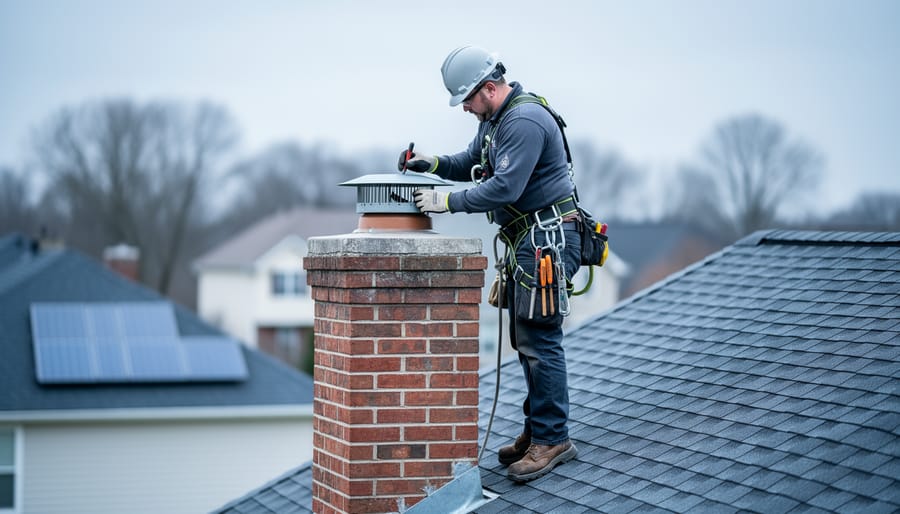
Schedule annual inspections with certified professionals like Mason Chimney Repair to catch cracks, blockages, and deteriorating mortar before they become expensive energy drains. A damaged chimney flue can pull heated air directly out of your home, forcing your HVAC system to work overtime and adding 15-30% to your heating bills.
Clean creosote buildup at least once per year, more frequently if you burn wood regularly. This tar-like substance not only creates fire hazards but also narrows your flue opening, disrupting the proper draft needed for efficient combustion and causing smoke to backdraft into living spaces.
Install a top-sealing damper to stop the constant air leakage that traditional throat dampers can’t prevent. An open or poorly sealed chimney acts like leaving a window open year-round, letting conditioned air escape and outdoor air infiltrate. This simple upgrade can reduce heating costs by hundreds of dollars annually while improving indoor comfort.
Every home’s path toward energy efficiency includes often-overlooked components. Your chimney represents one of the largest potential sources of energy loss, yet it remains invisible in most weatherization conversations. Communities across the country are discovering that a holistic approach to energy saving must address every opening in the building envelope, from windows and doors to chimneys and vents.
The families benefiting most from chimney maintenance are those in older homes, where decades of deferred upkeep have compounded small problems into major inefficiencies. In neighborhoods where energy burden already consumes too much of household income, these repairs deliver immediate relief. One community program in the Northeast helped 200 low-income homeowners seal and repair their chimneys, cutting average winter heating bills by $340. That’s money redirected toward groceries, healthcare, and education instead of disappearing up the flue.
Understanding chimney maintenance isn’t just about saving money. It’s about taking control of your energy future.
The Hidden Energy Drain: How Neglected Chimneys Waste Power and Money
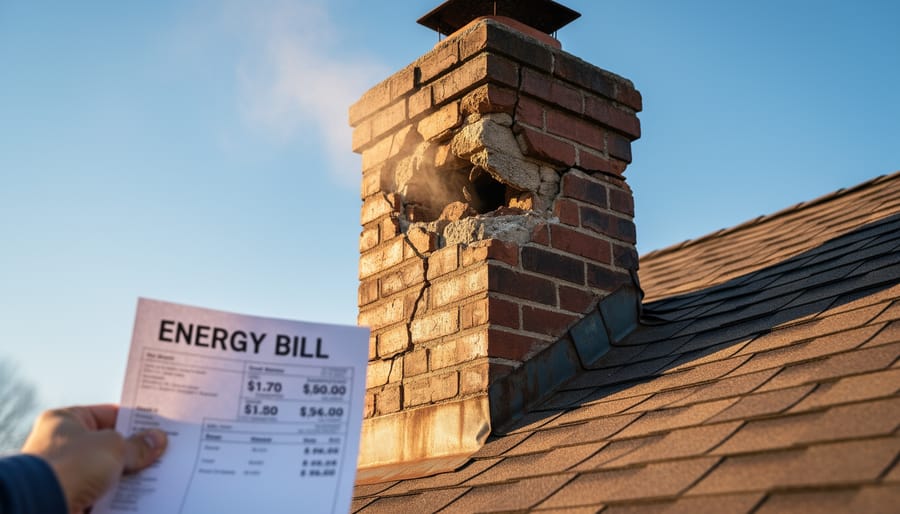
Your chimney might be quietly sabotaging every dollar you spend on heating your home. While we focus our attention on upgrading thermostats and installing better insulation, a neglected chimney creates a powerful upward draft that pulls heated air straight out of your living space. This effect, known as the stack effect, turns your chimney into a vacuum that continuously draws warm air from your home, forcing your heating system into overdrive just to maintain a comfortable temperature.
The problem extends beyond the chimney itself. Research demonstrates how air infiltration affects heating demand particularly around structural penetrations like chimneys where hot and cold air meet. Deteriorating mortar joints, cracked flue liners, and damaged dampers create pathways for conditioned air to escape. These air leaks around chimneys work against your heating system 24 hours a day, seven days a week throughout winter months.
The Riverside Community Coalition in Pittsburgh discovered this firsthand when they launched a neighborhood energy audit program last year. What they found surprised everyone: homes with unmaintained chimneys were spending 25% more on heating than comparable homes with recently serviced chimneys. One resident, Maria Chen, watched her monthly heating bill drop from $240 to $180 after addressing her chimney’s draft issues and repairing damaged mortar.
This waste directly undermines our clean energy efforts. Every extra kilowatt-hour or therm of natural gas burned to compensate for chimney-related heat loss adds unnecessary carbon emissions to our atmosphere. For households working hard to reduce their environmental impact through renewable energy adoption or energy-efficient appliances, an unmaintained chimney can erase those gains completely.
The carbon footprint impact compounds across communities. A neighborhood of just 100 homes with neglected chimneys collectively wastes enough energy annually to power 15 additional homes. That’s energy we’re burning unnecessarily while communities across our region still lack access to affordable, efficient heating solutions.
Essential Chimney Maintenance That Keeps Energy Inside Your Home
Sealing Air Leaks and Installing Chimney Dampers
Every winter, millions of dollars literally vanish up American chimneys. When your damper doesn’t seal properly or air leaks exist in your flue, you’re paying to heat the outdoors instead of your living room. This isn’t just about personal comfort. It represents wasted energy that strains our grid and burns fossil fuels unnecessarily.
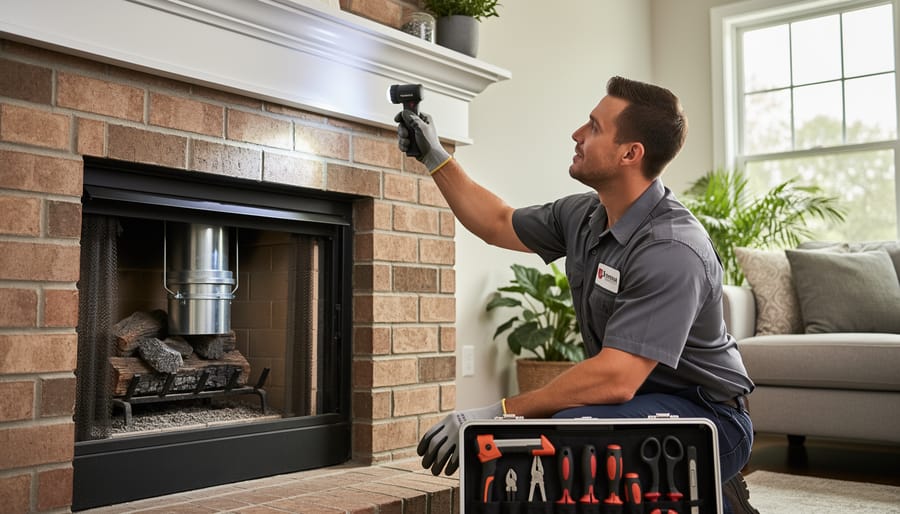
Here’s the good news: sealing these leaks is one of the simplest ways to reclaim lost energy. Start by checking your damper when the fireplace isn’t in use. Stand beneath it and look up with a flashlight. If you see daylight or feel a draft, your damper isn’t doing its job. A properly closed damper should create an airtight seal.
For traditional throat dampers that have worn out, consider upgrading to a top-sealing damper. These mount at the chimney crown and provide superior protection from both air loss and weather. The installation typically pays for itself within two heating seasons through reduced utility bills.
Around the chimney flue where it passes through your home, apply high-temperature caulk to seal any gaps. Check the area in your attic where the chimney meets the roofline. These transitions often develop cracks over time.
In Detroit’s Brightmoor neighborhood, residents working through a weatherization cooperative discovered that sealing chimney leaks reduced heating costs by an average of 18 percent. That’s real money returning to families who need it most. These improvements don’t require special skills, just attention and a few hours of your time.
Chimney Caps and Chase Covers: Your First Line of Defense
Small investments in chimney protection deliver outsized returns for your home’s energy performance. Chimney caps and chase covers act as sentinels, preventing three major threats that silently drain efficiency and money from household budgets.
Without proper covering, downdrafts force cold air down your chimney and into living spaces. Your heating system works overtime to compensate, burning through fuel and raising utility bills. A quality chimney cap disrupts these air currents, keeping conditioned air where it belongs.
Water infiltration poses an even greater threat. Rain and snow entering an unprotected chimney deteriorate masonry, corrode metal components, and saturate insulation systems. The Springfield Energy Cooperative documented how community members reduced heating costs by 12 to 18 percent after installing caps and repairing water damage. One resident discovered her attic insulation had absorbed moisture for years, essentially turning her home into an energy sieve.
Pest intrusions create surprising efficiency problems. Birds, squirrels, and raccoons nest in open chimneys, blocking proper ventilation and damaging flue liners. These disruptions force homeowners to leave windows open for ventilation, defeating insulation efforts entirely.
Installing caps and chase covers costs between $150 and $500, typically paying for themselves within two heating seasons through reduced energy waste.
Insulation and Weatherproofing Around Your Chimney
Where your chimney meets your roof, invisible gaps quietly drain warmth and inflate heating bills. These junctions lose more energy than most homeowners realize, but solutions are straightforward and affordable.
Start by inspecting the flashing, those metal sheets sealing the roof-chimney junction. Deteriorated flashing creates gaps where heated air escapes while moisture enters. Quality counter-flashing and base flashing work together to create an airtight barrier. Many hardware stores offer step-by-step tutorials that make this a manageable DIY project.
Check the chimney chase cover and crown too. Cracks in the concrete crown allow water infiltration and thermal bridging. A simple application of elastomeric sealant prevents further damage and improves thermal performance.
Inside your home, examine where the chimney passes through walls and ceilings. Gaps here should be filled with fire-rated caulk or insulation. One Cleveland neighborhood organized weatherproofing workshops where residents learned these techniques together, reducing collective heating costs by 18% that winter. Their success proves that small actions multiply when communities share knowledge. Your chimney can become part of your home’s energy solution rather than a source of waste.
Community Success: How Neighborhoods Are Combining Chimney Care with Solar Transitions
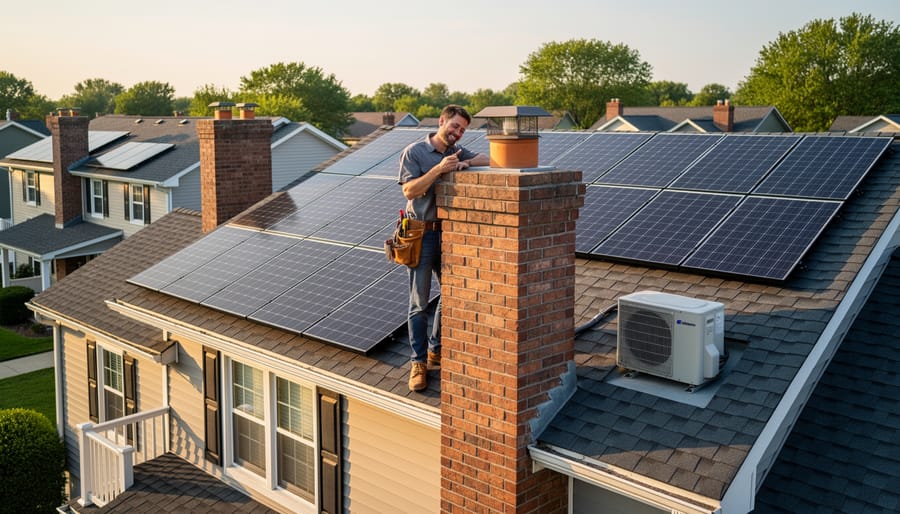
In Rochester, New York, a coalition of weatherization agencies discovered something unexpected during home energy audits: nearly 40 percent of older homes slated for solar panel installation had chimneys creating significant heat loss. Rather than treating these as separate issues, the Rochester Climate Action Collaborative developed an integrated approach. Homeowners received chimney inspections and repairs as part of their solar transition package, closing off unused flues, installing dampers, and sealing gaps before panels went on the roof. The results spoke clearly. Families reduced their overall energy consumption by an average of 22 percent, making their new solar systems even more effective and bringing monthly utility costs down faster than solar alone could achieve.
Similar success emerged in Portland, Oregon, where the Southeast Uplift Neighborhood Coalition partnered with local chimney professionals and solar installers to create a “Whole Home Energy” program. They focused specifically on households that had been excluded from clean energy transitions due to cost barriers. Through sliding-scale pricing and community fundraising, the program helped 150 families in three years address both their aging chimney infrastructure and add rooftop solar. One participant, Maria Torres, explained how fixing her deteriorating chimney liner and damper before installing solar panels cut her heating bills in half. “I thought solar was about the future, but fixing my chimney was about not wasting the energy I already had,” she said.
These efforts mirror the philosophy behind community-wide programs that recognize energy transition as a comprehensive undertaking, not a piecemeal effort. The key insight? Old infrastructure and new technology aren’t competing priorities. They’re partners.
In Denver, Habitat for Humanity incorporated chimney maintenance into their Green Retrofit program, training volunteers to identify common chimney issues during home assessments. This expanded their capacity to serve more families while building community expertise. Volunteers learned that a $200 chimney cap installation could prevent $2,000 in water damage and heat loss, making every dollar of program funding work harder.
These stories reveal a powerful truth: sustainable energy transitions succeed when they honor the homes people already live in. By addressing chimneys alongside solar panels, communities create pathways to clean energy that are more accessible, more effective, and more just. The revolution doesn’t require abandoning what exists. It requires making everything work together.
Making Chimney Maintenance Affordable and Accessible
Energy efficiency shouldn’t be a privilege reserved for those who can afford it. Yet too many families face a difficult choice: pay for essential chimney maintenance or stretch an already tight budget even thinner. This barrier keeps households trapped in inefficient homes, paying more for heat that literally goes up the chimney while missing out on the health and safety benefits of proper maintenance.
The good news? Solutions exist that bridge this gap. Weatherization assistance programs across the country now include chimney repairs and cleaning as eligible expenses. The Low-Income Home Energy Assistance Program (LIHEAP) has helped thousands of families address chimney issues that compromise their home’s energy performance. These programs recognize what energy justice advocates have long argued: home maintenance directly affects energy costs, and everyone deserves access to safe, efficient heating.
| Maintenance Task | Professional Cost | DIY Feasible? | Assistance Available |
|---|---|---|---|
| Annual Inspection | $125-$250 | Partial | LIHEAP, local grants |
| Chimney Cleaning | $200-$400 | Yes, with training | Weatherization programs |
| Damper Repair | $150-$350 | Sometimes | State energy offices |
| Masonry Repair | $500-$2,500 | No | Emergency repair funds |
Community-led initiatives are changing the landscape too. In Vermont, a neighborhood collective negotiated bulk rates with certified chimney sweeps, cutting costs by 40% for participating households. Similar programs in Oregon and Maine demonstrate how organizing collectively creates buying power that individuals lack alone.
For those comfortable with hands-on work, DIY options offer significant savings. Basic chimney cleaning can be learned through community workshops or online resources, though safety training is essential. Some tasks absolutely require professionals, but homeowners can handle visual inspections, damper operation checks, and minor weatherproofing.
Local libraries and community centers increasingly host skill-sharing sessions where neighbors teach each other home maintenance basics. These gatherings build both knowledge and community resilience. They prove that when we share resources and expertise, we create pathways for everyone to participate in the clean energy transition, one chimney at a time.
Your Next Steps: Integrating Chimney Care Into Your Clean Energy Journey
You’ve learned how chimney maintenance protects your clean energy investment and keeps your home efficient. Now it’s time to turn knowledge into action.
Start with a simple assessment. Walk around your home and look for visible signs that your chimney needs attention: crumbling mortar, white staining on bricks, or rust on the damper. Check inside for creosote buildup or debris. If you haven’t had a professional inspection in the past year, schedule one now. Many communities offer chimney safety programs through fire departments or energy efficiency initiatives that provide inspections at reduced costs or even free.
Prioritize your maintenance tasks based on safety first, then energy efficiency. A damaged chimney cap or cracked flue liner poses immediate risks. Once safety issues are resolved, focus on air sealing and insulation improvements that complement your other energy upgrades. Think of your chimney maintenance as part of the same investment strategy as your solar panels or heat pump.
Connect with local resources to make this work affordable and effective. Your town’s energy committee, weatherization assistance program, or environmental coalition can point you toward qualified professionals and available rebates. Some areas have launched neighborhood chimney maintenance cooperatives where residents schedule group inspections to negotiate better rates.
The Springfield Energy Alliance in Massachusetts created exactly this kind of program. After organizing collective chimney services for 47 households, participants saved an average of $340 annually on heating costs while preventing two house fires. They didn’t stop there. Neighbors shared what they learned at community meetings, inspiring adjacent towns to launch similar initiatives.
Talk to your neighbors about what you’re doing. Share your inspection reports, recommend reliable contractors, and discuss how chimney care fits into your broader clean energy plans. When enough households prioritize this overlooked piece of home efficiency, utility bills drop across entire neighborhoods.
Consider advocating for municipal chimney maintenance programs alongside solar incentives and weatherization funding. Energy efficiency gains momentum when communities tackle it together, ensuring everyone benefits from the clean energy transition.