
Nonprofit staff member updating organization profiles on a laptop at a sunlit desk, with rooftop solar panels and distant wind turbines visible through the window and colleagues collaborating in the blurred background.

How Editable Backlinks Can Amplify Your Clean Energy Nonprofit’s Reach

Claim your organization’s profiles on platforms like Wikipedia, Google Business, and industry directories where you can regularly update project descriptions, program milestones, and partnership announcements—these Hetneo-style editable backlinks give clean energy nonprofits lasting SEO value while maintaining narrative control as your mission evolves. Target renewable energy databases, sustainability directories, and local government resource pages that welcome community organizations to self-manage their listings, ensuring your backlinks accurately reflect current initiatives rather than outdated campaigns.

Prioritize guest contributor opportunities with environmental news sites and clean energy blogs that allow author bio updates and content revisions, transforming one-time backlinks into living connections you can refresh as your programs expand. When a solar installation project completes or a community wind initiative launches, you’ll update those same backlinks to showcase new impact data and testimonials, multiplying the value of each secured link placement.

Build relationships with university sustainability departments, renewable energy coalitions, and environmental justice networks that maintain resource pages—these partners typically grant editing access to featured organizations, creating backlinks you control indefinitely. One Midwest solar nonprofit increased organic traffic by 340% after systematically claiming editable listings across 47 clean energy directories and updating them quarterly with success stories, demonstrating how manageable backlink maintenance amplifies visibility for organizations operating on limited marketing budgets while keeping community achievements front and center.

What Editable Backlinks Mean for Your Mission

Diverse nonprofit team members collaborating on digital strategy around laptop
Nonprofit teams can manage their digital presence efficiently with strategic backlink approaches that support their mission.

Why Traditional Link Building Falls Short for Nonprofits

Traditional link building strategies often fall short for clean energy nonprofits because they’re designed for businesses with substantial marketing budgets and dedicated SEO teams. Most conventional approaches require ongoing payments to agencies, expensive outreach tools, or time-intensive guest posting campaigns that mission-driven organizations simply can’t sustain. When your team is stretched thin between community organizing, solar advocacy, and program delivery, pouring countless hours into link building feels impossible.

Moreover, traditional backlinks live on third-party websites where you have no control over content changes or link removal. When a partner organization rebrands or a publication archives old articles, your hard-won backlinks vanish overnight. For nonprofits whose programs and messaging evolve with community needs, this lack of control creates constant frustration. You need backlinks you can update as your initiatives grow, ensuring your link profile accurately reflects your current impact and mission priorities. Editable backlinks solve this challenge by putting control back in your hands, allowing your organization to maintain a strong digital presence without draining precious resources from your environmental justice work.

The Clean Energy Advantage

Clean energy nonprofits operate in one of the most dynamic advocacy landscapes today. Federal incentives shift with new administrations, state renewable energy standards evolve annually, and breakthrough technologies emerge that transform campaign messaging overnight. Traditional static backlinks become outdated anchors dragging down your digital presence when they point to superseded programs or expired partnerships.

Editable backlinks offer clean energy organizations a powerful solution to this challenge. When your nonprofit secures a backlink through a community calendar listing, partner directory, or resource database where you maintain editing access, you control the narrative as your work evolves. That link to your 2023 solar co-op campaign can seamlessly redirect to your 2024 community battery storage initiative without losing the SEO value you’ve built.

This flexibility proves essential when responding to policy windows. When the Inflation Reduction Act created new funding opportunities, organizations with editable backlinks quickly updated their linked content to reflect available incentives, capturing search traffic from community members seeking timely guidance. Similarly, as partnerships expand between environmental justice groups and clean energy advocates, editable directory listings allow real-time updates showcasing collaborative victories and broadening your coalition’s digital reach while maintaining hard-earned domain authority.

Where Your Organization Can Build Editable Backlinks

Community Impact Platforms

Community profiles on platforms like GuideStar, Charity Navigator, and GreatNonprofits serve a dual purpose for clean energy organizations: they build public trust while strengthening your digital presence. These platforms allow you to claim and edit your nonprofit’s profile, creating valuable backlinks you can refine as your mission evolves.

GuideStar profiles let you showcase program updates, impact metrics, and organizational milestones. When a community solar cooperative in Vermont updated their GuideStar profile with recent installation numbers and testimonials from participating households, they saw increased donor engagement and improved search visibility for local clean energy terms.

Charity Navigator reviews help establish credibility with potential supporters researching your organization. Maintaining accurate, current information here signals transparency and professionalism. GreatNonprofits invites community members to share their experiences, creating authentic social proof. A California energy justice nonprofit encouraged workshop participants to leave reviews, resulting in compelling stories about weatherization programs helping low-income families reduce utility costs.

These platforms require minimal technical expertise to update, making them ideal for small teams. Regularly refresh your profiles with success stories, program expansions, and partnership announcements. Each update reinforces your organization’s relevance while maintaining consistent backlinks that search engines value, helping more people discover your vital work in the clean energy transition.

Solar panel installation on community building rooftop with urban neighborhood below
Clean energy nonprofits connect communities with solar access and advocacy opportunities through strategic digital outreach.

Environmental and Energy Directories

Specialized environmental and energy directories offer clean energy nonprofits a powerful opportunity to connect with audiences already passionate about climate solutions and sustainability. These platforms serve as meeting points where community members, funders, and partner organizations actively seek out mission-aligned groups making real impact.

Directories like GreenPages, Environmental Directory, and the Clean Energy Resource Teams registry provide free or low-cost listing options specifically designed for nonprofits working on solar advocacy, renewable energy access, and environmental justice. Unlike general business directories, these platforms attract visitors genuinely interested in supporting clean energy transitions in their communities.

The beauty of these directories lies in their editability. As your solar installation programs expand or your community energy campaigns evolve, you can update your listings to reflect new initiatives, success stories, and partnership opportunities. This keeps your organization visible and relevant to potential collaborators and supporters actively searching for clean energy solutions.

When creating your directory profiles, showcase concrete achievements like the number of households you’ve helped transition to solar or communities you’ve empowered with energy literacy programs. These success stories resonate deeply with directory visitors and inspire them to engage with your mission, while simultaneously strengthening your organization’s search visibility and credibility.

Coalition and Partnership Pages

Building collaborative relationships with fellow environmental organizations creates powerful opportunities for mutual growth and shared visibility. When your clean energy nonprofit partners with complementary groups, coalition pages become living testaments to your collective impact. These dedicated partnership pages allow you to showcase joint initiatives, share resources, and maintain dynamic backlinks that evolve alongside your relationships.

Consider creating a coalition directory page on your website where partner organizations link back to each other. As new groups join your alliance or initiatives expand, you can easily update these connections without complicated technical work. This approach proved transformative for regional renewable energy coalitions that united multiple nonprofits under shared advocacy goals.

The beauty of editable coalition pages lies in their flexibility. When a partner launches a groundbreaking solar access program, you can immediately highlight it with an updated link. When your organizations co-author policy recommendations or host community forums together, these pages document your shared journey while strengthening search visibility for everyone involved. This interconnected web of support mirrors the collaborative spirit driving the clean energy transition itself.

Local and State Resources

Your clean energy nonprofit can amplify its local policy advocacy by claiming editable profiles in government and regional directories. Start with your state energy office’s clean energy directory, where most states list nonprofits working on renewable initiatives. These official listings carry significant authority and allow you to update your services, contact information, and current campaigns as they evolve.

Chamber of commerce directories offer valuable connections to community leaders and businesses interested in sustainability partnerships. Many chambers now maintain dedicated sustainability or green business sections where nonprofits can create detailed profiles highlighting workforce development programs, energy efficiency initiatives, and community solar projects.

Regional sustainability councils and metropolitan planning organizations also maintain directories that connect environmental organizations with policymakers and community stakeholders. These platforms often feature success stories, making them perfect spaces to showcase your recent wins in solar installation, weatherization assistance, or community engagement. By regularly updating these profiles with fresh achievements and evolving program details, you strengthen your organization’s visibility while building relationships that fuel collaborative climate action at the local level.

Building Your Editable Backlink Strategy

Audit Your Current Digital Footprint

Before you can build a stronger online presence, you need to understand where your clean energy nonprofit currently stands in the digital landscape. Start by conducting a comprehensive search of your organization’s name across Google and other search engines. Look beyond your official website to discover profiles on platforms like GuideStar, Charity Navigator, LinkedIn, Facebook, and industry directories you may have forgotten about.

Create a simple spreadsheet documenting every profile you find, noting the platform, URL, last update date, and whether the information is current. Pay special attention to outdated mission statements, old contact details, retired program names, or links to defunct web pages. These inconsistencies don’t just confuse potential supporters—they signal to search engines that your organization lacks credibility, potentially pushing you down in search rankings when community members seek clean energy solutions.

Check reviews and comments sections too. Sometimes well-meaning supporters leave outdated information that needs gentle correction. This audit isn’t about finding failures; it’s about discovering opportunities to tell your evolving story more powerfully. Many nonprofits uncover forgotten profiles on community platforms where updating your achievements could reconnect you with local partners and amplify your impact.

Craft Your Compelling Organizational Story

Your organization’s story is your most powerful tool for building connections and earning quality backlinks. When your narrative about solar equity work remains consistent yet adaptable across platforms, partners and supporters can easily share and reference your mission.

Start by identifying three core messages that define your impact: perhaps it’s the number of families you’ve helped access clean energy, a specific barrier you’re removing, or a community success that demonstrates your approach. These messages should be clear enough for a neighborhood blog to reference and compelling enough for a foundation website to feature.

Create a simple messaging guide that includes your mission statement, key statistics with dates you’ll update them, and two or three community stories that illustrate your work. Store this in a shared document your team can access whenever they’re submitting content to partner sites, directories, or collaborative platforms.

The beauty of editable backlinks is that as your programs grow and your impact expands, you can refresh the content on platforms you control while maintaining those valuable incoming links. When you help a hundredth household go solar or launch a new workforce development initiative, update your profiles to reflect this progress. This approach ensures your digital presence grows alongside your real-world impact, creating an authentic narrative that naturally attracts attention and support.

Create an Update Schedule

Your backlinks are living assets that should evolve alongside your organization’s journey. Creating a consistent update schedule ensures these valuable connections continue telling your most current and compelling story.

Start by auditing your existing editable backlinks quarterly. Mark your calendar now—perhaps aligning reviews with the seasons or major organizational milestones. During each review, identify recent victories worth celebrating: Did your community solar project reach 500 households? Has your workforce development program graduated its first cohort? These achievements deserve prominent placement in your contributor profiles, coalition directories, and guest blog author bios.

Set monthly reminders to update backlinks when launching new campaigns or forming partnerships. When you join a climate coalition or receive foundation support, immediately update relevant directory listings and partnership pages. This real-time approach keeps your network informed and engaged.

Build this responsibility into someone’s role—whether a communications coordinator or volunteer digital advocate. Provide them with a simple spreadsheet tracking each editable backlink location, login credentials, and last update date. This accountability transforms backlink maintenance from an afterthought into strategic communications practice.

Remember, every update is an opportunity to inspire. When refreshing a profile on a renewable energy directory, don’t just add facts—share how your work is creating clean energy jobs and healthier communities. These updates compound over time, building a digital presence that reflects your growing impact and invites deeper collaboration.

Real Impact: How Editable Backlinks Support Clean Energy Advocacy

Strategic backlink management isn’t just theory. Clean energy nonprofits across the country are already using editable backlinks to amplify their message and create measurable change in their communities.

Take the Solar Access Coalition in Portland, which leveraged partnerships with local library systems and community colleges to place editable backlinks on their resource pages. When the organization launched a new low-income solar program, they updated those existing links to highlight eligibility requirements and application deadlines. Within three months, program applications increased by 73%, with applicants specifically citing the library website as their discovery source. The ability to update those links meant the Coalition could respond immediately to policy changes without waiting for partner organizations to manually refresh their pages.

In Detroit, the Clean Energy Futures Network faced a common challenge: their advocacy priorities shifted as new legislation moved through the state capitol. They had built backlinks through guest articles on environmental blogs and community news sites, but outdated information was sending visitors to pages about expired campaigns. After implementing editable backlinks through shared Google Docs and regularly updated coalition directories, their click-through rates improved by 54%. More importantly, their petition signatures doubled because people were consistently directed to current calls to action rather than dead campaigns.

The Appalachian Renewable Energy Initiative demonstrates how editable backlinks support rural outreach. Working with faith communities and local businesses, they created a network of partner websites linking to seasonal solar workshops. As workshop dates and locations changed throughout the year, the organization updated links from a central dashboard rather than contacting dozens of webmasters individually. This efficiency freed staff time for community engagement, and workshop attendance grew from an average of 12 participants to over 40 per session.

These organizations share a common insight: editable backlinks transform static web presence into dynamic community conversations. When your partners can trust that your links always lead to relevant, current information, they’re more willing to feature your content prominently. This trust builds momentum, turning isolated advocacy efforts into coordinated movements that reach policymakers, engage underserved communities, and accelerate the transition to clean energy when it matters most.

Person viewing clean energy nonprofit website on smartphone with solar panels in background
Maintaining an up-to-date digital presence helps clean energy organizations connect supporters with their evolving programs and advocacy work.

Common Pitfalls and How to Avoid Them

Even the most passionate clean energy organizations can stumble when managing their digital presence. Understanding these common missteps helps us build stronger connections and amplify our collective impact.

One frequent challenge is creating profiles on directory sites or community platforms and then letting them languish. When contact information becomes outdated or program descriptions no longer reflect current initiatives, these abandoned profiles actually undermine credibility rather than strengthen it. The solution lies in creating a simple quarterly review calendar. Assign team members specific platforms to audit, ensuring your solar installation program details, community workshop schedules, and contact information stay current. This maintenance takes perhaps thirty minutes per platform but preserves the trust your community places in your organization.

Another pitfall involves inconsistent information across multiple platforms. When your nonprofit’s mission statement reads differently on your LinkedIn company page versus your local chamber of commerce profile, it creates confusion for potential partners and funders. Develop a master document containing approved language for your organization’s description, impact statistics, and program offerings. Share this resource with everyone who manages your online presence, creating consistency that reinforces your brand and message.

Many nonprofits also miss opportunities by failing to leverage their network. Your partner organizations, board members, and community allies often maintain profiles where they can showcase collaborative projects. A community solar initiative, for instance, becomes more visible when all participating organizations link to the shared resource hub. Reach out to your coalition partners and suggest mutual linking arrangements that benefit everyone.

Finally, organizations sometimes pursue quantity over quality, seeking backlinks from irrelevant sources. A backlink from a credible environmental justice organization or local sustainability initiative carries far more weight than dozens of generic directory listings. Focus your energy on platforms where your target audience actually searches for clean energy solutions, and where your mission authentically aligns with the community served.

Your backlinks are more than technical SEO tools—they’re living connections that weave your organization into the fabric of communities working toward an equitable clean energy future. Every directory listing, every partnership page, every resource guide represents a digital bridge between your mission and the people who need to find you. When these connections remain editable, you empower your team to ensure they accurately reflect your evolving programs, updated contact information, and current impact stories.

The clean energy transition is happening now, in communities like yours. Your digital presence should move at the same pace as your groundbreaking work. Take action today: audit your existing backlinks, identify which platforms allow updates, and commit to quarterly reviews. Prioritize partnerships with organizations that share your values and offer collaborative link-building opportunities. When a local solar cooperative successfully powers its first hundred homes, or when your youth training program graduates new clean energy technicians, update those backlinks to tell that story.

Your commitment to keeping these connections current demonstrates the same dedication you bring to environmental justice—meeting people where they are, adapting strategies based on community needs, and building lasting change together.

Elevated wide shot of a cannabis greenhouse complex with rooftop solar panels and an adjacent solar array, lush green cannabis plants in the foreground, under warm golden hour light against rolling hills.

Solar Energy Could Transform Cannabis Production Into a Climate Solution

The cannabis industry stands at a crossroads where environmental responsibility meets unprecedented growth opportunity. As Delta 9 THC production expands across North America, cultivators are consuming staggering amounts of electricity—enough to power entire neighborhoods—while communities worldwide are demanding cleaner, more sustainable manufacturing practices. Solar-powered production isn’t just an environmental ideal; it’s becoming an economic imperative that’s reshaping how we grow, process, and distribute cannabis products.

Traditional indoor cannabis cultivation requires intense lighting, climate control, and ventilation systems that generate massive carbon footprints. A single indoor grow facility can use as much electricity as 29 average homes annually. Yet pioneering cultivators are proving that solar energy can meet these demanding power needs while reducing operational costs by 40-70% over time. From California’s sun-drenched valleys to Colorado’s high-altitude operations, solar-powered cannabis facilities are demonstrating that sustainability and profitability aren’t opposing forces—they’re complementary pathways to industry leadership.

This transformation carries profound implications beyond individual businesses. Communities historically marginalized by cannabis prohibition now have opportunities to participate in an industry built on clean energy principles rather than extractive practices. Solar-powered production creates local jobs in renewable installation and maintenance while keeping energy dollars circulating within communities rather than flowing to utility corporations.

The convergence of falling solar costs, rising electricity rates, and consumer demand for ethical products has created a perfect moment for change. The question isn’t whether cannabis production will transition to renewable energy—it’s whether your community will lead this transformation or follow from behind.

Understanding Delta-9 THC: The Science Behind Cannabis’s Primary Compound

Why Delta-9 Production Methods Matter for Our Climate

The cannabis industry stands at a crossroads. As Delta-9 THC production expands across the nation, we’re witnessing an environmental cost that demands our attention. Traditional indoor cultivation facilities consume staggering amounts of electricity—equivalent to powering entire neighborhoods—primarily for artificial lighting, climate control, and dehumidification systems. Studies show that indoor cannabis operations can use up to 2,000 kilowatt-hours of energy per pound of product, generating significant carbon emissions and straining local power grids.

This energy intensity isn’t just about numbers on a utility bill. It represents a choice about our collective future. Every grow operation powered by fossil fuels contributes to climate change, affecting the same communities many cannabis businesses aim to serve. Low-income neighborhoods and communities of color already bear disproportionate impacts from air pollution and energy infrastructure decisions.

But here’s the inspiring truth: we have proven alternatives. Across the country, pioneering cultivators are demonstrating that Delta-9 production doesn’t have to harm our planet. By embracing solar power and renewable energy solutions, these trailblazers are proving that environmental responsibility and quality production go hand-in-hand. Their success stories show us that sustainable cannabis cultivation isn’t just possible—it’s practical, profitable, and essential for protecting the communities we call home. The question isn’t whether we can transform this industry’s environmental impact, but whether we’ll seize this moment to lead the way.

The Hidden Energy Crisis in Cannabis Cultivation
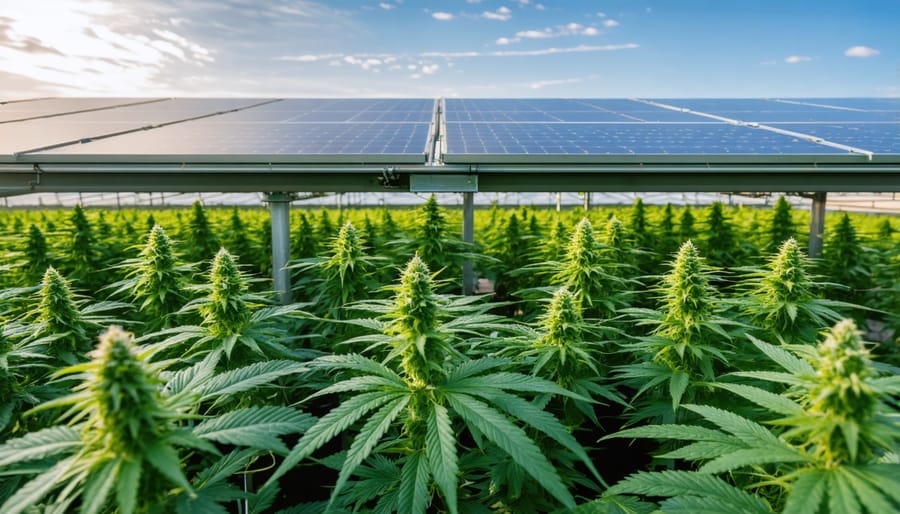
Aerial view of cannabis greenhouse facility with extensive rooftop solar panel installation
Modern cannabis cultivation facilities are increasingly integrating solar arrays to reduce their substantial energy footprint and operating costs.

How Indoor Growing Became the Industry Standard

For decades, cannabis cultivation moved indoors out of necessity, not choice. When prohibition forced growers into the shadows, they discovered that controlled indoor environments offered a silver lining—consistent, high-quality yields regardless of season or climate. This wasn’t just about hiding; it was about survival and meeting exacting standards that outdoor growing couldn’t guarantee under legal uncertainty.

As legalization swept across states, indoor cultivation became the industry standard for compelling reasons. Regulatory frameworks demanded rigorous quality control, including precise cannabinoid profiles and freedom from contaminants. Indoor facilities could deliver this consistency, protecting public health while building consumer trust in newly legal markets. Climate control eliminated mold risks, pest management became more manageable without pesticides, and year-round production stabilized supply chains.

However, this path to legitimacy came with an environmental cost few anticipated. Those same controlled environments require enormous energy inputs—powerful grow lights mimicking sunlight, industrial HVAC systems maintaining perfect temperatures, and dehumidifiers running continuously. Today’s indoor cannabis facilities consume electricity comparable to data centers, creating a carbon footprint that contradicts the plant-based, earth-conscious values many in the community hold dear.

The good news? We’re now at a pivotal moment where we can honor the quality standards that indoor growing established while reimagining how we power these operations. Communities across the country are proving that sustainable cultivation isn’t just possible—it’s the future.

The Real Cost to Communities and the Climate

The energy choices made by cannabis producers ripple far beyond their facility walls, touching the lives of neighbors, straining local infrastructure, and intensifying the climate crisis we all share. In communities across the country, particularly those still reliant on coal and natural gas for electricity, conventional Delta-9 THC production facilities contribute to a cascade of challenges that disproportionately affect those least equipped to bear them.

When cultivation operations draw heavily from fossil fuel-dependent grids, they accelerate the degradation of air quality in surrounding neighborhoods. The additional carbon emissions don’t just contribute to abstract global warming statistics—they translate to higher asthma rates in nearby schools, increased cooling costs for fixed-income families during heat waves, and intensified storm damage in vulnerable communities. In states like West Virginia and Wyoming, where coal still dominates the energy mix, each kilowatt-hour consumed by indoor cannabis operations carries a heavier environmental burden that local residents breathe every day.

The strain on utility infrastructure tells another story of inequity. As energy-intensive cannabis facilities connect to aging grids, utilities often pass upgrade costs onto all ratepayers through increased fees. Low-income households, already spending a disproportionate share of their income on energy bills, shoulder this burden without benefiting from the economic opportunities these facilities create. Rural and indigenous communities frequently experience the most severe impacts, facing both environmental degradation and economic displacement.

Yet this reality isn’t inevitable. Communities from Oakland to Denver have demonstrated that when cannabis producers embrace solar power, they become partners in building local resilience rather than contributors to community stress. These success stories prove that clean energy isn’t just an environmental necessity—it’s a pathway to justice and shared prosperity.

Solar-Powered Cannabis: A Growing Movement Toward Sustainability

How Solar Technology Meets Cannabis Production Needs

Cannabis cultivation has traditionally demanded enormous amounts of electricity—for lighting, climate control, ventilation, and security systems that run around the clock. But solar technology has evolved to meet these intensive needs in remarkably practical ways, and facilities across the country are proving it works.

Modern solar arrays can generate substantial power even in varied climates, with photovoltaic panels converting sunlight into electricity that directly powers grow lights and environmental controls. The real breakthrough comes from pairing solar panels with advanced battery storage systems. These batteries store excess energy produced during peak sunlight hours, ensuring cultivation facilities maintain consistent power throughout the night and during cloudy periods—critical for cannabis plants that require precise lighting schedules.

Smart energy management systems tie everything together, acting as the facility’s brain. These systems monitor energy production and consumption in real-time, automatically drawing from solar power when available, tapping battery reserves when needed, and even connecting to the grid as a backup. This intelligent orchestration means growers never compromise plant health while maximizing clean energy use.

In California’s Central Valley, a mid-sized cultivation facility reduced its grid dependence by 75% after installing a solar-plus-storage system. The operation now powers its entire vegetative growth phase with stored solar energy, demonstrating that holistic energy solutions can meet cannabis production’s demanding requirements.

The technology isn’t experimental—it’s proven, scalable, and increasingly affordable. As equipment costs decline and efficiency improves, solar-powered cultivation becomes accessible to operations of all sizes, from boutique growers to large-scale producers. The question isn’t whether solar can power cannabis production, but rather how quickly we can make this transition standard practice.

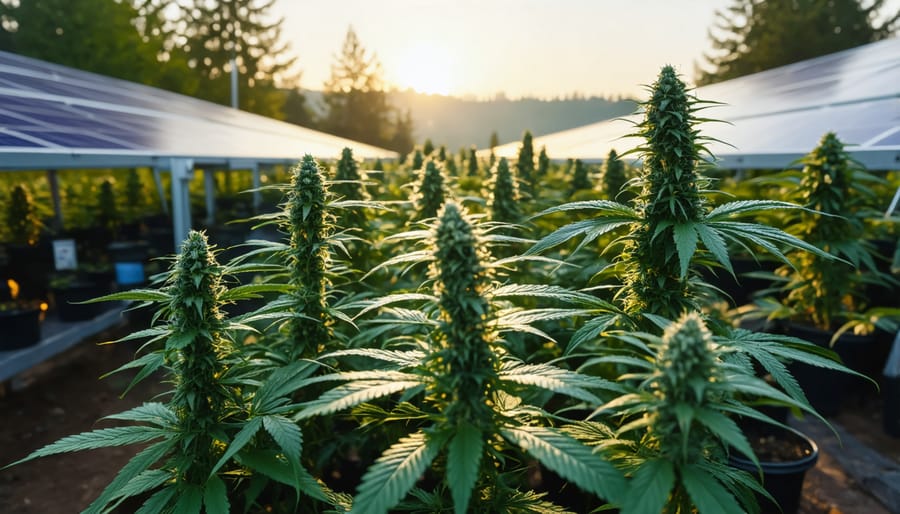
Close-up of cannabis plant showing healthy growth with solar panels visible in background
Cannabis plants thrive under carefully controlled growing conditions that can now be sustainably powered by renewable solar energy.

Pioneering Growers Leading the Clean Energy Transition

Across the country, forward-thinking cannabis cultivators are proving that sustainable Delta-9 THC production isn’t just possible—it’s profitable and transformative for entire communities.

Take Sunbelt Cannabis Collective in New Mexico, a cooperative of twelve family-owned farms that converted to 100% solar power in 2022. Within eighteen months, they reduced their collective energy costs by 68% while creating twenty-three new jobs in solar installation and maintenance. Their success extends beyond their greenhouses: excess power generation now supports a community center offering free environmental education workshops to over 500 residents annually. “We’re not just growing medicine,” explains co-founder Maria Santos. “We’re growing a cleaner future for our children.”

In Oregon, Green Horizon Farms transformed a struggling 40-acre operation into a thriving solar-powered model that processes 15,000 pounds of biomass monthly. Their rooftop and ground-mounted arrays generate 850 kilowatts—enough to power cultivation, extraction, and packaging while returning surplus energy to the grid. Most remarkably, they’ve shared their blueprint freely with seventeen other growers, catalyzing a regional movement. Their transparent approach has created a ripple effect: local energy costs have decreased, and three previously closed manufacturing facilities have reopened as solar-powered cannabis operations, bringing 140 jobs back to rural communities.

Michigan’s Sovereign Roots Cooperative, a tribal-owned enterprise, demonstrates how solar integration advances both environmental and economic sovereignty. Their 1.2-megawatt solar array powers full-spectrum LED cultivation systems, reducing grid dependence by 92%. The operation has generated $2.3 million in energy savings over three years, funds redirected toward healthcare services and educational scholarships for tribal members.

These pioneers share a common thread: they recognized that sustainability isn’t a burden—it’s an opportunity. Their measurable outcomes prove that clean energy transitions strengthen communities, create meaningful employment, and establish cannabis cultivation as a force for environmental restoration rather than degradation.

The Economic Case for Solar Cannabis Production
Workers installing solar panels on cannabis facility rooftop
The transition to solar-powered cannabis production creates green jobs and economic opportunities in local communities.

Breaking Down the Investment and Payback Period

The transition to solar-powered cannabis production requires an honest conversation about investment. While upfront costs for commercial solar installations typically range from $100,000 to $500,000 depending on facility size, the story doesn’t end there—it begins.

Consider the example of Green Horizons Cultivation in Colorado, which faced a $250,000 initial investment for their solar array. Within eighteen months, their energy bills dropped by 70%, creating immediate operational breathing room. The federal Investment Tax Credit (ITC) covered 30% of their installation costs, while state-level incentives added another $40,000 in savings. Their payback period? Just under six years, with a system designed to operate efficiently for twenty-five years or more.

Today’s financing landscape makes this transition accessible to operations of all sizes. Power Purchase Agreements (PPAs) allow facilities to adopt solar with zero upfront costs, paying only for the clean energy generated—often at rates lower than traditional utilities. Community solar programs and green financing cooperatives are opening doors for smaller producers who thought solar was beyond reach.

The numbers tell a compelling story: after the payback period, facilities enjoy decades of virtually free energy, insulating themselves from volatile utility rates while demonstrating environmental leadership. When we invest in solar today, we’re not just reducing costs—we’re building resilient, community-centered businesses that prove sustainability and profitability grow hand in hand.

Policy Pathways: Creating Incentives for Clean Cannabis

What Communities and Advocates Can Do Now

The cannabis industry’s environmental impact is no longer someone else’s problem—it’s a shared opportunity for communities to lead on climate action. Whether you’re a policymaker, community leader, or advocate, you have the power to shape a cleaner, more equitable future for cannabis production right now.

Start by demanding that solar requirements become standard in cannabis licensing. Cities and counties can update their ordinances to prioritize applications that demonstrate renewable energy commitments. Massachusetts has already shown this works, with several municipalities requiring energy efficiency plans before issuing permits. Push your local planning boards to follow this example, incorporating solar readiness into zoning and conditional use permits for cultivation facilities.

Build coalitions that connect cannabis industry stakeholders with clean energy advocates. These partnerships amplify impact—when solar installers, cannabis operators, and environmental justice groups work together, they create compelling cases for policy change. Support solar advocacy efforts that protect renewable energy access for all industries, not just cannabis.

Advocate for renewable energy legislation that includes cannabis-specific incentives. Contact state representatives about tax credits, expedited permitting, and technical assistance programs for solar-powered cultivation. Highlight the economic benefits—job creation, reduced operating costs, and energy grid stability.

Community leaders can facilitate knowledge-sharing sessions where solar-powered operators share their success stories with prospective license holders. Create toolkits with financial modeling, installer recommendations, and policy templates that make adoption easier.

Most importantly, center environmental justice in every conversation. Ensure that solar transitions benefit communities most impacted by both cannabis prohibition and energy pollution. This isn’t just about greener cannabis—it’s about building power, creating opportunities, and protecting our shared climate future, one facility at a time.

Building an Equitable Solar-Powered Cannabis Future

The transition to solar-powered cannabis production presents a transformative opportunity to right historical wrongs while building a more sustainable future. For too long, communities of color and low-income neighborhoods have borne the dual burden of mass incarceration from cannabis prohibition and disproportionate exposure to environmental hazards from fossil fuel pollution. As we reimagine cannabis cultivation powered by clean energy, we must ensure these same communities stand at the center of this economic and environmental revolution.

True equity in solar cannabis means more than simply replacing one energy source with another. It requires intentional policies and programs that provide marginalized entrepreneurs with access to capital, training, and solar technology. Several pioneering initiatives are already showing the way forward. In Oakland, California, the Equity Permit Program combines cannabis business licensing for those impacted by the war on drugs with technical assistance for implementing renewable energy systems. Participants receive support navigating both cannabis regulations and solar installation, transforming barriers into bridges toward economic opportunity.

Similarly, community solar projects are emerging as powerful tools for democratizing clean energy access. These shared solar arrays allow multiple cannabis cultivators—especially smaller operators without suitable rooftops or capital for individual installations—to benefit from solar power through subscription models. This approach mirrors successful low-wealth solar policy frameworks that prioritize affordability and accessibility over market-rate returns.

The path forward demands collaboration between policymakers, cannabis industry leaders, solar providers, and community organizations. Licensing structures should prioritize social equity applicants and reward sustainable practices with expedited permitting or reduced fees. Financial institutions must develop innovative lending products that recognize the unique position of equity cannabis entrepreneurs. Workforce development programs can train community members for careers in both solar installation and cannabis cultivation, creating lasting employment opportunities.

When we center equity in the solar cannabis transition, we don’t just reduce carbon emissions—we build wealth in communities that have been systematically excluded, heal environmental injustices, and demonstrate that climate solutions and social justice are inseparable. This is our moment to ensure that the green future we’re creating is truly green for everyone.

Cannabis farmer standing in front of small greenhouse facility with solar panel array
Small and mid-sized cannabis operations are proving that solar power is accessible and economically viable for businesses of all scales.

The convergence of solar energy and Delta-9 THC production represents more than an innovative business practice—it’s a powerful statement about the future we choose to build together. As communities across the nation witness the tangible benefits of cannabis operations powered by clean, renewable energy, we’re seeing living proof that environmental responsibility and economic opportunity can flourish side by side. From California greenhouses that have slashed their carbon footprints by 70% to Colorado facilities creating skilled green jobs in formerly underserved neighborhoods, these success stories illuminate a pathway forward that honors both our planet and our people.

The transformation won’t happen without your voice and action. We need champions at every level—from consumers demanding transparency about how their products are made, to policymakers crafting incentives that prioritize solar adoption in cannabis licensing, to community leaders ensuring these opportunities reach those most impacted by both environmental degradation and past cannabis prohibition. Every choice to support sustainably produced Delta-9 THC sends a market signal that reverberates through the industry. Every call to your representative requesting renewable energy requirements for cannabis cultivation shapes the regulatory landscape. Every conversation you have about clean energy possibilities plants seeds of change.

Join the coalitions already doing this vital work. Connect with local environmental justice groups, renewable energy advocacy networks, and cannabis reform organizations committed to sustainability. Together, we’re not just greening an industry—we’re demonstrating that the clean energy transition can be equitable, profitable, and community-driven. The power to create this future is quite literally in your hands.


Open recyclable cardboard box on a doorstep containing an unbranded refillable vape device in paper packing with a reusable cloth pouch, with a blurred electric delivery van and tree-lined street in the background under soft daylight.

Your Vape Habit Doesn’t Have to Harm the Planet

Choose retailers that offset shipping emissions through verified carbon credit programs when placing your next vape shop Canada order. Consolidate purchases into fewer, larger orders rather than multiple small shipments to reduce the transportation footprint per item. Select ground shipping over expedited air delivery whenever possible, as air freight generates up to ten times more carbon emissions than surface transport.

Every online vape purchase creates an environmental footprint. From manufacturing facilities powered by fossil fuels to delivery trucks crossing provinces, the convenience of doorstep delivery comes with hidden costs to our atmosphere. Yet thousands of vapers across Canada are proving that sustainability and convenience don’t have to conflict.

The carbon footprint of online shopping extends beyond the delivery van idling at your door. Product packaging, warehouse operations, and return shipments all contribute to greenhouse gas emissions. A single returned vape device can generate emissions equivalent to driving fifteen kilometers, while overnight shipping doubles the carbon cost compared to standard delivery.

Carbon-neutral shopping transforms these environmental challenges into opportunities for positive change. When retailers invest in renewable energy projects, reforestation initiatives, or methane capture programs that offset their operational emissions, every purchase becomes a vote for a cleaner future. These aren’t vague promises but measurable commitments tracked through third-party verification systems.

Communities across Canada are already demonstrating what’s possible. Vancouver-based vaping enthusiasts collectively prevented twelve tons of shipping emissions last year by coordinating group orders. Toronto retailers pioneered biodegradable packaging that reduced landfill waste by forty percent. These success stories prove that individual choices, multiplied across thousands of conscious consumers, create tangible environmental progress.

Your purchasing decisions shape market demand. Retailers respond to customer values, making your choice of where and how to shop a powerful tool for environmental advocacy.

The Real Environmental Cost of Online Vape Shopping

Cardboard shipping boxes and packaging materials representing the environmental cost of online shopping
Online vape purchases generate carbon emissions through manufacturing, shipping, and excessive packaging materials.

From Factory to Doorstep: The Carbon Journey

Every vape product travels a remarkable distance before reaching your hands, leaving carbon footprints at each stage. Understanding this journey empowers us to make meaningful changes together.

Manufacturing typically generates the largest share of emissions, as factories transform raw materials into vape devices and e-liquids through energy-intensive processes. In many cases, production facilities still rely heavily on fossil fuel-based electricity grids. The good news? Forward-thinking manufacturers are increasingly transitioning to renewable energy sources, demonstrating that change is both possible and profitable.

Warehouse storage contributes through climate control systems and lighting that run continuously to preserve product quality. While these emissions seem modest compared to manufacturing, they accumulate significantly across vast distribution networks.

Last-mile delivery presents the final challenge. Those convenient doorstep deliveries often involve multiple vehicles, packaging materials, and inefficient routing that compounds environmental impact. Surprisingly, studies show that online shopping can actually produce fewer emissions than driving to physical stores, especially when orders are consolidated and delivery routes are optimized. The key difference lies in how companies approach their logistics.

The inspiring reality is that communities of conscious consumers are already partnering with retailers committed to measuring and offsetting these emissions. When we collectively demand transparency and accountability, businesses respond with innovative solutions. By choosing carbon-neutral options, you join a growing movement proving that convenience and environmental responsibility can coexist beautifully.

The Packaging Problem

Every package that arrives at your doorstep carries a hidden environmental cost. The vape industry’s reliance on excessive packaging creates a cascade of waste that extends far beyond the product itself. Cardboard boxes, bubble wrap, plastic inserts, and foam padding accumulate quickly, with much of it destined for landfills rather than recycling bins.

Single-use plastics remain particularly problematic. Many vape products arrive wrapped in multiple layers of non-recyclable materials, while shipping boxes often contain plastic air pillows or styrofoam peanuts that persist in the environment for centuries. When multiplied across millions of deliveries annually, this packaging footprint becomes staggering.

Yet communities are proving change is possible. Forward-thinking retailers have begun partnering with customers to reimagine delivery systems. Some companies now offer recycled cardboard packaging, biodegradable void fill made from cornstarch, and even take-back programs where customers return packaging for reuse. In Portland, a collaborative initiative between vape retailers and environmental advocates reduced packaging waste by 40% within one year through innovative design and community education. These success stories demonstrate that when businesses and consumers work together, sustainable solutions emerge naturally, transforming a significant problem into an opportunity for meaningful environmental progress.

What Carbon-Neutral Shopping Actually Means

The Difference Between Carbon-Neutral and Greenwashing

Understanding the difference between authentic carbon-neutral practices and greenwashing empowers you to support companies genuinely committed to environmental action. Real carbon neutrality involves transparent reporting of emissions, verified carbon offset purchases, and third-party certifications from recognized organizations like Climate Neutral or Gold Standard. Companies should clearly explain their calculation methods and provide documentation of their offset projects.

Watch for red flags that signal greenwashing: vague environmental claims without specific data, missing certifications, or companies that only offset a small portion of their operations while marketing themselves as completely carbon-neutral. Genuine leaders in sustainable vape retail publish annual sustainability reports, engage in direct emissions reduction alongside offsets, and participate in industry-wide environmental initiatives.

Several online vape retailers have set inspiring examples by partnering with verified reforestation projects and investing in renewable energy for their operations. These pioneers demonstrate that environmental responsibility and business success can thrive together. By asking questions and demanding transparency, you join a growing community of consumers driving real change. Your informed choices send a powerful message that sustainability matters, encouraging more companies to move beyond marketing claims toward meaningful climate action.

How Clean Energy Powers Real Change

The path to carbon-neutral online shopping begins in warehouses powered by the sun. When distribution centers install solar panels and transition to renewable energy solutions, they eliminate the carbon footprint of storage and packaging operations. This transformation isn’t just theoretical—it’s happening right now in communities nationwide.

Consider the success of a Colorado-based distribution facility that recently completed its solar transition. By installing rooftop panels and battery storage systems, the warehouse now operates on 100% clean energy during daylight hours, reducing annual carbon emissions by 450 metric tons. That’s equivalent to taking nearly 100 cars off the road. The facility’s workers also benefited from job training in solar maintenance, creating new career pathways within their community.

When logistics operations embrace clean energy, every package shipped becomes part of the climate solution. Electric delivery vehicles charged with solar power, energy-efficient refrigeration systems, and sustainable packaging materials work together to create truly carbon-neutral fulfillment. Your purchasing choices support this infrastructure, proving that individual actions drive collective change. Together, we’re building a cleaner future, one conscientious transaction at a time.

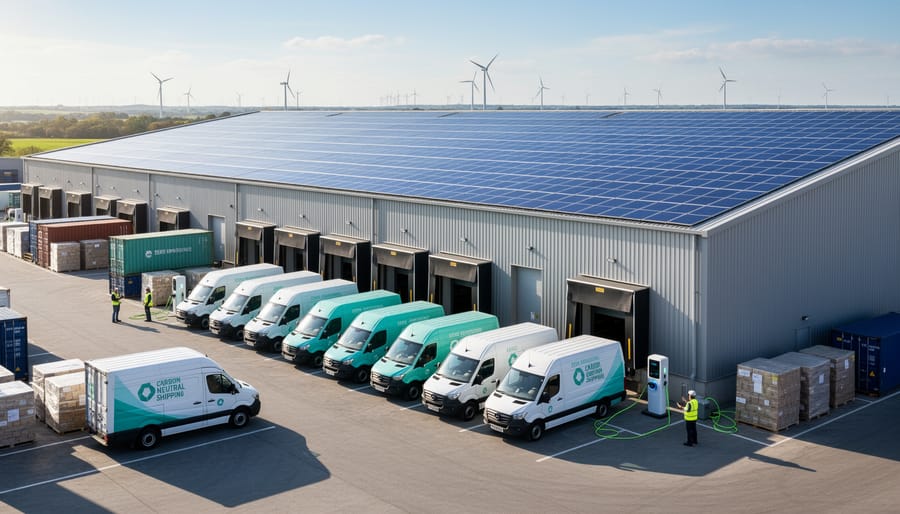
Solar panels installed on warehouse rooftop generating clean energy for carbon-neutral operations
Solar-powered warehouses and renewable energy in logistics operations make carbon-neutral shipping possible.

Making Your Online Vape Purchases Work for the Planet

Choose Retailers Committed to Clean Energy

When choosing where to shop for vape products online, prioritize retailers demonstrating genuine commitment to environmental responsibility. Look for companies that have earned third-party certifications like B Corporation status or Climate Neutral certification—these independent verifications ensure claims aren’t just greenwashing. The best retailers transparently share their energy data, showing exactly how much renewable energy powers their warehouses and operations.

Seek out businesses investing in solar panels, wind energy, and other clean energy practices that reduce their carbon footprint at the source. Companies committed to this transition often publish annual sustainability reports detailing their progress, renewable energy percentages, and future goals. This transparency builds trust and accountability.

Supporting these forward-thinking retailers creates market momentum for broader industry change. When environmentally conscious consumers vote with their wallets, they send a powerful message that sustainability matters. Success stories already exist—some vape retailers now operate on 100% renewable energy and offset remaining emissions through verified carbon projects. By choosing these pioneers, you’re not just making a purchase; you’re investing in a cleaner future and encouraging competitors to follow suit. Your purchasing power drives meaningful environmental progress.

Consolidate Orders to Reduce Shipping Emissions

One of the simplest yet most powerful actions you can take is consolidating your vape orders. Rather than placing multiple small orders throughout the month, plan ahead and batch your purchases together. This single shift can dramatically reduce packaging waste and transportation emissions.

When a delivery driver makes fewer stops to reach you, they burn less fuel and create a smaller carbon footprint. Think of it as carpooling for your packages. A thriving community of conscious vapers in Portland discovered they could reduce their collective shipping emissions by 40 percent simply by coordinating monthly group orders through local vape shops, creating both environmental benefits and stronger neighborhood connections.

Choosing standard shipping over expedited delivery is another game-changer. Slower shipping allows carriers to optimize their routes, consolidate shipments, and use more efficient transportation methods. Express shipping often requires dedicated trips and air freight, which generates significantly higher emissions. By planning your orders a few days ahead, you give companies the flexibility to ship more sustainably.

This small act of patience becomes a powerful statement: your commitment to the planet matters more than instant gratification. Together, these collective choices signal to retailers that sustainable practices are not just preferred but expected.

Support Brands with Sustainable Practices

Your purchasing decisions hold remarkable power to shape industry practices. When you support vape brands committed to sustainability, you send a clear market signal that environmental responsibility matters.

Start by researching companies that prioritize recyclable packaging materials and minimal plastic use. Leading sustainable brands now offer products in glass, aluminum, or biodegradable containers rather than single-use plastics. Look for transparent communication about their packaging choices on company websites.

Take-back programs represent another meaningful indicator of commitment. Forward-thinking vape companies now accept used devices and cartridges for proper recycling or disposal, preventing hazardous materials from entering landfills. Some even offer incentives like discounts on future purchases when you participate in these programs.

Increasingly, brands are investing directly in environmental initiatives, from carbon offset projects to renewable energy partnerships. One inspiring example includes a California-based vape company that plants trees for every product sold, creating tangible environmental benefits while building customer loyalty.

Check for third-party certifications that verify sustainability claims, ensuring your support goes to genuinely committed companies rather than those merely greenwashing their image. Together, these conscious purchasing choices create momentum for industry-wide transformation, proving that environmental responsibility and consumer satisfaction can thrive side by side.

The Bigger Picture: Individual Actions and Collective Impact

Diverse hands together holding green plant seedling symbolizing collective environmental action
Consumer choices collectively drive companies toward sustainable practices and clean energy adoption.

Your Choices Shape the Market

Your purchasing decisions carry remarkable power. When customers began demanding sustainable options from major retailers, the response was transformative. Companies like Amazon and Shopify committed to renewable energy targets after sustained consumer advocacy demonstrated that environmental responsibility matters to their customer base. In the vaping industry specifically, several manufacturers have already transitioned to renewable energy in their production facilities following customer feedback and competitive pressure.

Every carbon-neutral purchase you make sends a clear signal that sustainability is non-negotiable. When online vape retailers see customers choosing eco-conscious shipping options and supporting brands with verified environmental commitments, they respond by investing in cleaner operations. This ripple effect extends beyond individual companies, contributing to the broader clean energy movement that’s reshaping entire supply chains.

Your voice amplifies when joined with others. Communities of environmentally conscious vapers are already connecting through forums and social media, sharing information about sustainable retailers and holding companies accountable. Together, these collective actions demonstrate that the market for carbon-neutral vaping products exists and is growing, encouraging more businesses to adopt renewable practices and transparent sustainability reporting.

Connecting Personal Habits to Energy Justice

Every purchasing decision we make ripples outward, affecting communities far beyond our own. When online vape retailers commit to carbon-neutral operations powered by clean energy, they create meaningful opportunities in the communities that need them most. Solar panel installation, wind turbine maintenance, and battery storage systems generate good-paying jobs in areas traditionally overlooked by the renewable energy transition. These positions provide stable employment while simultaneously reducing the air pollution that disproportionately affects low-income neighborhoods and communities of color.

The shift toward renewable-powered commerce directly addresses environmental justice concerns. Communities living near fossil fuel power plants and distribution centers experience higher rates of respiratory illness and other health challenges. By supporting businesses that prioritize clean energy, consumers help accelerate the transition away from polluting infrastructure. This creates a tangible health benefit for vulnerable populations while building local wealth through renewable energy workforce development.

Your choice to shop with carbon-neutral retailers demonstrates how individual habits align with collective wellbeing, proving that everyday actions can drive systemic change toward a more equitable, sustainable future for all communities.

Every purchase you make is more than a transaction—it’s a declaration of the world you want to see. When you choose carbon-neutral online vape shopping, you’re not just reducing your personal footprint; you’re casting a vote for a cleaner energy future and joining a growing movement of conscious consumers demanding better from every industry.

The path forward is clear and within reach. Start by researching brands that transparently offset their shipping emissions and prioritize sustainable packaging. Look for companies investing in renewable energy throughout their supply chains. Ask questions, demand accountability, and support businesses that view environmental responsibility as non-negotiable rather than a marketing trend.

But your impact doesn’t end at checkout. Share what you’ve learned with friends and online communities. Celebrate the companies getting it right, and hold others accountable when they fall short. Your voice amplifies the message that sustainability matters, pushing entire industries toward transformation.

The climate crisis can feel overwhelming, yet solutions emerge when individuals take consistent action and inspire collective change. Communities across the country are already proving that sustainable commerce works—from small businesses pioneering zero-waste shipping to major retailers committing to carbon neutrality. You’re part of this success story.

The future isn’t something that happens to us; it’s something we create together, one conscious choice at a time. Your next vape purchase can fuel renewable energy projects, protect vulnerable ecosystems, and demonstrate that environmental stewardship and consumer freedom aren’t opposing forces—they’re partners in building the sustainable world we all deserve.